A Poor Frontier Girl Planted Strawberries in Old Barrels—Then Changed the Whole Valley

PART 1
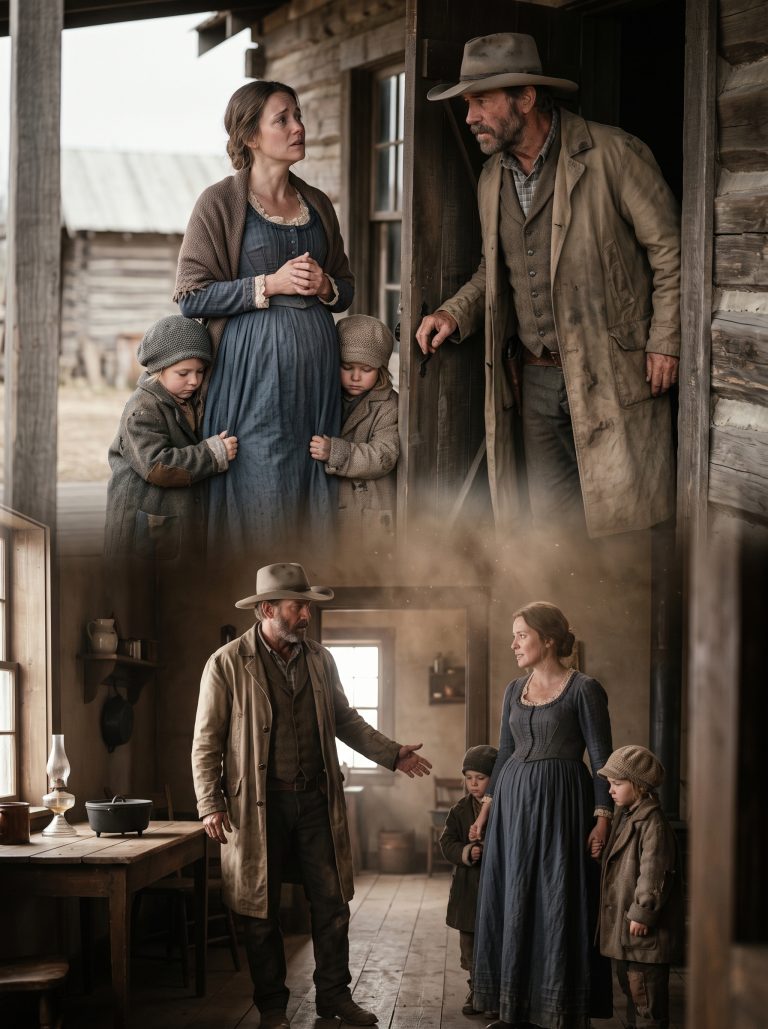
Marin Holloway dug her father’s grave on the same hill where she’d dug her mother’s three years earlier, and when the last neighbor finally left, she sat down at the kitchen table with eleven dollars in a tin box and four acres of rock nobody in Caro Valley would spit on.
She didn’t cry. Not that day. She’d already used up her crying the night before, alone, with her father’s old coat folded in her lap and the lamp turned down so low it barely counted as light.
What she had now was quieter than grief. Heavier, too. A weight sitting behind her sternum that felt like it had come to stay.
Thomas Holloway had spent six years coughing into rags and pretending he wasn’t. He’d tried corn on that hillside — twice — and both times it came up stunted, like the ground itself had decided against him. He’d tried chickens. The foxes solved that problem before the second winter did. Mostly he’d hauled other men’s freight and fixed other men’s fences, because the land he owned outright, the land that was supposed to be his, had never given him anything back.
He left behind a tin box, a barn that needed work, and eighty-four wooden barrels stacked against the north wall — collected over the years for some purpose he’d never gotten around to naming before he ran out of time.
Three days after the funeral, Gideon Mercer rode up the hill alone, which he probably thought looked humble. He owned three hundred acres of the richest bottomland in the valley. He owned the grain warehouse, half the dry goods trade, some arrangement with the hotel up the pass that the smaller farmers whispered about and never quite understood.
He took off his hat and held it in front of him like a man doing her a favor.
“I’m prepared to improve the offer I made your father,” he said. “Given your circumstances.”
“My circumstances,” Marin repeated.
“You’re alone up here. Winter’s coming. This ground —” He let the sentence die the way careful men let sentences die when the ending doesn’t need saying out loud.
She asked his number. He told her. It was more than she’d expected, and the fact that it was more than she’d expected made her suspicious instead of grateful, because men like Mercer didn’t overpay for things unless they believed they were underpaying.
“I’ll think about it,” she said.
Something moved behind his eyes — recalculation, not anger.
“Don’t think too long, Miss Holloway,” he said, putting his hat back on. “Winter has a way of making decisions for people.”
She watched him ride down until he was a shape and then nothing, and then she turned and looked at the barrels — eighty-four of them, oak staves and rusted iron hoops, smelling like the inside of old wood that had been fermenting quietly for years and was finally being asked to do something.
She thought about her mother. Eleanor Holloway had died in eleven days, a fever nobody saw coming, and what Marin remembered clearest — clearer than the face she was starting to lose — were her mother’s hands. Always moving. Always building something out of nothing.
One summer, when Marin was seven or eight, Eleanor had taken an old zinc washtub with a rusted-out hole, plugged it with a cork and a rag, filled it with soil, and planted strawberries in it on the south slope by the house.
They grew better than anything in the garden.
Because they’re up off the ground, her mother had said. The cold air rolls downhill at night and goes right underneath them. The rain doesn’t sit on the roots. The berries hang clean.
Marin sat on the fence rail until the light went completely, and somewhere in that darkness, without deciding all at once, she decided.
The credit office in town turned her away — no crop, no collateral, nothing but a dead man’s land and a dead woman’s memory. She wrote the word strawberries on a scrap of paper and stared at it until the shape of a plan started forming underneath it.
Eighty-four barrels. Thirty-seven sound enough to use right away, the rest cracked or split at the rim but maybe salvageable with time she didn’t feel like she had. A hillside everyone agreed was worthless because nobody had ever asked it the right question.
She went to Dela Marsh, sixty-one years old and sharper than anyone in the valley gave her credit for, and asked for a hundred strawberry crowns on credit against twenty percent of the first harvest.
“Twenty-five,” Dela said.
“Twenty-two.”
“Twenty-five, or you buy them somewhere else at full price.”
Marin agreed to twenty-five. Dela nodded once — the nod of someone who’d gotten exactly what she wanted and wasn’t going to make a show of it.
“Don’t tell anyone what you’re doing,” Dela said, “until you have something to show.”
Marin started in March, alone, in ground still hard from frost. She broke two mallets learning how to knock the bottom staves off a barrel without splitting it. By the twentieth barrel, she could do it in twenty minutes — and by the thirtieth, she’d stopped setting the cracked ones aside and started patching them instead, working the split staves back together with wire and tar until the thirty-seven she’d started with had become something closer to seventy.
She planted seventy-one barrels on the twelfth of April, in a cold gray drizzle, firming each crown into the soil with fingers she couldn’t feel anymore by midmorning.
She stood at the top of the hill when it was done and looked down at all those dark circles sitting in their timber frames, and felt something steadier than confidence, something that didn’t have a clean word — the particular calm that comes from having done a thing you can’t take back, and discovering, to your own surprise, that it settles you instead of terrifying you.
By May, the mockery had a name for her. The barrel girl.
She heard about it secondhand, filtered through Dela’s dry, unbothered voice, and she told herself it didn’t matter.
It mattered. She just didn’t have time to let it.
Because underneath the joke, underneath the whole valley’s certainty that she’d lost her mind, something was happening on that hillside that not one of them had bothered to look closely enough to see.
The plants were thriving.
And in three weeks, a man from the hotel up the pass was going to come looking for the source of the cleanest, reddest strawberries anyone in Caro Valley had ever tasted — and Marin Holloway was about to find out exactly how far a woman with eleven dollars and a washtub memory could go, when the man standing in her way owned everything else.
PART 2
The man’s name was Frederick Lane, and he arrived on a Tuesday in a coat that fit somewhere else better than it fit Caro Valley. He walked the rows without asking permission, crouched at the barrels, picked a berry that was just turning ripe and held it up to the light like he was checking it for a flaw he expected to find and couldn’t.
“No mud,” he said.
“That’s the point,” Marin said.
He asked her anticipated volume. She told him the real number — not the hopeful one. When he asked if she could guarantee more, she told him no, she couldn’t promise something that didn’t exist yet.
Something shifted in his face — attention, more than surprise, the look of a man who’d been fed careful lies for days and had just heard something unpolished enough to be true.
“I’d like to discuss terms,” he said.
The contract he offered was nearly double what the valley’s other growers were getting. Marin didn’t say yes right away, even though every part of her wanted to. She read every clause, pushed back on two that left her exposed, and only signed once they were fixed.
She thought that was the hard part. She was wrong.
Gideon Mercer found out within the month — not through gossip, but through the hotel’s own corporate office, above Lane’s head, where he proposed a bigger volume at a lower price and asked to be named the hotel’s exclusive valley source. He did it quietly. He did it in rooms Marin wasn’t allowed into.
Then he bought sixty wooden barrels from a cooperage two towns over and hauled them onto his own land — not the flat, rich bottomland where everything he touched already grew, but a hillside. A hillside he’d bought out from under an old man who couldn’t say no to the money.
He’d figured it out. Or someone close to Marin had told him what she’d spent a full season learning.
By spring, her supply credit had been quietly cut off. A lease she’d been counting on fell through overnight, sold to Mercer for a number the seller “couldn’t walk away from.” Two moves, at once, from two directions — which meant they hadn’t been accidents. They’d been planned.
Marin sat at her kitchen table with a letter from the hotel that said, essentially, not yet, and understood for the first time exactly how much bigger this had gotten than a strawberry contract.
It was never about the berries.
It was about who got to decide what marginal, worthless, laughed-at ground was actually worth — and whether a twenty-three-year-old woman with a dead father’s tin box was allowed to be the one who answered that question.
Then came the storm.
Hail the size of marbles, in the dead of a May night, hammering the whole valley at once — the flat fields with nothing to break the wind, and the hillsides with everything.
Marin woke to the sound of it on the roof and didn’t wait to see how bad it was. She went out into the dark with a lantern, checking frame after frame with hands too cold to feel what they were doing.
By morning, she knew two things.
Her crop had survived.
And somewhere across the ridge, on the hillside Mercer had built too fast, with framing too light, because he’d been in a hurry to have something to show the hotel — his didn’t.
What happened next in that grain hall on a gray Saturday morning, in front of sixty people, Gideon Mercer, and a woman from the hotel’s corporate office who’d traveled two hours specifically to hear what Marin Holloway had to say for herself — that’s the part nobody in the valley has stopped talking about since.
Part 3
The gray light of that Saturday morning came in low and flat over Caro Crossing, the kind of spring day that hadn’t yet decided whether it wanted to be winter still. Marin Holloway stood on the boardwalk outside the grain hall with a folder pressed against her ribs like something that might try to leave her hands if she loosened her grip, and watched the town fill a room that had never, in her memory, held this many people at once.
Four days had passed since the hail — four days of split hands and torn sleep, of her mind sprinting ahead toward this room while her body was still up on the hillside resetting frames. She hadn’t slept well. She hadn’t eaten enough. But she’d done the one thing she knew how to do when the ground felt uncertain: made a list, followed it, and now the list sat in her hand in the shape of a folder.
Barrett Voss found her on the steps before she went in — the same man who’d told half the valley in June that she’d lost her mind, hat pulled low against the wind, apparently on her side now.
“You ready?” he asked.
“No,” she said.
“Good. Means you’re taking it seriously.” He nodded toward the door, at the noise leaking out from under it. “He’ll try to make it about your age. Don’t let him make it about anything except what’s true.”
“What’s true is on paper,” Marin said. “I brought the paper.”
Voss almost smiled — an expression she hadn’t seen on him before. “Then let’s go watch him find that out.”
Inside, the grain hall held close to sixty people. Marin recognized nearly all of them — growers who’d sold her seed corn, merchants who’d turned her away for credit. Frederick Lane stood near the back beside a woman Marin hadn’t met, dressed for a city she’d never seen, watching the room with the patient stillness of someone whose whole job was reading rooms like this one.
Gideon Mercer stood near the front with two of his managers, already occupying the space the way he occupied everything — like it belonged to him before anyone had decided it did. He saw her come in. His expression went carefully neutral, which told her more than any expression could have.
Voss opened the meeting without ceremony. The storm had hit the valley hard, he said; several operations had taken real losses; the question in the room was what came next, particularly for the hotel contracts everyone depended on and nobody controlled.
Mercer didn’t wait to be invited. He never did. His voice came out measured, reasonable, arranged in the order that served him best — his bottomland had taken damage, which he admitted plainly because it cost him nothing; his new hillside trial had taken losses too, which he called the expected friction of a first season, easily corrected in the rebuild. He had capital, labor, thirty years of relationships this valley had built its trade around.
“I’m positioned to be this valley’s reliable large-scale supplier going into summer,” he said. “And I’m prepared to formalize that with contractual guarantees.”
He didn’t say Marin’s name once. The omission sat in the room louder than anything he’d actually said.
Lane raised a hand from the back. “The hotel’s current supplier weathered the storm without significant loss,” he said, mild enough that it took the room a second to register what he’d just done. “That’s relevant.”
A recalibration moved through the hall — heads turning, the particular murmur of a fact entering that someone had hoped to keep out.
“Miss Holloway’s operation is four acres,” Mercer said, jaw tight.
“In combination with the Reigns property,” Lane said, “the hotel’s current volume requirements are being met.”
“Marin,” Voss said. “Show them the numbers.”
She stood. She hadn’t prepared a speech and didn’t give one — she’d watched enough men perform at valley meetings to know how easily performances got dismissed. What she’d brought instead was harder to argue with.
She laid the first sheet on the table. “Two seasons of deliveries to Holt Mountain Hotel. Dates, volumes, quality grades. Rejection rate under two percent, both seasons combined.”
The second sheet. “Yield per barrel, against the county average for conventional bottomland planting. These aren’t my numbers — they’re from the agricultural bulletin. Public record.”
The third. “Storm damage figures from six valley operations, including Mr. Mercer’s bottomland field. These came from the growers themselves. I didn’t calculate them.”
She let that sit before she looked up.
“The frames survived because of two things working together — elevation and drainage. You can put a barrel anywhere. You can’t fake the combination of high ground and fast-draining soil that changes how the plant grows. I learned that by accident, because I didn’t have good ground. I only had the hillside.” She paused. “The storm didn’t create a lucky outcome. It proved what a full season already suggested. The method works — but only if you understand why it works.”
She sat down.
“This is one season’s data from a four-acre operation run by —” Mercer stopped himself.
He didn’t finish the sentence. The room heard the shape of what he hadn’t said anyway, and the silence that followed wasn’t on his side.
An older man rose near the back — heavyset, late sixties, the unhurried authority of someone who’d never once needed to raise his voice to be heard. August Crane. She’d sold him berries at market since her first harvest and never heard him say more than a dozen words at once.
“I’ve bought fruit at every market in this valley for forty years,” Crane said. “I’ve seen what Holloway’s operation produces, and I’ve seen what everything else produces. The quality isn’t comparable. That’s not opinion. That’s forty years telling you what the numbers already said.”
He sat back down. Mercer said something about scale. His manager said something about reliability. Then the woman Marin hadn’t met raised her hand with the patience of someone who’d been waiting for the right moment to use it.
“Gretchen Pharaoh,” she said — the hotel group’s regional procurement director. “I’d like to say something.”
She spoke for four minutes. Stripped to its substance: the hotel group wasn’t interested in the cheapest supply. They wanted the most consistent quality at a defensible price, because the hotel’s reputation was built on what it served. The Holloway arrangement had been the strongest-performing contract in their regional portfolio, and the storm hadn’t been a lucky anomaly — it had confirmed the method and the conditions behind it were genuinely different from anything else in this valley.
“We’re prepared to discuss extending and expanding the existing arrangement,” she said, “on terms that will require broader production capacity than a single property can provide.” She looked directly at Marin on the last part.
“Any expanded arrangement would naturally involve the largest, most established operation in this valley,” Mercer said, the edge in his voice no longer disguised.
Pharaoh regarded him with the polite blankness of a woman who’d dealt with men like him in rooms like this for twenty years. “That determination will be based on the criteria I’ve described. Quality. Consistency. Demonstrated resilience of the method.” She looked back down at her notes and didn’t look up again.
From the side of the room, Voss made a sound that was almost, but not quite, a laugh.
The meeting didn’t resolve everything that morning — these things rarely did in one sitting. Mercer left before the discussion finished, which told Marin how he’d read the room’s turn. His manager stayed until the end, which told her something else: Mercer wasn’t done. He’d simply shifted, mid-defeat, to a different kind of calculation.
Lane caught her on the boardwalk afterward.
“Pharaoh wants to meet with you Monday,” he said. “Formally. Bring whatever documentation you have on the Reigns operation’s capacity.”
“All right.”
“And Marin —” He paused, weighing something before he said it. “She’s going to ask about scalability. Whether you can actually grow this. Have an honest answer ready. Not an optimistic one.”
“I know the difference,” Marin said.
“I know you do.” He looked out at the emptying street. “Crane’s endorsement helped. People listen to him.”
“I know,” she said. She’d felt it in the room — the moment Crane stood, something had settled that thirty years of a man’s reputation had done in ten seconds what two years of her own careful record-keeping might not have managed alone.
Frank was waiting with the wagon at the end of the street. He looked at her face as she came down the steps and didn’t ask how it had gone — he’d learned, over eight months of working the hillside beside her, exactly which questions could wait and which couldn’t.
“Eli’s going to want to hear everything,” he said instead.
“I know.”
She climbed up beside him. The afternoon had turned colder, a thin wind sliding down off the pass, and the road out of town was clearing as people headed home ahead of dark. As the wagon came around the bend where the Holloway property first came into view, she looked up at the hillside — the frames standing in their rows against a gray spring sky, while below them the valley floor still wore the storm’s bruises in every flattened row and waterlogged channel.
She looked at it for a long time. Frank said nothing. The horse kept climbing.
Monday. She needed to be ready for Monday.
The meeting with Gretchen Pharaoh lasted two hours and forty minutes — longer than Lane had suggested it might, shorter than Marin had privately feared. Pharaoh was thorough in the specific way of a woman who made decisions other people would later hold her accountable for, which meant she asked the same question three different ways until she was satisfied the answer never changed shape.
She asked about the soil. About the exact combination of elevation and drainage. About whether the method could transfer to other hillside land without losing what made it work. She asked about the Reigns operation’s readiness. She asked, more than once, what could go wrong — and how Marin had accounted for it.
Marin answered everything directly. Where she didn’t know something, she said so. Where a projection was uncertain, she said that too. And each time she did, Pharaoh’s expression carried the particular satisfaction of someone checking a box she’d half-expected to go unchecked.
At the end, Pharaoh set her pen down and looked at the folder between them — the delivery records, the yield comparisons, the storm figures laid beside the surviving harvest numbers.
“What you’re describing,” she said, “isn’t a single farm operation. You’re describing a production standard that depends on specific conditions and a specific method. The real question is whether you can hold that standard across multiple properties without it diluting.”
“That’s the right question,” Marin said.
“What’s your answer?”
“The conditions are replicable on the right ground. The method is teachable. What isn’t transferable is the shortcut. You can’t build the frames wrong and expect the conditions to make up the difference.” Marin held her gaze. “My concern with expanding isn’t whether other hillside properties can meet the standard. It’s whether the people working them understand why the standard exists — not just how to meet it on paper.”
“And how do you solve that?”
“I stay involved,” Marin said. “Not as the owner of everyone’s operation. As the person who trains the method and certifies the quality. If a property enters an arrangement with the hotel, it meets my standard, or it doesn’t carry the designation. Full stop.”
“You’d refuse to certify a property even if it cost you volume.”
“It would cost me less than the hotel receiving one bad delivery and losing confidence in everything that comes off this hillside.”
Pharaoh was quiet a moment. She picked her pen back up, made a note, set it down again.
“We’ll need a formal framework,” she said. “Something contractual — certification criteria, a quality floor, a remediation process. Can you draft that?”
Marin thought about what drafting something like that would actually require — the legal precision, the language she didn’t yet know how to use correctly.
“I’ll need help with the legal form,” she said. “I can tell you every specific that belongs in it. I can’t promise I know how to write it so it holds up.”
“We have people for that,” Pharaoh said. “I’ll send a template. What I need from you is the substance.” She looked at Marin steadily. “If this framework holds up under our review, we’re prepared to offer a three-year supply agreement — structured around a designated hillside cooperative. Your operation, and any certified properties that meet the standard. Volume targets increase each year. Pricing reflects the quality differential.”
She named a figure for year one.
Marin kept her face level, though something in her chest moved that had nothing to do with composure.
“I’ll need to review the full terms,” she said.
“Of course.” Pharaoh gathered her papers, then paused, the way someone pauses when they’ve been waiting for the formal part to end before saying the real thing. “One more thing, Miss Holloway. The storm outcome wasn’t luck. You prepared for it. The other operations in this valley — including Mercer’s — did not, or could not. From the outside, that looks like luck. It isn’t. I’ve been in procurement long enough to know the difference.”
Marin didn’t answer that. She only nodded.
She drove back up the hill road with the afternoon sun coming in low from the west, the valley spread out below her still marked by the storm — patches of replanted ground, sections of ruined crop that hadn’t recovered and had already been turned under. She thought about Pharaoh’s question. What’s your answer? She hadn’t had it fully formed in her own mind until she’d been forced to say it out loud in that room — which was something she was starting to understand about herself. The shape of a thing in her head was always approximate, soft at the edges. Saying it aloud, precisely enough for someone else to evaluate it, was what made it real even to her.
Three-year agreement. Certified cooperative. A quality standard with her name attached to it, for better or worse, permanently.
She thought about her father’s eighty-four barrels leaning against a barn wall and eleven dollars in a tin box, and she thought he would have laughed at the idea of any of this. And then, she thought, he would have believed it.
She told Eli and Frank that same evening, in the Reigns kitchen, which had stopped feeling like a place she visited and started feeling like a place she simply belonged. Eli made coffee without being asked — his version of welcome — and Frank sat across the table with his forearms resting flat on the wood, listening to the whole account without once interrupting.
When she finished, Eli was quiet for a long time.
“Three years,” he said finally.
“Yes.”
“Certified cooperative. Your certification.”
“My standard. The hotel enforces it through the contract. If a property falls below grade, they stop buying from it until it’s corrected. I’m the one who decides what corrected looks like.”
He looked into his coffee cup, turning it slightly, not drinking. “That’s a lot of responsibility to put on one person.”
“I know.”
“You’re twenty-three years old.”
“I know that too.”
He looked up at her then, and something moved across his face she hadn’t seen there before — not doubt, not exactly. Something closer to recognition. The look a person gets when an idea stops being theoretical and becomes actual weight, the kind somebody has to carry.
“I’m not saying you can’t do it,” he said. “I’m saying you should know what you’re taking on.”
“I’ve been taking things on since I buried my father with eleven dollars in the house,” Marin said.
He was quiet again. It was Frank who spoke next, from across the table, simple and direct, without performance in it.
“What do you need from us?”
The question landed with a particular weight — the weight of something said by a person who meant exactly what he’d said and nothing more or less.
“I need the Reigns operation at full capacity by July,” she said. “I need your grandfather to let me bring two other hillside growers up here to see the build before I try to certify anyone else’s land. And I need both of you to tell me when I’m wrong about something. Because I’m going to be wrong about things, and I need to know it before the hotel does.”
Frank nodded once. Eli was quiet a moment longer, and then he said, “The two growers. Who?”
“Voss,” Marin said. “And a woman named Clara Sutton. Six acres on the East Ridge, been trying to make it work for four years. The aspect is right. The soil is right. She doesn’t have capital, but she’s a good farmer, and she’s not too proud to learn something new.”
“She at the meeting?”
“She was there. The one in the back corner who didn’t say anything and took notes the whole time.”
Eli looked at Frank. Frank looked back. Something passed between them without a single word — the particular shorthand of two people who had spent a lifetime, or a childhood, in the same rooms.
“Bring them up,” Eli said.
Barrett Voss agreed to tear out four years of established lowland planting and start over on his south slope — not easily, and not without saying, plainly, that he was asking Marin to bet his next five years on her being right. “You get me the framework document when it’s ready,” he told her. “I’ll look at it. That’s all I’m asking.” Then, quieter, something that had clearly cost him more to say: “You’re asking me to trust that you know what you’re doing well enough to be worth betting five years on. The answer’s yes. Call it what it is.”
Clara Sutton took longer to decide, and Marin didn’t push her. She’d learned, over two seasons of trying to make impossible ground produce something worth having, that pushing a person toward a decision you’d already made for them cost you the thing that mattered most — their actual buy-in, the part of them that would carry the work through the days when it got hard and nobody was there to encourage them.
“Show me the build,” Clara said, eventually, standing on her own silver-gray slope with the wind moving through the scrub. And Marin did.
By the third week of June, the Caro Valley Hillside Cooperative had four founding members — Holloway, Reigns, Voss, Sutton — and a certification standard that Marin had fought, over two rounds of negotiation with Pharaoh’s office, to keep open to any hillside property that could meet the quality floor, without requiring the hotel’s approval for every new name added.
The standard is the gate, she’d told Pharaoh. Pharaoh had accepted it almost immediately — Marin came to believe she’d wanted to accept it from the start, and had simply been testing whether Marin would hold the line.
The agreement was signed on a Friday morning in late June, in the same grain hall where the storm meeting had turned everything. Pharaoh and Lane sat on one side of the table. Marin, Eli, Voss, and Clara sat on the other. Frank stood against the wall because there wasn’t room, and told Marin he was fine there when she tried to make space for him.
Mercer wasn’t present. He’d made one final approach to Lane the week before — arguing the cooperative unfairly excluded established operations, that the quality claim was unproven at scale, that the whole structure rested on two seasons of data from a marginal property. Lane had listened, and told him the hotel’s decisions were based on demonstrated performance, and the current supplier’s demonstrated performance was the entire basis for the decision on the table.
Mercer said something after that. Lane declined to repeat it.
After the signatures, Pharaoh looked around the table. “We expect this cooperative to grow,” she said. “The hotel group has properties in two other regions interested in this sourcing model. If this arrangement performs the way the original contract performed, we’ll want to discuss something larger.”
Nobody spoke for a moment. Eli, at the end of the table, made a small sound — quiet, brief, that might have been satisfaction, or might have been something bigger than that. The sound of a man who six months earlier had been prepared to sell his land to Gideon Mercer, now sitting at a table where the direction of everything had turned in a way he hadn’t dared expect.
Outside, on the boardwalk, Voss stood in the June morning looking at the valley like he was seeing it from an angle he’d never used before.
“Well,” he said.
“Well,” Marin said.
“Fifty-one’s not too old,” he said — not what she’d expected, spoken like a man confirming something he’d been arguing with himself about for weeks.
“No,” she said. “It’s not.”
He put his hat on and walked to his wagon without further ceremony, which was, she’d learned, exactly how Voss did everything.
Summer came in hot and full, and the hillside handled it better than the valley floor ever could — the elevation kept the nights cool, and the cool nights kept the fruit firming properly instead of softening in trapped, accumulated warmth. Marin picked through July and into August alongside Frank, alongside Clara, alongside Voss’s daughter, who turned out to be the fastest picker any of them had ever worked with. The hotel’s deliveries went out on schedule, every one of them. Margarite, the chef, sent word through Lane that the dessert program was drawing unsolicited comments from guests — the kind of comment people don’t make about food unless something has genuinely surprised them.
By August, two more hillside farmers had come asking about certification. One from the north ridge, who’d spent three weeks watching Voss’s new frames go in before finally working up the nerve to come down and ask. The other had driven two hours from outside the county entirely, having heard about the cooperative through some thread in the hotel’s supply network.
Her land wasn’t quite right — the elevation matched, but the soil conditions were different enough that Marin spent two full afternoons walking the property before she understood why. She told the woman honestly: the conditions might be workable, but she’d need to see a small trial succeed before certification was possible.
“I’ll do the trial,” the woman said. Her name was Rosalie Kern.
Marin drove home from that visit down a road she’d never traveled before, past land she’d never seen, thinking about what it meant that someone had driven two hours to find not a berry operation, but a person who knew how to make impossible ground produce something worth finding.
It was a strange thing to be, at twenty-three. She didn’t feel like the person that drive implied. She felt like herself — tired, sore-backed from a week of heavy picking, behind on a list of things that never seemed to shrink, and carrying a conversation with Frank Reigns she’d been putting off for reasons that had all sounded reasonable in isolation and amounted, together, to nothing but avoidance.
He was waiting at the upper fence line when she turned in at the gate that evening, which wasn’t unusual — he often came by at dusk to check the north blocks from her higher vantage. He saw the wagon and waited.
“How was it?” he asked, as she pulled up.
“Long,” she said. “The property’s interesting. Different soil. I think it might work with adjustments.”
“You think, or you know?”
“I think,” she said. “I told her that.”
He nodded, and she looked at him a moment longer than the conversation required, and finally said what she’d been putting off since spring.
“Frank.” She paused. “I need to tell you something, and I need you to not make it complicated.”
He looked up at her, steady, faintly amused, entirely patient. “All right.”
“I don’t know how to do this part,” she admitted. “The rest of it — the land, the method, the cooperative — I figured that out by working through it, piece by piece. This I don’t know how to work through. I just know I’m better at everything when you’re around. That I look for you when something goes wrong. That the table at the signing felt wrong with you standing against the wall instead of sitting at it.”
He was quiet a beat. “That wasn’t complicated,” he said.
“I haven’t finished.”
“Go ahead.”
“I’m not easy to be around,” she said. “I work too much. I don’t explain myself enough. I’ve been wrong about things and taken too long to admit it. I’m telling you that first, because it’s true, and if you’re going to decide something based on this conversation, you should decide it based on the accurate version.”
He looked at her for a long moment. The evening had gone warm and still, the last light coming off the hillside in the reddish gold she’d been watching for two years and had never once gotten tired of.
“I know all of that,” he said. “I’ve been working alongside you for eight months.”
“I know you know. I’m saying it anyway.”
“Okay.” He reached up and took her hand where it rested on the wagon rail. Just that. Held it. “I’ve been waiting for you to stop being too busy to have this conversation,” he said. “I wasn’t going to push.”
“You don’t move well when you’re pushed.”
She looked down at their hands. She thought, unexpectedly, of the washtub in her mother’s garden, of a voice she’d almost let herself lose. It grows where you make it grow.
“No,” she said. “I don’t.”
He didn’t say anything else. Neither did she. For a while the valley went dark below them — the fields, the road, the far, small lights of Caro Crossing — settling into the particular quiet of a summer evening when the heat finally breaks and everything, for a moment, breathes.
The cooperative had seven members by the following spring. The Kern property, two counties over, passed its trial in October and was certified before the first frost. Two more Caro Valley hillside operations joined before winter closed in. The hotel’s regional office sent a letter inquiring about replicating the model at two other properties entirely.
Mercer never came back to her fence line.
She heard, through the valley’s usual channels, that he’d turned his attention south, toward a grain consolidation deal — the kind of thing he was built for, the kind of market she had no interest in competing in. She didn’t know whether he’d made peace with what had happened or was simply waiting for another angle. She suspected the latter, and she suspected, more and more, that it didn’t matter much either way.
What mattered was the hillside in May — the frames standing in their long rows, new growth pushing up green through the barrel soil, the particular color that meant winter had done its job and spring was doing its job and the plants were doing exactly what plants did when the conditions were finally, finally right.
She stood at the top of the Holloway property one morning that arrived with no warning at all — blue sky, cool air, the kind of light that made even rock and thin soil look like something worth having. Below her, the valley spread out in its familiar flatness. To the north, the Reigns slope in full production. Past that, the beginning of the Voss acreage, new frames gone in over the winter. Further still, barely visible in the haze, Clara Sutton’s East Ridge.
Seven operations. More coming. A quality standard that carried her name, which meant every good delivery and every bad one reflected back on her, personally, permanently — uncomfortable, and correct. She had chosen that. Anonymous standards drifted. Standards that drifted eventually meant nothing at all, and she had not spent two years climbing this hillside to build something that meant nothing.
She thought about the version of her mother’s words she’d finally recovered, piece by piece, over two seasons of working land Eleanor Holloway had once worked before her — not the shortened memory she’d carried for years, but the whole of it.
It grows where you make it grow, her mother had said. But you have to be willing to look stupid first. You have to be willing to carry the washtub out where everybody can see you, and plant in it anyway, while they’re all deciding you’ve lost your mind. That’s the part nobody wants to do. The rest is just farming.
Marin had carried the washtub out in full view of the whole valley. She’d planted in it while they laughed, and the berries had grown, and the laughter had stopped, and the valley — slowly, unevenly, one hillside at a time — had changed.
She hadn’t been fearless. She’d been frightened, consistently, and worked anyway, which was a different thing from courage and, she’d come to believe, considerably more useful. She had been willing to look like a fool on the one hillside where the foolish thing turned out to be exactly what the ground had been waiting for.
The rest was just farming.
She turned and started back down the slope toward the barn, where Frank was already at work on the frame repairs from last week’s wind, the sound of his hammer coming clear and steady through the cool morning air. There were deliveries to prepare. A letter from Rosalie Kern waiting on a reply. A meeting with Pharaoh’s office next week, about second-year terms, and a short list of things Marin already intended to push for.
There was work, as always.
She had work.
Below her, the valley lay quiet in the May light, and across the hillsides the barrel towers stood in their long, patient rows — all those dark circles against pale stone, all that unlikely growing in the most unlikely ground, fruit hanging clean in the open air above a valley that had once looked up at this slope and seen nothing worth having at all.
She went to work.
THE END