Her Dog Kept Scratching the Same Rock—What She Found Inside Changed Her Entire Winter Survival

PART 1
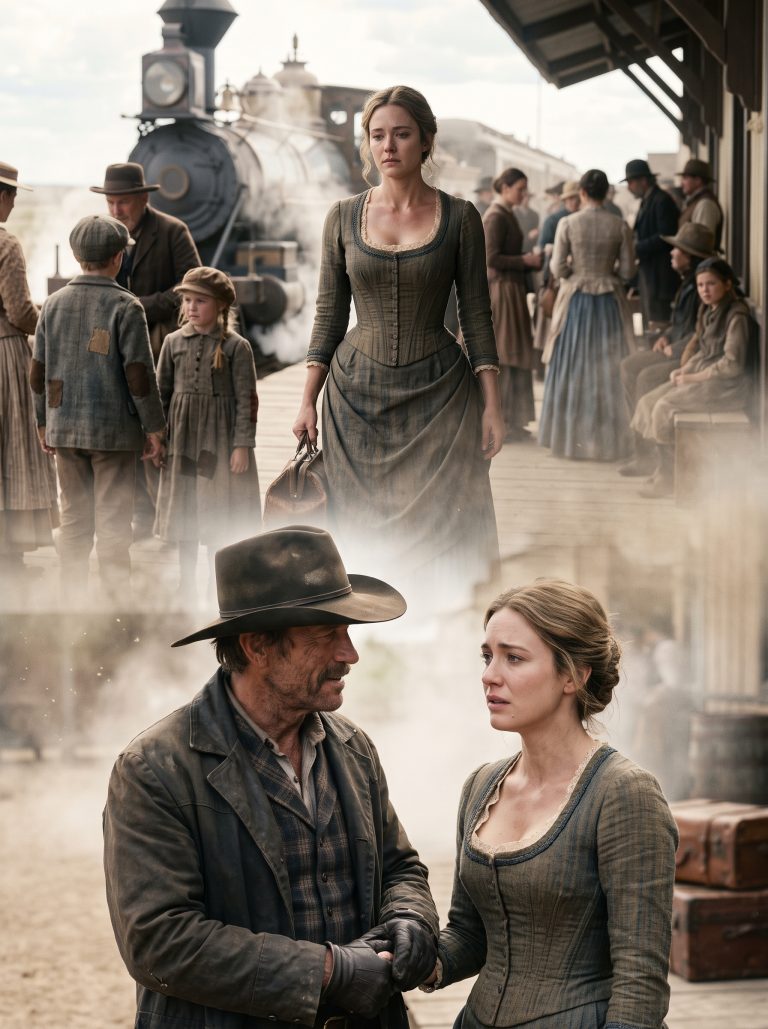
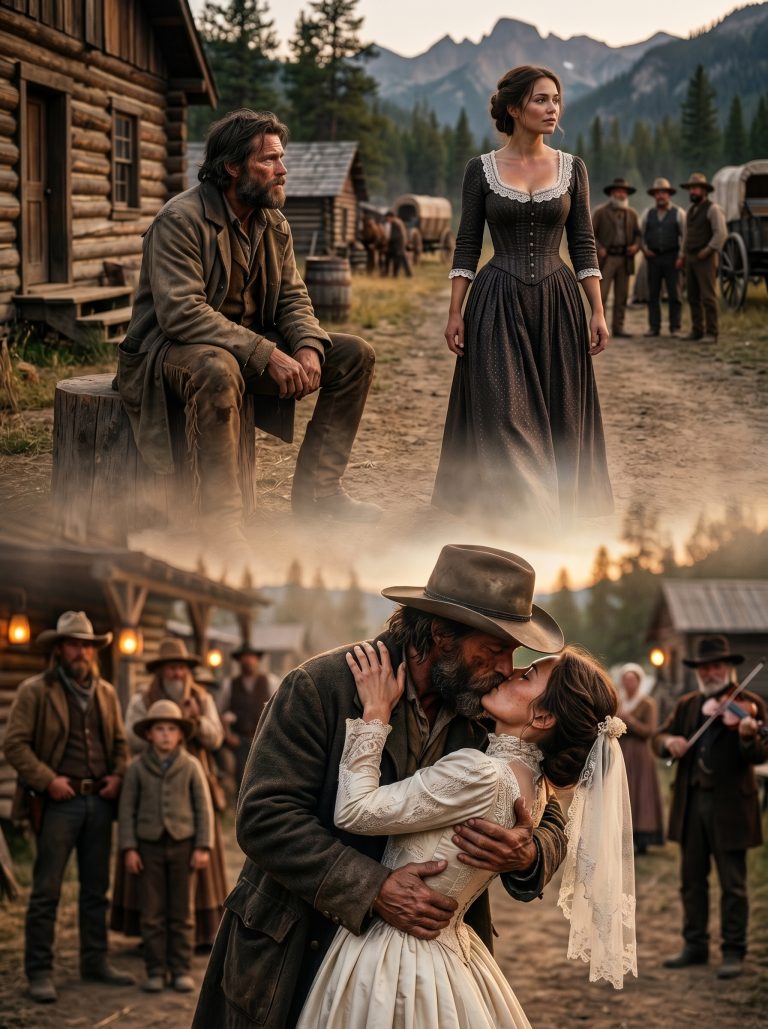
Grief, Clara Winslow had learned in the eleven months since Daniel died, arrived first as noise and only much later as silence — and she was still waiting for the silence the October afternoon Marcus Teague rode up the frozen lane with a folded deed held out in front of him like a weapon he’d been practicing with.
She was splitting the last of the deadfall pine when she heard his horse. She didn’t stop swinging the axe until he’d already dismounted.
Marcus didn’t greet her. He never had, not once in the six years she’d been married to his brother.
“You have until the first hard snow,” he said, holding the deed up so the wind caught the edges of it. “Daniel’s labor doesn’t change who this land legally belongs to. Neither does your marriage, as far as the law’s concerned. After the first snow, the property gets vacated.”
“By whose order?”
“By the law’s order, Clara. I’m only the one telling you.”
He didn’t offer a wagon. He didn’t offer a room in his own house, though he had five empty ones. He didn’t offer so much as a place in the world for a widow to go once his deadline came due. He turned his horse and rode back the way he’d come, and Clara stood in the wind and watched him shrink to a dark mark against the flat gray prairie before she finally set the axe down.
She carried his papers inside and fed them to the stove one page at a time.
Her dog, Scout, laid his head on her knee and whined low in his throat, the same sound he’d made the morning Daniel didn’t come back from the ridge.
Miller’s Gulch had already decided how her story ended. The mercantile cut her credit inside a week, Otis Renner mumbling something about accounts and risk while he wouldn’t quite meet her eyes across his own counter. The sheriff called it a family matter, not his to settle, and turned back to his ledger before she’d even finished asking. Women lowered their voices when Clara passed on the boardwalk, the particular hush people save for someone they’ve already buried in their own minds, and more than one former friend crossed to the far side of the street rather than have to find something to say to a widow whose future had apparently already been decided by men who’d never once split her firewood or buried her husband beside the creek he loved.
But Clara did not leave.
Every morning she walked the land Daniel had loved, reading the ridgelines and the creek and the wind exactly the way he’d once taught her to read them, because it was the only conversation she had left with him, and because Marcus Teague’s folded paper had not yet managed to teach her how to stop listening for her husband’s voice in weather he used to name for her.
On the third day of November, with the sky gone the color of wet slate and the air carrying that particular metallic taste that meant snow, she climbed the granite spine along the western boundary — ground Marcus’s forged paper claimed for himself, ground Daniel had walked a thousand times before her.
That was when Scout stopped dead in the frozen grass.
His ears came up first. Then he lunged for the rock face and started barking at it with the kind of urgency he’d never once wasted on a rabbit or a stray coyote, circling the same three feet of stone again and again as though something on the other side of it had just answered him back and he meant to make it answer a second time.
Clara followed his stare to a narrow crack in the granite, nearly swallowed by dead vines, and heard Daniel’s voice rise up out of eleven months of silence as clearly as if he were standing beside her.
Rock breathes, Clara. You just have to know how to listen for it.
The fissure was barely wide enough to fit her hand through. But something came off the cold air rising out of that crack — a stillness that had no business belonging to a Wyoming ridge in November, a held-breath quiet that didn’t match the wind screaming everywhere else around her — and Clara knelt in the half-frozen dirt with her ear pressed flat against granite that Marcus Teague had already decided, on paper, was no longer any of her business at all.
PART 2
She heard it before she believed it. A hollow sound, deep and patient, exactly the kind of sound a small room makes when it’s waiting for someone to finally come find it.
By dusk her hands were raw from working the pry bar. The vines came away first, then packed dirt, then stones fitted so precisely they might have been laid by a mason rather than stacked by a man teaching himself masonry out of necessity. Scout paced behind her the whole time, restless, trembling, the way he trembled during thunderstorms — as though he already knew exactly what the mountain had been keeping from both of them.
The crack finally widened enough for her lantern. Clara struck a match, cupped the flame from the wind with her whole body, and pushed the light through the gap.
The darkness on the other side didn’t end where a small crevice should have ended.
It opened.
Against the far wall, where nothing should have been sitting for anyone to find, the lantern light caught the edge of something wrapped tight in oilskin. Clara turned sideways and squeezed through the gap after it.
The chamber inside was larger than her own cabin. Shelves had been cut directly into the stone, and every one of them was stacked — sealed tins, flour sacked and dipped in wax against damp, dried beans, smoked meat, salt, coffee, candles, lamp oil, jar after jar of preserved fruit gone amber in the lantern light, all of it arranged with the same careful, patient hand that had once mended harness by the fire and taught a young wife to read weather off a ridgeline. Enough to carry one careful person through years, not just one hard winter.
Or enough, she understood slowly, standing very still in the middle of all of it, to carry a great many people through one very hard winter.
Daniel had built this.
She knew it before she ever found his initials burned into the side of a wooden crate.
D.W.
Her knees went, and she had to put one hand flat against the cold stone shelf to keep herself upright — because at the very back of the chamber sat his old trapping box, and inside it, beneath folded wool blankets and a revolver still wrapped in oiled cloth, lay a letter with her own name written across the front in a hand she would have known anywhere in the world, a hand she’d been certain she would never see fresh ink from again.
PART 3
Clara pressed the letter against her mouth before she even finished reading it, as though she could keep the words from being true by holding them there.
Clara,
If you are reading this, then I was right not to trust Marcus, and I am sorry I never said so plainly enough while I was still alive to say it.
Our father left the western ridge to me outright. Marcus has believed his whole life that everything belonging to this family should belong to him instead, and last spring I caught him searching our own house for the original deed while you were at church. The copy sitting in the county office is wrong — I don’t know yet how he managed it, only that it’s wrong, and that he means to use it.
The true deed is hidden beneath the flour shelf in this chamber. It names you as my lawful heir, plain and legal, with Father’s own signature on it.
I built this cache because winter doesn’t care who deserves mercy, and neither does my brother. Trust Scout. He remembers this place better than either of us ever will — I brought him up here a dozen times on our hunting trips, teaching him the path in case a day ever came when you needed it and I couldn’t walk it with you.
I love you. I always will, wherever I end up.
Daniel
Clara stood in the lantern light with the letter shaking in both hands, reading it a second time and then a third, understanding all at once that Scout hadn’t stumbled onto that crevice by accident at all. He’d remembered it. Daniel had spent a dozen ordinary afternoons — afternoons she’d assumed were nothing more than a man and his dog wandering the ridge for the pleasure of it — deliberately teaching Scout the one thing he couldn’t teach his wife directly without frightening her into believing he expected the worst. That a day like this one might come. That when it did, she wouldn’t be as alone as Marcus Teague clearly wanted her to believe standing in her yard with that folded deed held out like a blade.
She sat down hard on an overturned crate, letter still open in her lap, and allowed herself, for the first time since the funeral, to cry without also feeling as though the tears were a weakness she couldn’t afford. Scout pressed his whole body against her side in the lantern light, patient, the way he always had been, as though he understood this particular grief was different from the kind that needed comforting quietly and could instead simply be sat beside.
Beneath the flour shelf, exactly where the letter promised, she found a small tin document box sealed shut with wax. Inside lay the original deed, Daniel’s handwritten will, a stack of tax receipts going back nine years, and a surveyor’s map showing plainly that Marcus’s own property line ended nearly two miles east of the homestead he’d just tried to steal out from under her.
Marcus hadn’t simply misunderstood the law the way he’d wanted her to believe.
He had forged it, deliberately, with his own hand or someone else’s paid to hold the pen for him.
The first snow began falling while Clara carried the first loads of supplies down off the ridge. For three days she worked without real rest, moving enough food into the cabin to last several weeks, hiding the deed beneath a loose floorboard under her own bed, and carefully returning the chamber’s entrance to something close to its original hidden appearance — vines replaced, stones fitted back into place, nothing left to show a passing rider that the mountain held anything worth finding.
Then the hard snow arrived in earnest.
It buried the road within a single night and rose steadily against the cabin walls until the windows on the north side went dark by midafternoon. The temperature dropped so sharply that water froze solid inside the buckets kept beside the stove, and the wind found every gap in the timber and turned it into a low, constant complaint that never quite stopped. Clara spent the first true blizzard night awake beside the fire with Scout pressed against her side, listening to the cabin groan under wind Daniel had once told her a well-built house should be able to shrug off, and finding, to her own surprise, that she believed him even with him gone, because he had built this cabin with the same careful hands that had built the chamber up on the ridge.
Clara burned wood carefully, rationing it the way Daniel had once shown her — a double handful morning and night, never more, no matter how deep the cold outside — and ate well for the first time since his funeral, real meals instead of the thin broth and stale bread she’d been surviving on for weeks while Marcus’s deadline hung over her. She shared strips of dried meat with Scout in front of the fire and talked to him through the longest of the nights, the way she’d once talked to Daniel while he mended harness by lamplight, filling the cabin’s silence with a voice because the alternative silence had become unbearable.
“You kept your promise to him,” she told the dog, scratching behind one ear gone gray at the tip. “Now I intend to keep mine.”
She spent the quiet days of that first heavy snowfall going through Daniel’s old trapping box more carefully than she had the night she found it, discovering beneath the revolver a second, smaller letter she hadn’t noticed at first, tucked into the lining — not addressed to her this time, but a rough accounting in Daniel’s own hand of every family in the valley he’d quietly helped over the years, debts he’d forgiven, meals he’d shared, firewood he’d split for widows and the sick without ever once mentioning it to Clara. The list ran to nearly two full pages, names she recognized from church and the mercantile and the schoolhouse, dates going back nearly as far as their marriage, and reading it she understood, sitting cross-legged on the cabin floor with Scout’s head heavy on her knee, that the chamber on the ridge hadn’t been built only for her. It had been built the way Daniel had lived his whole life — preparing quietly for a need he expected to arrive eventually, whether or not anyone ever thanked him for it, and never once making a show of the preparing.
Two weeks later, Marcus returned with Sheriff Wyman Pratt and two hired men riding behind him, plainly expecting to find an abandoned cabin and an empty homestead ready for the taking. Sheriff Pratt had agreed to ride out mostly, he would admit to Clara much later, because he’d assumed the matter would settle itself the moment they found the cabin empty and the widow already gone to relatives somewhere east, sparing him the discomfort of having to enforce a family dispute he’d never fully believed was his business to enforce in the first place.
Instead, smoke rose steady from the chimney. Clara stood in the open doorway with Scout planted at her side and Daniel’s revolver resting openly against the fold of her skirt, not hidden, not apologized for.
“The first hard snow has come and gone,” Marcus said, reining in at the edge of the yard. “You were ordered to leave this property.”
“You ordered me to leave,” Clara said. “The law never did.”
Marcus smiled thinly and nodded toward the sheriff, the same practiced gesture of a man used to having other people do his enforcing for him.
Sheriff Pratt stepped forward, plainly reluctant, his eyes moving once to the smoke over the cabin and once to the dog standing rigid at Clara’s side before settling back on Marcus. “Mrs. Winslow, unless you’ve got some kind of proof to the contrary —”
She handed him the original deed without a word.
Marcus’s smile disappeared entirely.
The sheriff read the first page, then the second, his expression hardening by degrees as he reached the county seal and, beneath it, Daniel’s own signed will. “This document names the homestead as belonging outright to Mrs. Winslow.”
“It’s false,” Marcus snapped. “Whatever she’s handed you, it’s forged.”
Clara produced the tax receipts next, and then the surveyor’s map, laying them out one at a time across the porch rail where the sheriff could see every line of them in the gray daylight.
“The false document is the one Marcus filed with the county after Daniel died,” she said. “This is the one my husband hid because he already knew his brother would try exactly this.”
For a moment nobody on that porch moved at all. The wind had dropped to almost nothing, and the only sound in the yard was the horses shifting their weight in the cold.
Then Marcus lunged for the papers in the sheriff’s hand, faster than a man his age had any business moving, snow spraying up from under his boots.
Scout hit him before he’d crossed half the distance, jaws closing hard around his coat sleeve and dragging him sideways into the snow with a violence that startled even Clara, who had never once seen the old dog turn on a person before. Marcus shouted and clawed for the pistol at his own hip, but Sheriff Pratt drew first, the barrel already leveled before Marcus’s hand had even closed around the grip.
“Don’t,” the sheriff said, and Marcus went perfectly still in the snow with the dog still gripping his sleeve, chest heaving, eyes fixed on the sheriff’s revolver rather than on Clara standing calm in her own doorway.
“Call him off,” Marcus managed, breathless, snow packed into his collar.
“Scout,” Clara said, and the dog released him instantly and backed away, though he kept his body angled between Marcus and the porch steps, and kept his eyes on him too.
Sheriff Pratt compared the two deeds’ signatures side by side in the failing light, holding both pages close to catch what remained of the daylight, and Clara watched the truth settle slowly across his face the way weather settles across open country — forgery, plain and undeniable; fraud against a county office; attempted theft of a widow’s legal land. Whatever this had once been able to pass for as a family disagreement, it plainly wasn’t that anymore, and every man standing in that yard understood it in the same instant, including the two hired men who had already begun backing their horses toward the road without waiting to be told.
The sheriff took Marcus’s gun off him, ordered the two hired men to turn their wagon back toward town, and only then looked past Clara at the smoke rising steady from her chimney, then out at the white emptiness stretching in every direction around the cabin.
“You’ve got enough provisions to see the whole winter through, all the way to spring thaw?”
Clara rested one hand on Scout’s head, feeling him finally settle under her palm.
“We’ll manage,” she said, and meant it in a way she hadn’t been able to mean anything in eleven months.
Marcus was held in the Miller’s Gulch jail until a circuit judge could ride through in the spring. An examination of the county records that followed turned up a bribed clerk who’d swapped the original deed for the forged copy the same week of Daniel’s funeral, a young man named Percy who broke down and confessed everything within an hour of the judge’s questions, weeping that Marcus had threatened his own family’s mortgage if he didn’t cooperate, and producing a hidden ledger of his own that recorded every dollar Marcus had paid him across the better part of a year, evidence that made the whole scheme plain to anyone who read it. The investigation also turned up evidence that Marcus had already been quietly negotiating to sell the western ridge to a railroad company scouting new lines through the territory, correspondence found folded inside his own desk drawer describing acreage he had no legal claim to as though it were already sold and settled. What Marcus hadn’t known, and what the judge seemed to take a certain grim satisfaction in telling him from the bench, was that the railroad’s survey had shifted two counties north months earlier, quietly, before the ink on his forged papers had even dried. The land he’d forged a man’s signature to steal was worth almost nothing to a railroad company anymore, and had likely been worth nothing to them for the better part of a year before he’d ever ridden up Clara’s lane with that deed held out like a weapon.
But it was worth everything in the world to Clara.
The judge sentenced Marcus to five years for forgery and fraud against the county, with the clerk Percy receiving a lighter sentence in exchange for his full and immediate cooperation, a leniency the judge noted was earned rather than given freely. Clara sat through the entire proceeding in the same plain wool coat she’d worn the morning Marcus first rode up her lane, and when the judge finally asked if she wished to speak before sentencing, she stood and said only that she wanted the court to know Daniel had suspected his brother capable of exactly this, months before either of them ever imagined it would come to a courtroom. The judge wrote that into the record himself, in his own hand, before moving on, and thanked her for her composure throughout what he called an unusually clear-cut case for his circuit.
That winter turned into the coldest anyone in Miller’s Gulch could remember living through. Snow caved in barn roofs across three separate ranches. Cattle froze standing upright in open pasture, found weeks later exactly where they’d been standing when the cold finally took them. The road to the nearest supply station vanished under drift for the better part of seven weeks, and for most of that stretch, Miller’s Gulch was as cut off from the rest of the territory as Clara herself had been the day Marcus rode away and left her with nothing but a burned deed and an empty larder.
One night a neighbor arrived at her door half-frozen, carrying a feverish child wrapped in a horse blanket, his own wife too weak from the same fever to make the walk herself. Clara sat up with the boy until dawn, cooling his forehead with snowmelt and feeding him broth by the spoonful the way she’d once nursed Daniel through a bad fever their second winter married, and by morning his color had steadied enough that his father wept openly at her table, apologizing for every lowered voice he’d ever used against her on the boardwalk.
The next morning an elderly couple came on foot after their own roof finally gave way under the weight of three straight days of snow, the old man carrying nothing but a lockbox of family papers and his wife’s good winter coat, having left everything else buried under their collapsed ceiling. Then, a week later, Otis Renner appeared at the edge of her yard, the mercantile owner who’d cut off her credit the same week Marcus first rode up her lane, ashamed and half-starved after his own storeroom burned to the ground in a lamp fire nobody had been able to fight in that wind. He stood in her yard turning his hat in both hands for a long moment before he could bring himself to ask for help, and Clara noticed, without saying anything about it, that shame sat on a man very differently than cold did.
Clara could have turned every one of them away, and no one in that valley would have blamed her for it, least of all after the winter Marcus had tried to force on her without so much as a wagon to carry her belongings.
Instead, she led them up to the granite ridge.
One by one, the same people who had spoken of her in lowered voices as though she were already buried beneath the snow stepped through the narrow opening in the rock and stood staring, speechless, at the shelves Daniel had built and stocked with his own two hands years before any of them had ever needed saving. Otis Renner, of all people, was the one who finally broke the silence inside that chamber, running one hand along a shelf of tinned goods and saying, quietly, that he’d sold Daniel Winslow half these very supplies over the years without ever once asking what a man needed with so much salt pork and lamp oil, and never once imagining it would come back around to save his own family.
Clara shared the flour, the beans, the smoked meat, the candles, the medicine — every bit of it, without a ledger, without a debt attached to a single sack of grain, refusing every offer of payment with the same quiet firmness Daniel had once used when neighbors tried to pay him back for a favor he considered simply neighborly.
No one in Miller’s Gulch went hungry that winter, and no family froze that could reach her door.
By the time the thaw finally came, the chamber inside the ridge stood nearly empty, but Clara’s cabin was surrounded, morning after morning, by neighbors mending her fences, turning her fields, and stacking replacement cordwood for every log she’d burned keeping their children warm through the worst of it. Otis Renner reopened her credit at the mercantile without being asked and refused, for the rest of his life, to ever charge her interest on so much as a spool of thread, a small kindness he never once explained aloud but which Clara understood plainly enough for exactly what it was.
Marcus eventually returned to Miller’s Gulch after serving out his full sentence, thinner and grayer than the man who’d once ridden up her lane holding a forged deed like a weapon. He stopped at the edge of Clara’s property and did not cross the new fence line the neighbors had helped her raise that spring.
Scout stood on the porch and growled low in his chest until Marcus turned his horse and rode away for good, and Clara watched from the doorway without stepping outside, feeling something settle in her chest that wasn’t quite forgiveness and wasn’t quite triumph either — something closer to a debt finally marked paid in full.
She heard, secondhand and much later, that Marcus had gone east after that, taking work as a clerk in a county office two territories over, a detail that struck Clara as its own quiet form of justice — a man who’d once forged a deed spending the rest of his working life filing other people’s honest paperwork under someone else’s watchful supervision, never again trusted with a signature that mattered.
The homestead itself prospered greatly in the years that followed, in ways Clara had never quite let herself imagine during the very worst nights of that first hard winter. She expanded the cabin the following summer with lumber neighbors helped her haul up from the mill, adding a second room that had once been Daniel’s plan for a nursery they’d never gotten the chance to fill together, and turned it instead into a proper pantry and workroom where she began drying and preserving food each autumn on a scale that went well beyond what one household could ever need — a habit the whole valley eventually came to understand and quietly rely on, the same way Daniel once had.
Otis Renner’s mercantile began stocking a small dedicated corner specifically set aside for what he called Winslow provisions, goods Clara brought down from her own cellar each fall to sell at a fair price to families who couldn’t manage the trip up to the ridge themselves, though everyone in Miller’s Gulch understood clearly by then that the chamber up on the granite spine remained exactly what Daniel had built it to be from the very beginning — not a business, not quite a charity either, but something closer to an understanding the whole valley had come to share without ever needing to write it down.
Sheriff Pratt stopped by every autumn after that first winter, not on any official business, just to see how her stores were shaping up before the first hard snow, a habit that started as duty and settled, over the years, into something closer to friendship, the two of them sitting on her porch steps with coffee while he updated her on whatever news had come through town that season. He never once mentioned that particular afternoon he’d drawn his own pistol on Marcus Teague right there in her yard, and neither did she, though both of them understood exactly what that afternoon had cost and settled between them, and neither felt any particular need to revisit it aloud.
Years afterward, people in that country still told the story of the widow whose dog had discovered enough food hidden inside a mountain to save an entire settlement through the hardest winter anyone could remember.
Clara always corrected them, gently, whenever she heard it told that way, usually over coffee at her own kitchen table with whichever traveler or newcomer happened to be passing through and curious enough to ask.
Scout hadn’t discovered the chamber.
He had remembered it, exactly the way Daniel had trained him to, on the strength of a promise made years before anyone knew it would ever need keeping. The old dog lived nine more years after that first terrible winter, gray-muzzled and slower on the ridge trail every season, but he never once failed to lead Clara straight to that crack in the granite whenever she asked him to, right up until the year his legs finally gave out for good and she buried him beneath a marker on the same ridge, close enough to the chamber that she liked to think some part of him was still standing guard over it.
Daniel had understood something his own brother never once managed to grasp in his whole grasping life — that land was never made valuable by whatever name happened to be written across a deed in some county office. Its value came from the hands that worked it honestly, the lives it sheltered when the weather turned against everyone equally, and the mercy offered freely when winter finally arrived at every door in the valley at once, deserving or not.
Above the crack in the granite, once the chamber stood empty for the last time, Clara carved six words into the stone with her own hands, working at the letters slowly across three cold afternoons until they sat exactly the way she wanted them to sit, plain and permanent and impossible to forge:
WHAT WE SAVE MUST SAVE OTHERS.