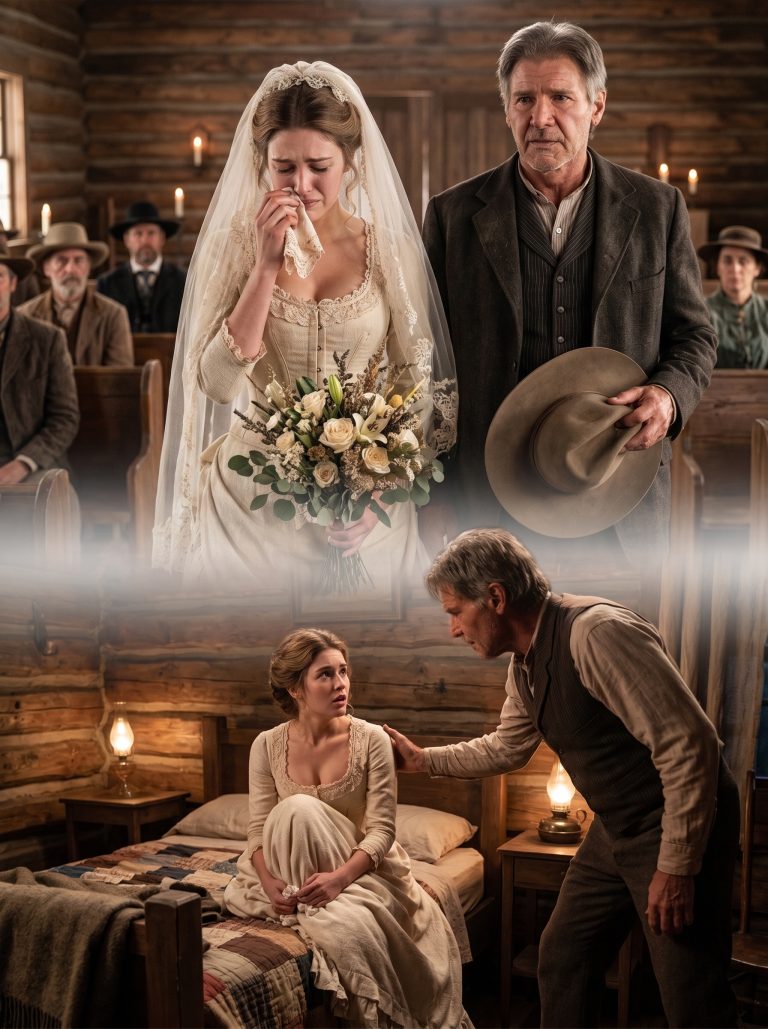
Ninety-Nine Doctors Declared the Paralyzed Mafia Boss Would Never Walk Again—Until a Maid’s Little Girl Entered His Forbidden Garden and Changed Everything

PART 1
The hospital called at 3:47 AM, but Grace Harper almost didn’t answer.
Her phone was buried in a laundry bag with three weeks of other people’s clothes. She had been scrubbing blood from the emergency room tiles when labor pains started—sharp, impossible to ignore. Not her blood. Someone else’s tragedy.
By the time she found her phone, the message was three minutes old:
“Patient Elena Mercer. Baby survived. Dr. Reeves requests immediate family. Status critical.”
Grace’s hands went numb.
She had noticed the pregnant woman that morning—rushed through obstetric doors with gunshot wounds, a belly swollen with a baby due in three months. The woman had looked directly at Grace, a cleaning girl in a hospital uniform, and said one thing before losing consciousness:
“Save her if you can.”
Now the hospital was saying the baby had lived.
The woman had not.
Grace took the stairs three at a time, reaching the maternity ward where nobody questioned why a janitor in soaked clothes burst through restricted doors. In an isolated incubator lay a child no bigger than her hand, dark hair, pink skin, hands like fists of determination.
Grace’s legs gave out. She sat on the floor and cried.
“We’ll need family for adoption paperwork,” Dr. Catherine Reid said. “Do you know if there are any relatives?”
Grace’s mind split. There was the right answer—tell them about the man in expensive clothes who had visited Elena’s room before she died. The man a nurse had identified as David Whitmore, attorney to Julian Mercer, one of the city’s most dangerous men.
Then there was the other truth. The one that lived in a dying woman’s grip.
“Don’t let him take her.”
“No relatives,” Grace said. “Just me.”
The lie came out steady, like she had practiced it her whole life.
Dr. Reid studied her, then nodded something into recognition—what poverty looks like, what desperation sounds like—and turned back to paperwork.
Within six hours, Grace had signed documents she didn’t understand, forged a last name on forms that mattered, and walked out with a baby wrapped in a hospital blanket and a blood-soaked secret.
She named her Sophia.
For three years, Grace raised the child in a studio apartment in Dorchester, working double shifts and taking in James, a neighbor’s boy whose grandmother had died. She fed him because hunger came regardless of which paperwork said it didn’t exist.
Then one winter morning, a man in an expensive coat appeared at her building.
“Ms. Harper, Mr. Mercer has been searching for his daughter for three years. He believes you have information.”
Grace’s blood turned to ice. She had kept everything—the hospital records, the falsified birth certificate, the locket taken from Elena’s body. The one with a photograph of a man and woman laughing at the harbor, before violence and deception.
All hidden under her mattress.
“His daughter died with her mother,” Grace said, hand on Sophia’s shoulder. “It’s in all the reports.”
The man’s eyes didn’t change. But she felt the threat settle around them like cold air.
Three days later, Grace did something reckless.
She fabricated employment records and positioned herself as a new maid for Julian Mercer’s mansion—the very man looking for the daughter he didn’t know existed. The household manager barely glanced at her background. The estate simply absorbed workers like it consumed time and silence.
That first day, Grace stood in the winter garden with a mop and watched her daughter’s father from behind a pillar. He sat in a wheelchair, face scarred and terrible, eyes that had seen violence and chosen it. A man built like a weapon in an expensive suit. Three armed guards stood nearby, watching for outside threats, never imagining the threat was already inside, carrying cleaning supplies.
She was invisible. Exactly what she needed.
What she didn’t expect was Sophia.
The girl slipped through an unlocked door, drawn by the glass ceiling and the impossible garden inside a stone mansion. James followed, terrified and pale.
“Rich people are weird,” Sophia whispered, looking at the marble, the fountain, the scarred man in the wheelchair.
Julian Mercer’s eyes moved toward her, cold and dangerous.
And Grace—frozen behind a column, mop in hand—watched her daughter walk toward the man who could destroy them both.
Then Sophia opened her mouth.
“Mister, did your face forget how to smile?”
Everything stopped.
The guards tensed. James made a wounded sound. Grace’s heart became a fist.
Julian Mercer did not move.
But his hand—resting on the wheelchair arm—twitched.
And somewhere in the shadows, someone watching from the darkness suddenly turned and walked away fast, already calculating what would need to be done about the girl who had accomplished what ninety-nine doctors had failed to achieve.
She had made him laugh.
And laughter, it seemed, was far more dangerous than any weapon.
PART 2
For two weeks, Sophia danced in the winter garden every afternoon. Not gracefully—she slipped on marble, knocked over ferns, announced subway stops like a fever conductor. Each time Julian laughed, his legs twitched. By week two, his right foot lifted deliberately off the floor.
Dr. Catherine Reid confirmed the impossible: his nervous system was responding. “The nervous system responds to meaning,” she said. “If that child gives your brain a reason to reconnect, do not discount the miracle.”
Grace brought James and Sophia upstairs to the east wing. “I lost my apartment,” she told Julian. It wasn’t the whole truth, but it was true enough.
Julian ordered the east wing opened. “She’s under contract to insult me until my face works properly,” he told Grace. Sophia negotiated chocolate chip pancakes as payment.
The mansion transformed. Crayons appeared. Guards left warm gloves. The mausoleum became a home. Julian pushed through physical therapy, and Grace stood nearby because she understood what it meant to beg your own body to cooperate.
Then David Whitmore arrived.
He had been Julian’s advisor for fifteen years. He looked at Grace and Sophia with the calculation of someone solving an equation.
“She’s too convenient,” he told Julian. “A maid and child appear, and suddenly you’re recovering? That feels staged.”
That night, someone called child protective services.
When the caseworker arrived, Julian entered standing between therapy bars, legs shaking—but standing. “Ms. Harper and her daughter are guests in my home, safe, fed, and represented by my attorney. If this report was malicious, we will find out who filed it.”
Later that night, Grace put Sophia to bed and went downstairs. She found the silver locket in the winter garden—the one she had taken from Elena’s body.
The one with the photograph of Julian and his wife, laughing at the harbor.
Julian found it in her hands. His body went rigid.
Inside was not the photograph. Inside was a hospital document: Baby Girl Mercer. Born alive. 3:18 a.m.
Something inside him broke.
“Explain,” he said.
Grace, tired of running, whispered the truth.
“She’s yours. Sophia is your daughter.”
Julian stared at her. “My daughter died with my wife.”
“That is what they told you.”
“Who?”
“David Whitmore.”
The name moved through the room like poison.
PART 3
The full truth came out that evening, spoken in fragments that shattered Julian piece by piece.
His hands trembled as Grace spoke, the locket swinging between them like a pendulum keeping time with a heart that had forgotten how to beat. She sat across from him in the library, afternoon light bleeding through the tall windows, turning the dust in the air into something golden and unbearable.
She told him about the hospital basement, the laundry bags, the seventeen-hour shifts that had bent her spine into the shape of survival. She told him about a pregnant woman she had never met, who had gripped her wrist with the strength of a person who knew death was coming and wanted to make sure something lived instead.
“Save her if you can.”
Those words had haunted her for eight years.
Grace had kept the birth certificate she had forged. She had kept the hospital records hidden in a shoebox under her mattress. She had built an entire life on top of lies because lies felt safer than truth, and Sophia needed her to be brave enough for both of them.
“I was going to tell you,” Grace whispered. “A hundred times, I started to. But every time I saw David Whitmore standing near your wheelchair, I remembered what he said to the doctor. No loose ends. And I couldn’t—I couldn’t risk her.”
Julian’s face was a landscape of pain and understanding colliding at the same moment.
“You protected her when I couldn’t,” he said quietly. “When I didn’t even know she existed.”
Grace’s voice broke. “She slept in a car once. In the winter. I had lost my job and couldn’t pay rent, and we slept in my friend’s car because the apartment got too cold and I was terrified hypothermia would take her the way it takes children in the news stories. I sang to her. All night, I sang so she would stay conscious. Stay alive.”
Julian closed his eyes.
He could see it perfectly—a desperate woman in a freezing car, a small child pressed against her chest, a voice singing against the dark. It was the version of his daughter’s life he had never allowed himself to imagine because imagination had too much power. It could break him.
But now the breaking was happening anyway.
“How much do you need?” he asked suddenly. “To never be afraid again. How much?”
Grace looked at him with an expression that might have been pity, might have been love. “It’s too late for that. Fear is part of her now. The way it’s part of me. We just live with it.”
Julian stood, moving to the window. Through the glass, Boston spread out like a map of power he had spent his entire life controlling. Shipping routes, construction contracts, political favors—all of it flowing through his hands, all of it built on a foundation of people who had no choice but to bend.
And while he was building his empire, his daughter had been sleeping in cars.
“What else?” he asked. “What else did I miss?”
Grace told him everything.
The day Sophia learned to walk, and there was nobody to celebrate it. The moment she said her first word—”mama”—and Grace had cried so hard she couldn’t breathe. The fever that had lasted four days when Sophia was five, and Grace had sat beside her bed counting heartbeats because she couldn’t afford the emergency room. The winter coat that was too small, the shoes with holes in the soles, the birthday present that was a library book because it was the only thing free.
Every sacrifice. Every prayer. Every moment of a mother loving a child with the fierceness of someone protecting something sacred.
By the time she finished, Julian was not crying anymore.
He was empty—hollowed out, scraped clean, reduced to the single fact of what had been taken from him.
That night, after Grace had put Sophia to bed, Julian sat in the winter garden and held the locket under the moonlight. He opened it again and again, looking at the hospital document, reading the time of birth like it was a prayer.
3:18 a.m.
He had been asleep when his daughter entered the world. He had been asleep when she survived. He had been asleep, wrapped in grief and medication, while a poor woman with red hands and a brave heart had been teaching her to dance.
The revelation changed everything about the mansion overnight.
Julian’s security team moved with new urgency. They began tracing the origins of the child protective services call, pulling records, following threads that led directly back to David Whitmore’s personal network. They discovered that Whitmore had been planning contingencies for years—layers of insurance policies, backup plans, insurance against the day Julian Mercer stopped being controllable.
That day was arriving faster than anyone had anticipated.
When Julian told Grace he wanted to legitimize everything—have Sophia’s birth certificate corrected, have her name added to his will, have her recognized as his legal daughter—Grace wept with the kind of relief that only comes after eight years of holding your breath.
“What about the foundation?” Grace asked. “The shelter you wanted to build?”
“Everything is for her now,” Julian said. “Everything I build, I build so she never sleeps in a cold car again. So no other child has to.”
The story of the gala attack had already begun spreading through the city by the time police arrived to collect David Whitmore from the ballroom floor. Reporters had captured everything on their phones—the lights going out, the gunshot echoing in the darkness, the moment when a man in an expensive suit had stood up on broken legs and walked across a marble floor with the expression of someone reclaiming his own life.
By morning, the news outlets had their narrative: a disabled billionaire had heroically stopped an armed attack. A loyal aide had turned traitor. A touching family reunion had unfolded in front of the city’s most influential people.
The truth was more complicated, and in the weeks that followed, it all came out.
Federal investigators discovered that David Whitmore had orchestrated not just the hospital cover-up, but an entire architecture of deception. He had controlled which doctors Julian saw—doctors paid to keep him medicated, confused, dependent. He had suppressed laboratory results that showed promising neural regeneration. He had intercepted letters from specialists who wanted to try new treatments. He had systematically dismantled Julian’s ability to recover because a healing Julian would be unpredictable, dangerous, impossible to control.
The criminal network David had maintained in Julian’s name was extensive. Construction contracts funneled to companies David’s family owned. Waste disposal routes managed through shell corporations. Political donations made in Julian’s name to judges and officials on David’s payroll. Decades of corruption, all of it layered in Julian’s name, all of it harvested by David’s ambition.
When investigators presented the evidence, David had smiled—a thin, bitter smile that suggested he had always known this moment would come.
“He was nothing,” David said to the federal prosecutor. “A broken man in a wheelchair, too medicated to notice what was happening around him. I built an empire while he rotted in his own grief. He should have been grateful.”
Julian sat in the courtroom gallery while David spoke, Sophia’s hand in his, and felt no anger.
Only pity for a man so small he had mistaken power for greatness.
The Marino Harbor Foundation began taking shape even before David’s trial ended. Julian had decided early that the only way forward was to surrender the shadowed parts of his empire—the routes that had come through violence, the contracts that had been bought with threats, the silence that had been purchased with money and fear.
It was not redemption. Julian knew that. Redemption suggested that good deeds could balance the scale of harm he had caused. But he had learned from Grace, from a woman who had lived with less, that intention mattered. That trying to build something gentler from wreckage was not erasing the wreckage.
It was just choosing what came next.
Grace was appointed director of the foundation not because she had credentials or experience in nonprofit management, but because she understood poverty in her bones. She knew which winters were deadly. She knew which illnesses became tragedies when medical care cost too much. She knew what it meant to choose between food and heat, between medicine and rent.
The first shelter opened in Dorchester in November, a renovated townhouse that had once been a condemned building. Grace had insisted on choosing that location specifically—a neighborhood close enough to where she and Sophia had once lived that the residents would believe change was possible.
She argued with contractors about the thickness of blankets. She charmed donors into funding therapeutic services. She made sure every child who walked through the doors understood they would not be sent back out into the cold.
Julian watched her work and understood that he had been wrong about power his entire life.
Power was not control.
Power was a woman standing between the world and everyone fragile enough to need her.
One autumn evening, almost a year after Sophia first wandered into the winter garden, Julian stood beneath the glass roof and remembered what it had felt like when he could not walk. The pain of knowing his own body had become a prison. The despair of believing nothing would change.
He could still feel it sometimes—the ghost of the paralysis, the way his legs would ache when the weather shifted, the dreams where he was still trapped, still waiting for a miracle that would never come.
But he was not trapped anymore.
Sophia placed the old speaker on the marble floor—the same speaker she had brought months ago, the one that had awakened something in him that no doctor had been able to reach.
Grace stood near the fountain, wearing a dress that Julian had chosen for her—navy silk, simple and elegant, the kind of dress that made her look like she had always belonged in such places.
James leaned against a pillar with the posture of someone who had learned to disappear from danger early, and was still learning that safety could be real.
“If there’s pigeon dancing, I’m leaving,” he announced, but he was smiling.
“There is always pigeon dancing,” Sophia said seriously.
Julian offered his daughter his hand.
The song began—the same song, the silly American rock song that had seemed so impossible in his silent mansion that first day. Now it filled the space with warmth and noise and the sound of a family learning how to live together.
At first, they moved slowly. Julian’s steps were still careful, still imperfect in ways that would probably never fully resolve. His spine would always carry the memory of those eight years—the inflammation, the scarring, the damage that doctors said would require management for the rest of his life.
But he was moving.
Sophia guided him with theatrical seriousness, as if she were the adult and he were the child learning the steps. She corrected his rhythm, pointed out when he was late on the turn, took his hand more tightly when his legs showed signs of wavering.
“You’re late on the turn,” she said, her voice carrying the weight of expert authority.
“I was paralyzed for eight years,” Julian said. “Allow me some artistic flexibility.”
“No excuses in dance class,” Sophia replied with the tone of a teacher who would accept no argument.
Grace laughed—a sound that had become more frequent in recent months, softer than her survival-laugh, warmer than her I’m-pretending-everything-is-fine-laugh. This was a real laugh. A laugh that belonged to someone who had started to believe that happiness might be sustainable.
Julian looked toward her while Sophia spun him through the turn, and something moved in his chest that he had not felt since Elena died.
It was not the same as what he had felt for his wife. Elena had been a love that belonged to the man he had been—the man who controlled harbors and people and outcomes. That love had been fierce and focused, the kind that made him believe he could build walls around the people he cared about and keep them safe.
It had not worked.
But this—whatever this was with Grace—belonged to the man he had become. A man who understood that walls could not protect anyone. That love was not about control. That the only real power was standing beside someone and choosing to stay, even when staying was difficult.
Later, when the music ended and Sophia had collapsed dramatically onto the marble floor to recover from the exertion of “dance class,” Julian pulled Grace aside.
“Thank you,” he said.
Grace looked confused. “For what?”
“For being brave enough to come here. Brave enough to raise our daughter alone. Brave enough to tell me the truth even when it would have been easier to keep lying.”
Grace’s eyes filled with tears. “I was terrified. Every single day, I was terrified.”
“I know,” Julian said. “That’s what makes it brave.”
He kissed her then—not with passion, but with a kind of reverence. The kiss of a man who had been given a second chance at life and understood how fragile and precious that was.
James, pretending not to watch, rolled his eyes and announced he was going to get snacks because apparently love made everyone boring.
But before he left, Julian caught his shoulder.
“I spoke to a lawyer,” Julian said. “If you want, if you’re willing, we can make the adoption official. You could be James Mercer. This could be your home. Permanently.”
James looked like someone had just offered him the moon.
He did not say anything—he just nodded, his throat too tight for words—but Julian understood. He had been there once, in a place where love was offered suddenly and you were not sure if you were allowed to accept it.
As winter deepened and the holidays approached, the mansion transformed into something that would have been unrecognizable to the man Julian had been eight years ago.
There were stockings hung above the fireplace in the library. Sophia had decorated them—unevenly, with the kind of enthusiasm that had resulted in far too much glitter and a few mysterious stains of unknown origin.
A Christmas tree stood in the main hall, decorated by committee, which meant it had ornaments from expensive designers next to construction paper cutouts from Sophia’s school, next to photographs in frames that James had insisted on adding.
There were photographs everywhere now. Photographs of Sophia dancing. Photographs of Grace and Julian at the shelter’s opening. Photographs of James at his chess tournament. Photographs of all of them together in the winter garden, caught mid-laugh by someone with a camera.
The house that had been a mausoleum had become a home, and there was nothing fancy about it—just the accumulation of ordinary moments that meant something because they were shared.
One night, a few days before Christmas, Sophia asked Julian the question that had been forming in her mind for months.
“Are you still sad?” she asked, the way children do when they notice something in an adult’s face that needs addressing.
Julian considered lying. It would have been the easier answer. Adults were supposed to have worked through their grief by a certain point, to have processed it into something manageable.
But he had learned from Grace that lying to Sophia would be a waste of both their time.
“Sometimes,” he said honestly.
Sophia nodded with a kind of ancient wisdom that no eight-year-old should possess. “But not all the way?”
Julian smiled. Fully this time. A smile that had nothing held back, nothing performed for effect. A smile that came from someone who had learned to live in the space between grief and joy, and had discovered that both could exist without canceling each other out.
“No, sweetheart. Not all the way.”
He pulled her close and let her rest against his chest, feeling her small heartbeat against his ribs. She was warm and alive and real, and she was his, and somehow that had become enough to rebuild a life around.
Outside the windows, Boston glittered with Christmas lights and winter snow. The harbor wind moved beyond the glass, carrying the salt and cold of the Atlantic. But inside, in the winter garden that had become the heart of their home, there was warmth and music and the sound of a family that had survived more than one kind of paralysis.
Julian Mercer had once believed power was the ability to make people fear him. He had built an empire on that foundation and watched it corrode from the inside while he remained unaware.
A poor maid and her dancing daughter had taught him the truth.
Power was Grace standing between a child and a deadly world, working three jobs with red hands and empty pockets.
Power was James choosing loyalty over fear, building trust in a teenager who had learned that adults could not be trusted.
Power was Sophia dancing when every sensible person would have hidden, using joy as a weapon against the darkness.
And power was a broken man—broken by loss, broken by guilt, broken by eight years of being told his body would never work again—deciding that redemption did not mean erasing the past.
It meant building something gentler from the wreckage.
Ninety-nine doctors had tried to heal him with machines and medications and their considerable expertise.
They had not found the part of Julian Mercer that most needed healing.
A little girl in a red hoodie had found it in a silent garden.
Then she had danced it back to life.
THE END