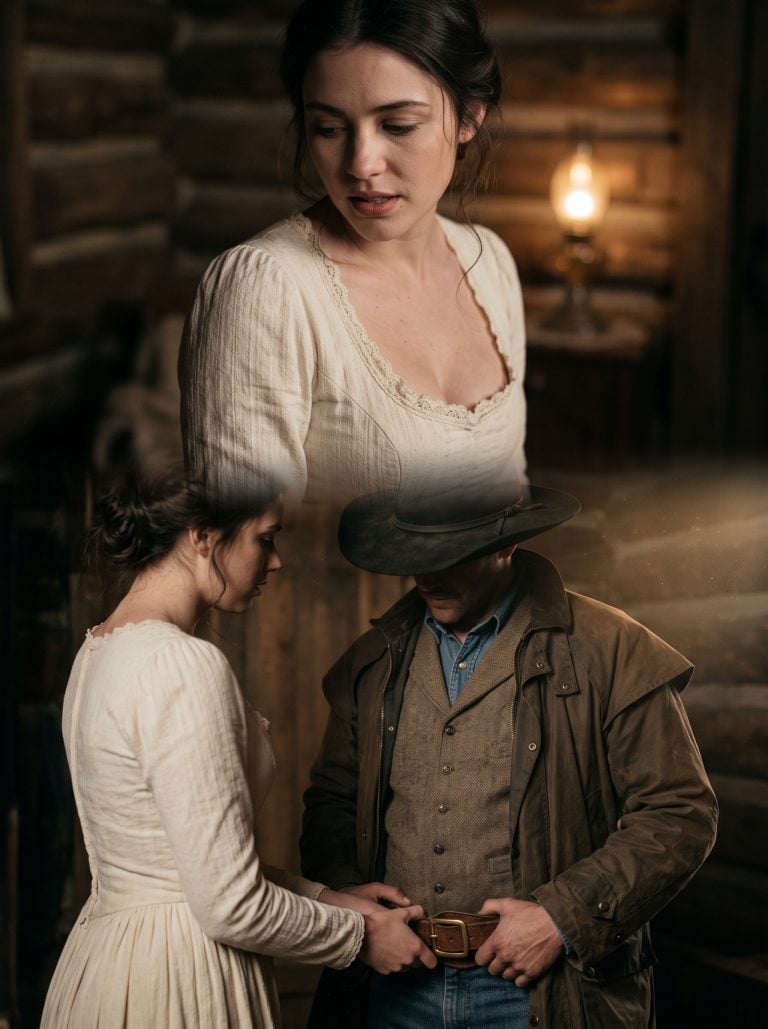
The mafia boss had ignored every beggar in New York—until a little girl looked at his ring and whispered, “My mom has one just like that.”

PART 1
Rain fell sideways over Manhattan, turning the alley behind West 39th Street into a black ribbon of oil, cigarette butts, and neon reflections.
Adrian Stone did not stop for beggars.
He had stepped over men bleeding from knife wounds. He had walked past women crying outside pawnshops. He had ignored junkies shivering under scaffolding and teenagers selling stolen watches beneath broken streetlights. In Adrian’s world, pity was a luxury that got people killed, and mercy was something men pretended to believe in before they begged for it.
So when a tiny hand grabbed the sleeve of his cashmere coat, he almost shoved it away without looking.
Almost.
The hand was too small.
Too cold.
Too filthy.
Adrian looked down and saw a girl no older than six in the rain. Her yellow puffer jacket was torn at the shoulder. Gray stuffing leaked from it like dirty snow. Her sneakers were too big, wrapped in duct tape, and her brown hair hung in wet ropes across her pale face.
Beside Adrian, Frank Martino moved fast.
“Back up, kid,” Frank growled, one scarred hand sliding under his jacket. “Go find a shelter.”
The girl didn’t even blink at him.
She stared only at Adrian’s right hand.
At the heavy gold signet ring on his pinky.
Adrian’s jaw tightened. “What do you want?”
The girl raised one dirt-caked finger and pointed at the ring.
“My mother has that,” she whispered.
The rain seemed to stop.
Adrian heard nothing for one long second. Not traffic. Not sirens. Not the buzzing pink neon sign flickering above the adult store across the street. Only those five impossible words.
My mother has that.
The ring was not something a child could recognize by accident. It was not a common piece of jewelry. It had been made fifteen years ago by a half-blind goldsmith in Naples, poured in a locked back room and carved with the crest of a two-headed hound.
Only two existed.
Adrian wore one.
The other had been given to Isabella Wright on a summer night in Brooklyn, when she laughed at him and said only a criminal would make an engagement ring look like a threat.
Isabella had been dead for six years.
Or that was what Adrian had believed.
He had seen her car go over the bridge. He had watched divers pull twisted metal from the dark water. He had received the report saying no body was recovered because the current had carried her out to sea.
He had buried his grief under blood, concrete, money, and fear.
Now a starving child stood in the rain and told him his dead woman’s ring still existed.
Adrian crouched slowly. Frank stiffened behind him.
“What did you say?” Adrian asked.
The girl looked at his face for the first time. Her eyes were hazel, pale and washed-out, but stubborn in a way that made his chest tighten.
“My mother has that,” she repeated, voice rasping like paper. “The man said if I showed you, you’d give money for the doctor.”
Adrian did not move.
“What man?”
The girl’s mouth closed.
The city returned all at once, loud and ugly around them. A horn screamed. A drunk laughed somewhere down the block. Rain slapped the pavement.
Adrian stood.
“Where is your mother?”
The girl hesitated, then looked toward the east, toward the part of the city men like Adrian owned but never visited unless somebody needed to disappear.
“Building Four,” she said. “Fifth floor.”
Frank swore under his breath. “Boss, this is a setup.”
Adrian knew it could be. He had enemies in every borough and more buried in Jersey than he cared to count. A child could be bait. A ring could be copied. A ghost could be a trap.
But Isabella’s name had already risen from the grave and wrapped itself around his throat.
“Bring the car,” Adrian said.
Frank stared at him. “Adrian—”
“Now.”
The Mercedes smelled of leather, cedar, and expensive silence. The girl sat pressed against the far door, muddy shoes on hand-stitched upholstery, her body trembling but her eyes fixed on the city outside. Adrian watched her profile as streetlights slid over her face.
Dark hair.
Sharp chin.
Hazel eyes.
No.
He killed the thought before it grew teeth.
“What’s your name?” he asked.
The girl did not answer.
Adrian leaned back, his thumb moving over the ridges of his ring. “Mine is Adrian.”
“I know,” she said.
His eyes narrowed. “Who told you?”
She stayed silent.
Frank drove without speaking. He knew better. But every few seconds his eyes jumped to the rearview mirror, watching Adrian like he expected the man to explode.
The city changed outside the tinted glass. Restaurants and hotel awnings gave way to shuttered storefronts, then warehouses, then towers of stained concrete rising over cracked sidewalks. The Mercedes rolled into a housing project where most of the streetlights were dead and the ones still working buzzed weakly above piles of trash.
“Stop there,” the girl said.
Building Four looked less like a place where people lived and more like a place where hope had been sentenced to die.
Adrian stepped out into the cold. The air smelled of urine, wet brick, boiled cabbage, and mold. The girl slid from the car and walked toward the entrance without looking back.
Frank came around the hood. “Let me clear it first.”
“No,” Adrian said.
“You don’t know what’s up there.”
Adrian looked at the little girl disappearing through the broken door.
“Yes,” he said quietly. “I do.”
The elevator was dead. They took the stairs. Every landing smelled worse than the last. Somewhere behind a thin apartment door, a baby screamed. Somewhere else, a man shouted, then something heavy hit a wall.
The girl climbed fast for someone so small.
On the fifth floor, she pushed open the fire door and led Adrian down a hallway where the carpet had worn away to splintered wood. She stopped at apartment 512.
The door had been kicked in before. More than once.
She pushed it open.
Adrian crossed the threshold and felt the past rise around him like smoke.
The apartment was one room. Freezing. A mattress lay on the floor beneath a window filmed with frost and grime. A hot plate sat on a milk crate. The air smelled of sickness, wet cloth, and metal.
Then he heard the cough.
Wet.
Deep.
Almost inhuman.
A woman shifted beneath gray blankets.
Adrian took one step forward.
The woman pulled the blanket down with a skeletal hand.
The world dropped away.
Isabella Wright looked like death had been eating her slowly and had almost finished the meal. Her cheekbones were sharp beneath translucent skin. Her lips were cracked. Her dark hair had thinned and gone gray at the roots.
But it was her.
And against her hollow collarbone, tied on a cheap black shoelace, hung the second gold ring.
The two-headed hound.
Her fever-bright eyes struggled to focus. When they landed on him, her cracked lips parted.
“Adrian,” she whispered.
Something inside him broke so violently he almost reached for his gun.
Anger came first because anger was easier than grief. She had been alive. Alive while he mourned her. Alive while he destroyed men looking for the traitor who had supposedly sold him out. Alive while he turned himself into the thing she used to beg him not to become.
“You,” he said, voice low and deadly. “You let me think you were dead.”
Isabella tried to speak, but the cough took her. Blood dotted her lips.
The little girl threw herself between them.
“Don’t touch her!” she hissed.
Adrian stared at the child, then at Isabella’s burning skin, the trembling hands, the wet rattle in her chest.
The anger vanished.
Panic replaced it.
He pulled out his phone and called Frank. “Fifth floor. Apartment 512. Bring the trauma kit.”
“Boss—”
“Now.”
Isabella’s eyes fluttered.
“Leo,” she breathed. “Run.”
Adrian froze.
Leo Bianchi had been a rival underboss. The man everyone said Isabella had been meeting the night she vanished. The man Adrian had killed three years ago with two bullets and no apology.
“I’m not Leo,” Adrian said. “Leo is dead.”
Isabella’s eyes opened just enough to find him.
“I know,” she whispered. “I saw it on the news.”
Before he could answer, Frank appeared in the doorway carrying a black medical bag. He took one look at Isabella and went pale.
He had been there the night she disappeared. He had driven the chase car. He had heard Adrian scream her name from the bridge.
“Jesus Christ,” Frank breathed.
“Not a word,” Adrian said. “Take the girl.”
The child backed away from him.
“I’ll walk,” she snapped.
Adrian slid his arms under Isabella and lifted her. She weighed almost nothing. The feeling of her bones through the blanket made his stomach turn.
He looked down at the girl.
“Stay close,” he said. “If you run, I won’t chase you. And she dies here.”
It was cruel.
But Adrian Stone had never learned how to be gentle.
The girl stayed close to his coat all the way down the stairs.
They took Isabella to a private underground clinic hidden beneath a laundromat in Queens, a place where gunshot wounds were stitched without police reports and men paid cash to keep secrets breathing.
Dr. Thomas Harris, a disgraced trauma surgeon with trembling hands and debts large enough to own him, worked on Isabella behind a plastic curtain while Adrian sat in a cracked chair and stared at the floor drain.
The girl sat across from him, knees tucked to her chest.
“What’s your name?” Adrian asked again.
She watched the curtain.
“Alice,” she said finally.
Adrian closed his eyes.
Alice.
Isabella’s mother’s name.
The doctor stepped out forty minutes later, his gloves bloody, face gray.
“She’s stable for now,” Harris said. “But, Adrian… it’s bad.”
Adrian stood.
“How bad?”
Harris swallowed. “Heavy metal poisoning. Severe. Chronic. Lead, maybe other compounds. Years of exposure. Her kidneys are failing. Her bones are contaminated. Her lungs are compromised. I can treat the pneumonia, but I can’t undo six years of poison.”
The word poison moved through Adrian like a blade.
Alice had climbed from her chair and stood at the curtain, staring at the shadow of her mother inside.
She did not cry.
That was what ruined him.
A child that young should cry. She should scream. She should ask adults to fix it.
Alice just stood there like someone who had already learned that adults did not fix anything.
Adrian turned to Frank.
“Prepare the estate.”
Frank’s eyes widened. “The Long Island house?”
“Medical wing. Hospital bed. Dialysis machine. Ventilator. Everything.”
“Adrian, if Caruso hears you brought her there—”
Adrian looked at him.
“If Vincent Caruso wants her,” he said softly, “he can come to my front door and ask. I’ll bury him under the driveway.”
PART 2
Adrian Stone’s Long Island estate sat behind iron gates, rolling lawns, and enough armed guards to make the place look like a private embassy for violence.
Alice stared at it through the car window like she had been driven to another planet.
The mansion was all limestone, glass, and old money bought with new blood. Fountains whispered in the dark. Security cameras watched from every corner. Men in black coats stood beneath the portico pretending not to stare at the rusted medical van behind Adrian’s Mercedes.
Isabella was unloaded on a stretcher.
Alice moved when her mother moved.
Not toward Adrian.
Never toward Adrian.
Just close enough to see the gurney disappear through the side entrance.
Inside, the foyer smelled of cedar polish and lilies. Marble floors reflected the chandelier above. Alice’s duct-taped sneakers left dirty half-moons on the shine.
Adrian watched the staff watching her.
Then he said, “Everybody out.”
No one argued.
Within minutes, the grand house emptied until only Frank, Dr. Harris, the old housekeeper Iris, and the guards remained.
Adrian led Alice into the kitchen.
It was enormous, stainless steel and white stone, with copper pans hanging above an island bigger than the room where she had been living. Alice climbed onto a stool but kept one foot hooked around the chair leg, ready to run.
Adrian opened the refrigerator and stared at food prepared by a chef he rarely bothered to thank. Truffle pasta. Roasted salmon. Glass containers labeled with dates. Organic berries. Imported cheeses.
He ignored all of it.
He took out eggs, butter, and bread.
Alice watched every move.
The butter hissed in the pan. Her nostrils flared. Her stomach growled so loudly she pressed both hands over it, humiliated.
Adrian cracked the eggs and scrambled them badly. He burned one edge of the toast. He put the plate in front of her and slid over a fork.
“Eat.”
Alice looked at him.
“What do I owe?”
The question hit harder than any insult.
“Nothing.”
Her eyes narrowed. “Nothing is free.”
Adrian leaned against the counter. “In this house, tonight, it is.”
Hunger won.
She grabbed the eggs with her fingers and shoved them into her mouth, barely breathing between bites until the plate was empty.
Then he asked, “Where were you before the apartment?”
Alice licked butter from her thumb. “The loud place.”
“The place with machines,” she said flatly. “We weren’t supposed to go outside. The water tasted like pennies. The dust was yellow.”
Adrian’s hand tightened around the granite.
Pennies. Yellow dust. Machines. He knew the place.
A shuttered munitions plant in Jersey where contamination reports had vanished years ago. Lead. Sulfur. Chemical residue buried under concrete and corruption.
“Who kept you there?” he asked.
Alice went very still.
Adrian softened his voice as much as he could. “Alice.”
She looked at the empty plate.
“The man with melted skin.”
Frank, standing near the doorway, muttered, “Raphael.”
Adrian closed his eyes.
Raphael Moretti.
Vincent Caruso’s cleaner.
A man with scar tissue climbing the left side of his neck from a botched arson job ten years earlier. He did not leave bullet holes. He did not make public messes. He made people vanish and turned their deaths into rumors.
Adrian understood then.
Caruso had not ordered Isabella shot.
That would have been too quick. Too traceable. Too likely to send Adrian into a war before Caruso was ready.
He had locked her in poison.
A pregnant woman.
His woman.
His child.
Adrian turned away before Alice could see his face.
“Iris,” he called.
The housekeeper entered, gray hair pulled back, posture rigid.
“Wash her,” Adrian said. “Burn the clothes. Feed her again, lightly. Then put her in the blue guest room near the medical wing.”
Alice jumped off the stool. “No.”
Iris stopped.
Adrian looked down. “No?”
“I stay with Mama.”
“Your mother is with the doctor.”
“I stay with Mama.”
“She is very sick.”
“I know.”
Adrian stared at her.
The child had his stubbornness. That annoyed him more than it should have.
“You can see her after Iris gets you clean.”
Alice’s lip trembled, but she fought it like crying was a crime.
“The man said if I left the box, men with guns would shoot us.”
Adrian knelt slowly so his eyes were level with hers.
“Alice,” he said. “There are men with guns here too.”
She froze.
“But they belong to me.”
“That doesn’t make it better.”
“No,” Adrian said after a moment. “It doesn’t.”
For the first time, something like surprise crossed her face.
He did not lie to her.
That was the first brick in a bridge neither of them knew they were building.
Iris took Alice upstairs. Adrian went down.
The medical wing had once been a wine cellar. Now it was white tile, steel cabinets, monitors, oxygen tanks, and a hospital bed under bright lights. Isabella lay in the center of it, hooked to tubes, her face nearly transparent.
Dr. Harris adjusted an IV bag. “She woke once.”
Isabella’s eyes opened before he touched her.
“You still scowl,” she whispered. “Even after six years.”
Adrian swallowed. “Save your breath.”
She smiled weakly. “For what?”
He gripped the railing until his knuckles whitened.
“Why didn’t you come to me?”
Isabella’s eyes filled. “It was Caruso.”
“He found out I was pregnant,” she whispered. “He said your bloodline was becoming too powerful. He would kill you and make me watch him kill her.”
Adrian’s chest constricted.
“I disappeared to keep you alive.”
He had no answer.
“They kept us in that factory,” Isabella said. “Raphael brought food. Water. Sometimes medicine if he wanted me alive enough to suffer. I knew the dust was killing me. I tried to keep Alice away from it. I drank less so she could have the bottled water. I ate what smelled wrong so she wouldn’t.”
Adrian turned his face away.
“Look at me,” Isabella whispered.
He did.
“She’s yours.”
His throat closed.
“I know.”
“No. You don’t.” Isabella’s eyes sharpened through the pain. “Not just blood. She is yours now. Not your empire. Not your revenge. Her.”
Adrian said nothing.
“Promise me you won’t make her into you.”
He wanted to promise. For Isabella, he wanted to become any kind of man she needed in that moment.
But Adrian had built a life on ugly truths.
“I don’t know how to be anything else.”
Isabella’s eyes filled again, but this time she smiled.
“Then learn.”
The monitor stuttered.
Harris stepped forward. “Adrian—”
Isabella squeezed Adrian’s fingers with almost no strength.
“She likes stories,” she breathed. “But not princesses. She says princesses wait too much.”
Adrian let out something that almost became a laugh and almost became a sob.
“What does she like?”
“Dogs,” Isabella whispered. “And pancakes. And the color blue.”
Her eyes drifted toward the ceiling.
“Tell her I didn’t leave her.”
Adrian leaned closer. “Isabella.”
“Tell her,” she said, breath breaking, “I sent her home.”
Then the monitor screamed.
A single flat line.
Dr. Harris moved. Frank cursed from the corner. Adrian did not move at all.
He kept his hand over Isabella’s until her skin began to cool.
For ten seconds, he listened to the sound.
Then he stepped back.
“Put her somewhere cold,” he said.
His voice had no life in it.
Frank followed him into the hall. “Adrian.”
Adrian walked past him.
“Adrian, listen to me.”
Adrian did not stop.
He went to the armory.
The room smelled of gun oil and metal. Rifles lined the walls. Ammunition sat in labeled drawers. Adrian pulled a black duffel from beneath the steel table and began loading magazines.
One.
Two.
Three.
Frank came in behind him.
“You hit Caruso tonight, you die.”
Adrian slammed a magazine into a rifle. “Get the men.”
“No.”
Adrian turned slowly.
Frank had said no to him only once before, fifteen years ago, and Adrian had broken his nose for it.
“Say that again,” Adrian said.
Frank stood his ground. “No.”
The silence sharpened.
“Caruso has fifty men around that Staten Island compound,” Frank said. “You go there with grief in your eyes and guns in your hands, you don’t come back. And when you die, who protects the kid upstairs?”
Adrian’s fingers tightened around the rifle.
Frank stepped closer. “You want Raphael? You’ll get him. You want Caruso? I’ll help you bury him myself. But not like this. Not stupid. Not tonight.”
Adrian’s rage shook through him.
Then a small voice came from the doorway.
“Are you going to die?”
Alice stood in the hall wearing an oversized blue sweater, her damp hair combed flat, her face scrubbed clean for the first time in years.
She looked smaller without the dirt.
Younger.
More breakable.
Adrian lowered the rifle.
Alice looked at the weapons on the table, then back at him.
“The man with melted skin said if we left, men would shoot us.”
Adrian set the rifle down.
The sound echoed like a door closing.
He walked to Alice and crouched in front of her.
“No,” he said. “I am not going to die tonight.”
“Are you going to shoot him?”
Adrian could have lied.
He didn’t.
“Yes,” he said. “But not tonight.”
Alice studied him.
“Then what happens tonight?”
Adrian looked at Frank. Then at the guns. Then at the child Isabella had kept alive by letting herself die.
“Tonight,” he said, “you sleep in a warm bed.”
PART 3
Adrian did not sleep.
Neither did Alice.
At two in the morning, Iris found the girl sitting cross-legged outside the medical wing with a blanket around her shoulders and a plastic cup of water untouched beside her.
“She won’t move,” Iris told Adrian.
Adrian came down the hall in shirtsleeves, the violence of the armory washed from his hands but not from his eyes.
Alice looked up.
“Is Mama awake?”
Adrian stopped.
No war, no commission meeting, no federal indictment, no gun at his throat had ever frightened him like that question.
He sat on the floor across from her because he did not know what else to do.
“No,” he said.
Alice stared at him.
“She’s sleeping?”
Adrian looked down at his hands.
“No.”
The hallway seemed too bright. Too quiet.
Alice did not cry at first. She watched his face, searching for the trick, the bargain, the hidden cost. When she found none, something in her folded.
Her mouth opened, but no sound came out.
Adrian reached toward her, then stopped.
Alice crawled into his lap on her own.
He froze.
Her body was so light. Her grief came without noise, just shaking, breathless and endless. Adrian held her awkwardly, one hand on her back, the other hovering before finally settling over her hair.
“She told me to tell you something,” he said.
Alice’s fingers clutched his shirt.
“She said she didn’t leave you.”
Alice shook harder.
“She said she sent you home.”
That broke the sound loose.
Alice cried like a child for the first time since Adrian had met her.
And Adrian Stone, who had made grown men weep in basements, sat on a marble floor until dawn while his daughter cried into his chest.
By morning, the house had changed.
Not visibly. The lawns were still perfect. The guards still patrolled. The kitchen still gleamed.
But everybody inside it knew something had shifted.
Adrian did not go to Staten Island.
He went to war without firing a shot.
First, he moved Alice into the blue room near the garden. Iris filled the closet with clothes, none of which Alice trusted at first. She slept under the bed the first two nights, curled like an animal in hiding, until Adrian stopped telling her to get out and simply placed a blanket there.
On the third night, she climbed into the bed.
On the fourth, she asked for pancakes.
Adrian burned the first batch.
Alice stared at the black edges. “Do rich people eat them like this?”
“No,” Adrian said.
“Then why are they like that?”
“Because I’m bad at pancakes.”
She considered that. “Mama was bad too.”
Adrian slid the plate toward her. “Then it runs in the family.”
Alice looked at him sharply, suspicious of the word family, but she ate two pancakes anyway.
While Alice learned what warmth felt like, Adrian dismantled Vincent Caruso’s world piece by piece.
He did not storm the compound. He did not spray bullets across marble floors. He did not give Caruso the dramatic war he expected.
He made phone calls.
He bought debts.
He flipped captains.
He sent photographs of the Jersey munitions plant to men who cared more about leverage than loyalty. He found city inspectors Caruso had paid off and paid them more to remember their conscience. He located Raphael’s storage unit in Newark and emptied it before Raphael knew it had been found.
Inside were records.
Payments.
Medical logs.
Photographs of Isabella in the factory, taken like proof of life and proof of control.
And one handwritten note from Caruso to Raphael.
Keep the woman alive until the child is born. After that, decide what is useful.
Frank read the note and crossed himself.
Adrian said nothing.
His silence scared Frank more than rage ever had.
The final move came two weeks after Isabella’s funeral.
Adrian buried her at a small cemetery near the water in Brooklyn, beneath her real name, not the false one Caruso had forced onto her life. Only four people stood at the grave: Adrian, Alice, Iris, and Frank.
Alice wore a navy coat and held the gold ring that had hung from her mother’s neck.
Adrian had tried to take it once, to keep it safe.
Alice had looked at him and said, “No.”
He had not asked again.
At the grave, she placed the ring on the casket.
Then she changed her mind, snatched it back, and pressed it to her chest.
Adrian pretended not to see.
That night, Caruso summoned the commission.
Old men came in dark coats to a private club on Staten Island, a place with velvet booths, red wine, and no windows. They expected Adrian to arrive angry. They expected threats. They expected blood.
He came alone.
No rifle.
No visible gun.
Just a black suit, tired eyes, and a folder under one arm.
Vincent Caruso sat at the head of the table, white-haired and thin-lipped, with Raphael standing behind him. The left side of Raphael’s neck shone pink and melted under the chandelier light.
Caruso smiled.
“Adrian,” he said. “We hear you’ve had a difficult month.”
Adrian looked at Raphael first.
Raphael’s smile twitched.
Then Adrian looked at Caruso.
“You locked Isabella Wright in a toxic factory for six years.”
The room went still.
Caruso sighed like a disappointed father. “Careful.”
“You poisoned her. You poisoned my child.”
Several men shifted in their seats.
Caruso’s eyes hardened. “You have no proof.”
Adrian placed the folder on the table.
“No,” he said. “I have copies.”
Caruso’s smile faded.
Adrian opened the folder. Photographs slid across the polished wood. Payment records. Inspection reports. Raphael’s signature. Caruso’s note.
One by one, the old men at the table looked down.
Then they looked at Caruso.
Caruso understood before anyone spoke. The commission did not care about Isabella. They did not care about a child. They cared that Caruso had hidden a living bargaining chip from them for six years. They cared that he had poisoned a blood heir without permission. They cared that he had been sloppy enough to leave evidence.
Adrian leaned forward.
“I sent copies to every captain you underpaid, every federal agent you bought, and every widow whose husband disappeared after speaking your name. At sunrise, they become public unless I make a call.”
Caruso stood. “You think paperwork saves you?”
“No,” Adrian said. “But greed does.”
The door behind Caruso opened.
Two of Caruso’s own men stepped inside.
Raphael reached for his gun.
Frank appeared behind him and pressed a pistol to the base of his skull.
“Don’t,” Frank said.
Raphael froze.
Caruso looked around the room and saw what Adrian had spent two weeks building.
Not an attack.
A collapse.
His captains had sold him. His allies had stepped back. His secrets had become currency.
Adrian stood.
“I wanted to kill you in front of everybody,” he said. “I wanted Alice to know the man who hurt her mother died afraid.”
Caruso’s face twisted. “Then do it.”
Adrian stared at him for a long time.
Then he shook his head.
“No.”
Even Frank looked surprised.
Adrian’s voice dropped. “That would make her first inheritance from me a body count.”
Caruso laughed once, sharp and bitter. “You’ve gone soft.”
“No,” Adrian said. “I’ve become patient.”
By dawn, Vincent Caruso was gone from the city in handcuffs delivered through channels he had once controlled. His financial ledgers reached federal investigators. His captains turned on each other. Raphael Moretti disappeared into a prison intake system with enemies on both sides of the bars.
Adrian did not pull the trigger.
For Alice, that mattered.
Not right away. At six years old, she did not understand indictments, commissions, leverage, or why men who once bowed to Adrian now avoided saying his name.
But she understood he came home.
Every night.
Sometimes late. Sometimes silent. Sometimes with blood on his cuff that was not his.
But he came home.
And slowly, the mansion stopped feeling like a cage.
Spring arrived in Long Island with white flowers along the garden wall. Alice gained weight. Her hair grew shiny. She learned to read with Iris at the kitchen island and learned to make pancakes better than Adrian by April.
One morning, Adrian found her outside near the fountain, crouched beside a muddy stray dog that had slipped through the hedges.
“Don’t touch that,” he said. “It could bite.”
Alice looked up. “So could I.”
Adrian stared at her.
Then, despite himself, he laughed.
It startled both of them.
Alice smiled a little, then looked back at the dog. “Can we keep him?”
“No.”
She nodded. “Okay.”
That was suspicious.
By dinner, the dog was asleep in her room.
Adrian stood in the doorway and looked at the animal, then at Alice pretending to read.
“I said no.”
“You also said everything in this house belongs to you,” Alice said. “So now he’s your dog.”
Adrian looked at the ceiling.
“What’s his name?”
“Hound.”
Of course it was.
That night, after Alice fell asleep with Hound curled at her feet, Adrian walked into his study and opened the safe.
Inside lay his gold ring.
The two-headed hound caught the lamplight.
He had worn it for fifteen years as a symbol of power. Men feared it. Men kissed it. Men died after seeing it.
Now he saw only Isabella’s hand closing around its twin.
Alice appeared at the doorway in her pajamas.
“You’re not supposed to be awake,” he said.
“Neither are you.”
He closed the safe halfway. “Bad dream?”
She nodded.
He waited.
“In the dream, we were still in the box,” she said. “Mama told me to run, but I couldn’t find the door.”
Adrian’s chest tightened.
“You’re not there anymore.”
“I know.” Alice looked at the ring. “But sometimes my head doesn’t know.”
Adrian crossed the room and knelt in front of her.
“Mine doesn’t either.”
She studied him.
“Do you miss her?”
Every day, he thought.
Every hour.
“Yes,” he said.
“Do you miss her more because of me?”
Adrian frowned. “What?”
Alice’s eyes dropped. “Because I look like her.”
Adrian felt something inside him crack open, not violently this time, but quietly, like ice beginning to melt.
He reached for her slowly. She allowed it.
“You do look like her,” he said. “But you are not a wound, Alice.”
She blinked.
“You are what she saved.”
Alice’s mouth trembled.
Then she stepped into his arms.
Adrian held her better now. Not perfectly. But better.
Years later, people would tell different stories about why Adrian Stone changed.
Some said prison scared him. Others said the commission weakened after Caruso fell and Adrian simply became more strategic. A few whispered that the ghost of Isabella Wright haunted the Long Island estate and dragged the devil out of him piece by piece.
None of them knew about the little girl in the yellow jacket.
They did not know that the most feared man in New York learned how to braid hair from a YouTube video at midnight.
They did not know he burned pancakes six Sundays in a row before getting them right.
They did not know he stopped wearing his ring because his daughter once asked if power always had to be heavy.
And they did not know that every November, Adrian took Alice to a quiet Brooklyn cemetery, where she placed blue flowers on her mother’s grave and told Isabella everything.
About school.
About Hound.
About Iris’s terrible singing.
About Frank teaching her poker and then pretending not to lose.
About Adrian trying, failing, and trying again.
On Alice’s seventh birthday, Adrian brought her to the garden behind the estate. The fountain had been turned off for winter, and the air smelled like salt from the Sound.
He handed her a small velvet box.
Alice opened it carefully.
Inside was not a ring.
It was a necklace with a small gold charm shaped like a two-headed hound.
Alice touched it with one finger. “Is this Mama’s?”
“No,” Adrian said. “Your mother’s ring is yours when you’re ready. This one is new.”
“Why two heads?”
Adrian looked toward the water.
“One looks back,” he said. “So it remembers.”
Alice waited.
“And one looks forward,” he continued. “So it doesn’t get trapped there.”
Alice held the charm in her palm.
Then she looked up at him. “Are we good people now?”
Adrian could have lied.
He still had enemies. Still had sins. Still had nights when the dark inside him felt familiar enough to call home.
But he also had a child waiting at the breakfast table.
A child who knew the truth and still reached for his hand.
“I don’t know,” he said. “But we’re trying.”
Alice nodded like that answer made sense.
Then she slipped her small hand into his.
For once, Adrian Stone did not feel the weight of an empire.
He felt the warmth of a child who had crossed through poison, hunger, fear, and death, and still somehow believed tomorrow could be different.
Behind them, the mansion glowed with soft yellow light.
Ahead of them, the garden path curved toward the sea.
And for the first time in his life, Adrian did not look back at the darkness and mistake it for home.
THE END