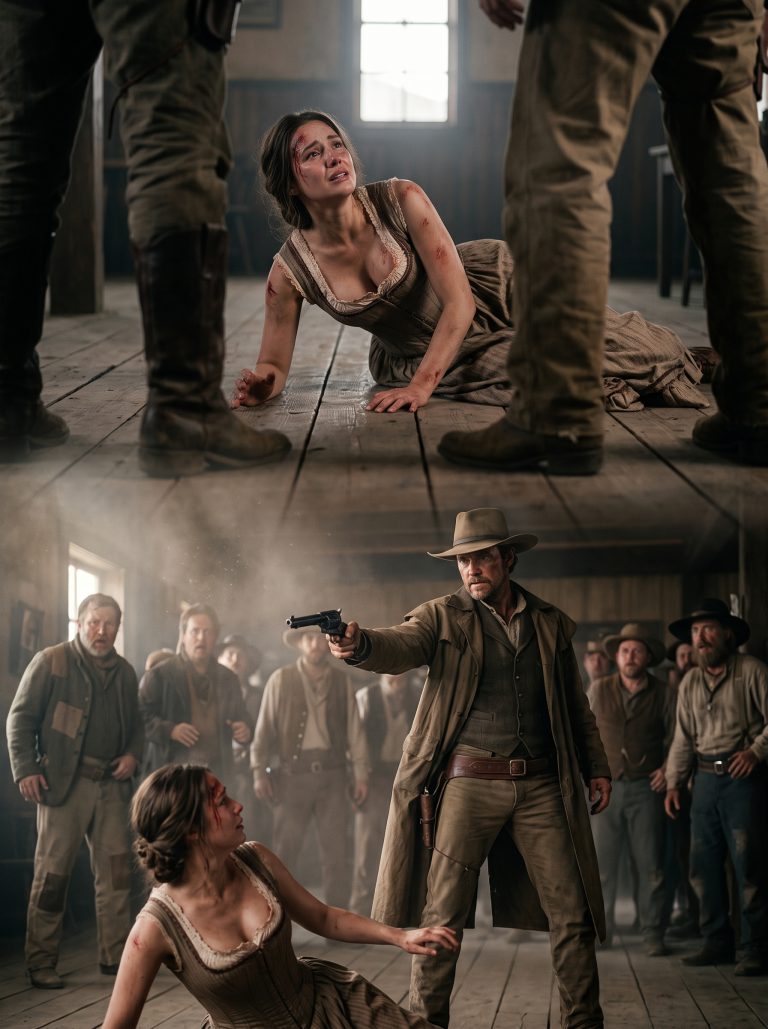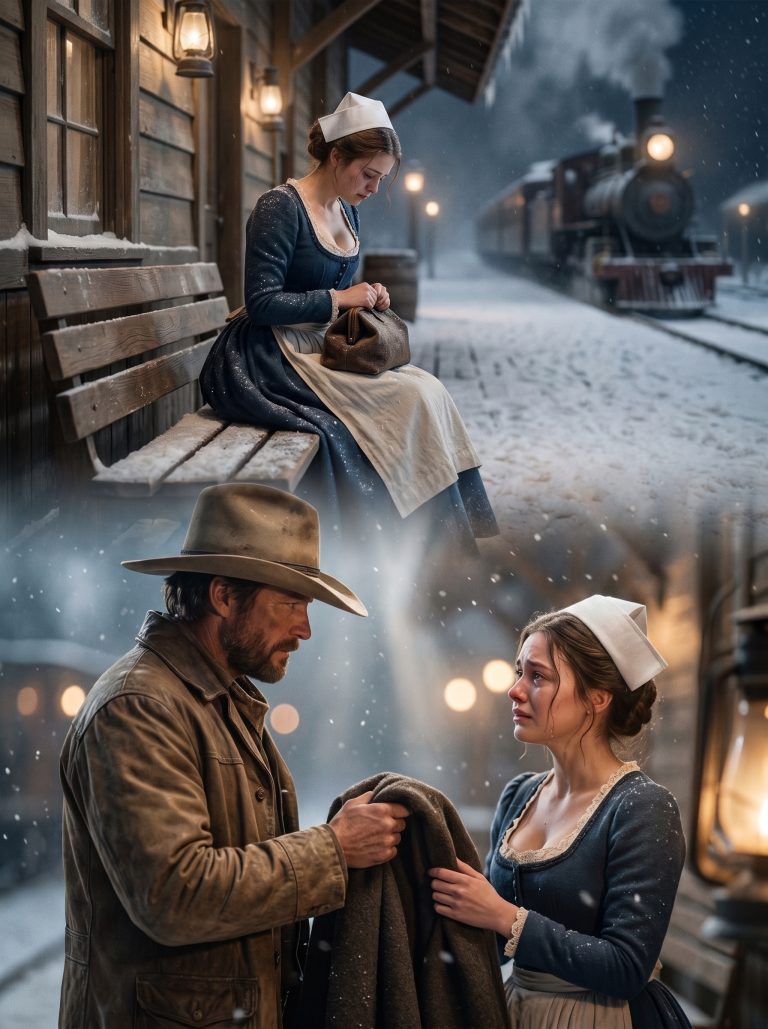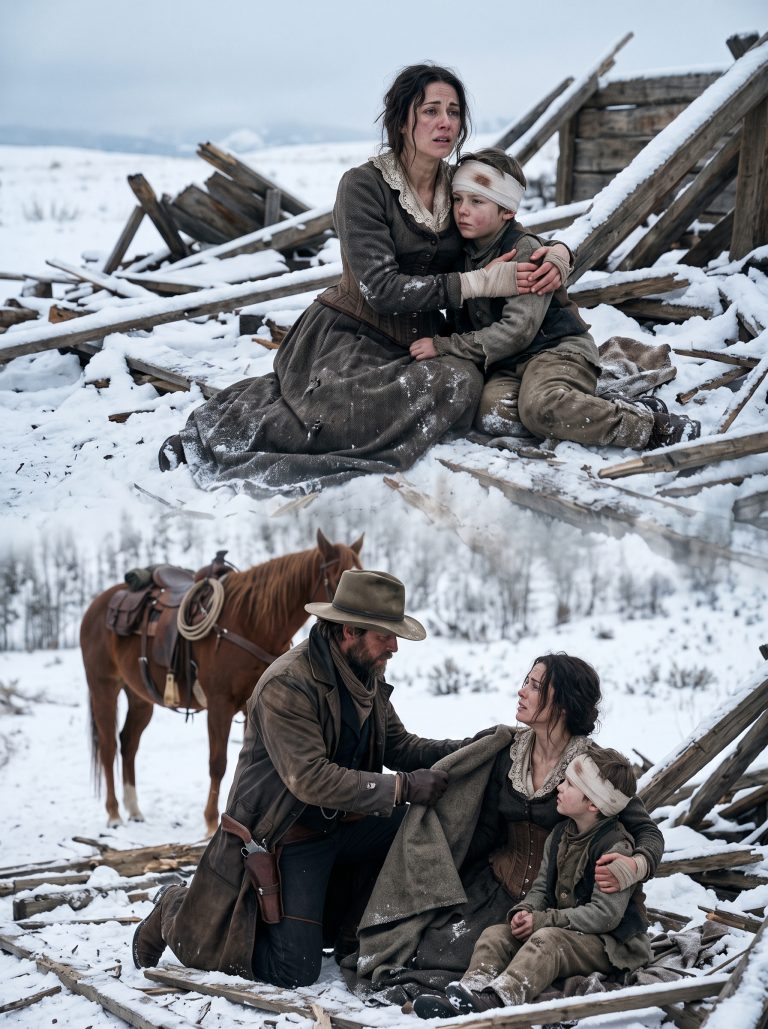
“Take the Family,” the Outlaw Boss Ordered — Seconds Later, a 12-Year-Old Sharpshooter Changed Everything

Part 1
The Hale place sat on a rise of Kansas grassland that turned the color of old brass every evening, and Josephine Hale had learned to love that hour better than any other, because it was the only time her stepfather’s shoulders came down from around his ears.
“Nice and steady,” Thomas Reeves said, standing behind her with his hand hovering an inch from the rifle stock, not touching it. “You’re anticipating the kick again.”
“I am not.”
“You are. Breathe out, then squeeze. Don’t decide when it fires. Let it decide.”
Jo slowly released her breath and the rifle cracked, and forty yards away, a tin can spun into the grass. Her younger brother Caleb whooped from the fence rail where he was supposed to be mending twine and clearly wasn’t.
“Beginner’s luck,” Thomas said, but he was smiling, and Jo counted that smile the way she counted good weather — rare enough to remember.
Three years now since her mother Elizabeth had married him and moved her children out of the boarding house in Independence. Thomas had walked into their small, unsteady family like a man walking into a room built for him, and if Jo still flinched sometimes at how easily he handled a gun, or how his eyes went flat and distant whenever a rider approached the property, she told herself that was just a husband being careful with what he’d built.
He had built plenty. A house with real glass windows. A barn. A herd that was going to be a real herd once the bull came up from the Hendricks place. He said the word someday more than any man Jo had ever known, and he said it like he’d earned the right to it.
The rider came up the north road on a Tuesday, hat pushed back, saddlebags heavy with surveying tools. He introduced himself as Daniel Marsh, said he worked for a railroad company scouting a line through the county, and asked, very politely, if he might look over their acreage.
“Provided you’re honest about what you find,” Elizabeth said, handing him a cup of coffee she hadn’t been asked to pour.
“I’m always honest, ma’am. It’s a character flaw.”
Jo didn’t trust him for exactly that reason — men who announced their honesty were, in her experience, laying groundwork. But he was easy with Caleb, patient when the boy asked him fifty questions about the transit and the chain and the little brass compass, and by supper Elizabeth had invited him to stay the night rather than ride seven miles back to town in the dark.
It was Thomas who went quiet.
Jo noticed it the way she noticed weather changing — a pressure drop before the storm shows itself. He asked Marsh where he’d learned surveying. Marsh said he’d worked as a topographer for the Union Army during the war, a story with dates and places that fit together too neatly, like a fence built in one afternoon by a man in a hurry.
“You ever work Missouri way?” Thomas asked, very casual, refilling his coffee.
“Here and there.”
“Ozark country?”
“Once or twice.” Marsh held his eyes for one beat too long. “Why, you know it?”
“Used to,” Thomas said, and didn’t say another word for the rest of supper.
That night Jo couldn’t sleep. She heard her mother and stepfather’s voices low through the wall — not arguing, exactly, but Elizabeth’s voice had the particular flatness she used when she already suspected an answer and was asking the question anyway.
“You know that man.”
“I don’t know him.”
“Thomas.”
“I said I don’t.”
“Then why are your hands shaking?”
Silence. Then Thomas, so quiet Jo almost missed it: “Because I know men who look like him. And men like that don’t ride alone.”
Jo lay in the dark turning that sentence over like a stone with something written on the underside she couldn’t quite read.
She was still awake near dawn when she heard the horses — not one, but many, coming slow and unhurried up the north road, the way men ride when they already know nobody’s going anywhere.
Through the window she counted five riders in the grey light, and at the head of them, a lean man in a black coat who sat his horse like he’d been sitting horses since before there were roads to ride them on. He stopped at the gate and looked up at the house for a long moment, patient as weather, and then he took off his hat and held it against his chest like a man arriving at a funeral he’d personally arranged.
“Silas,” he called, in a voice made for church. “It’s Amos. Come on out now. We’ve come an awful long way to see you.”
Jo’s stepfather’s name had never once been Thomas.