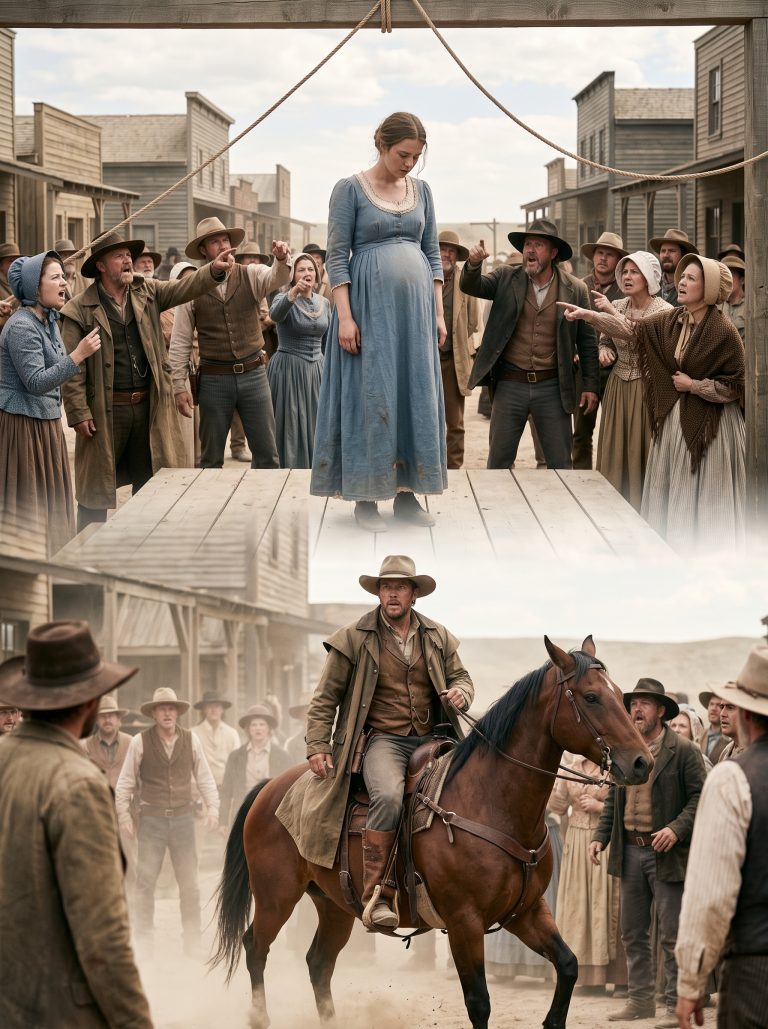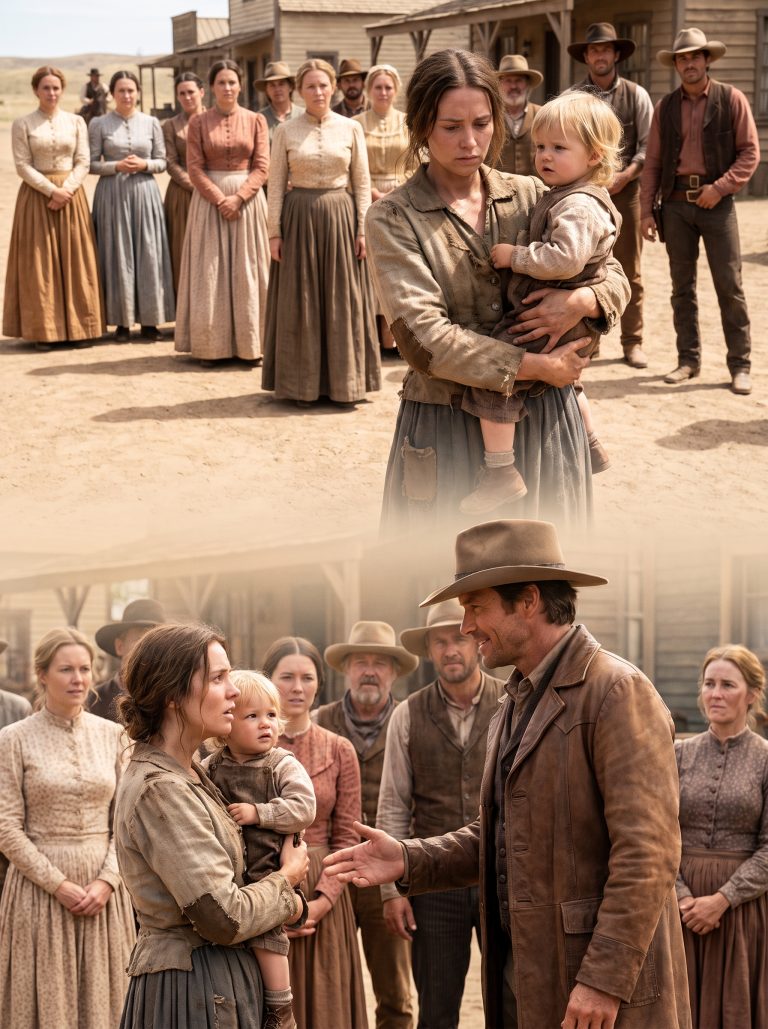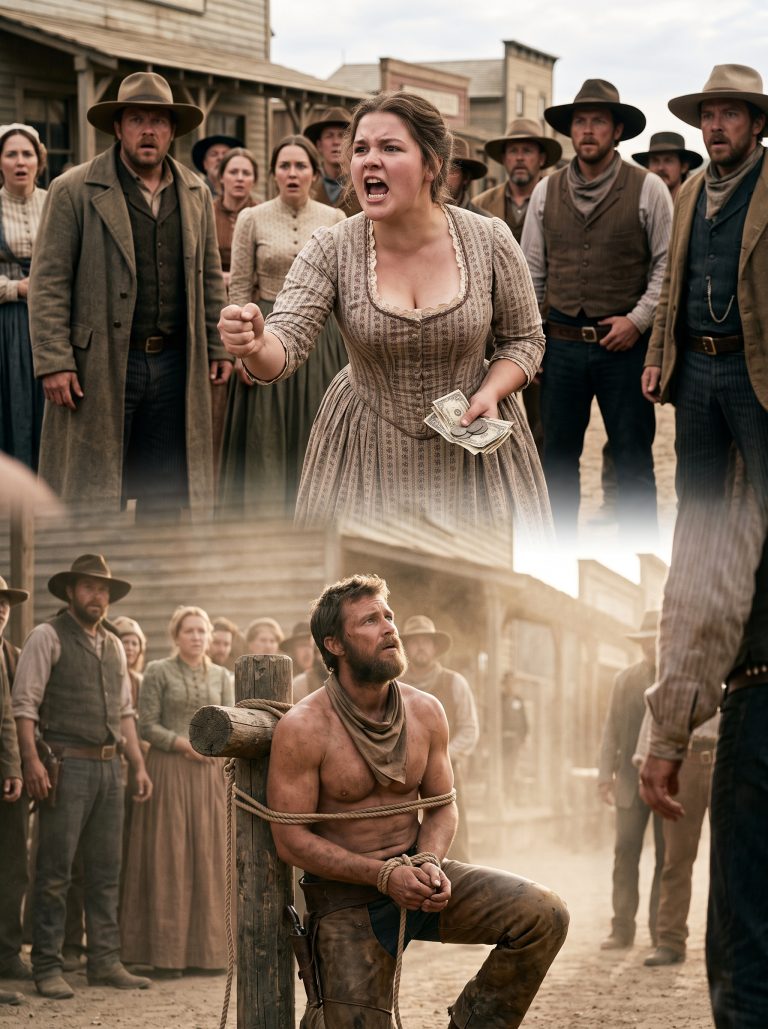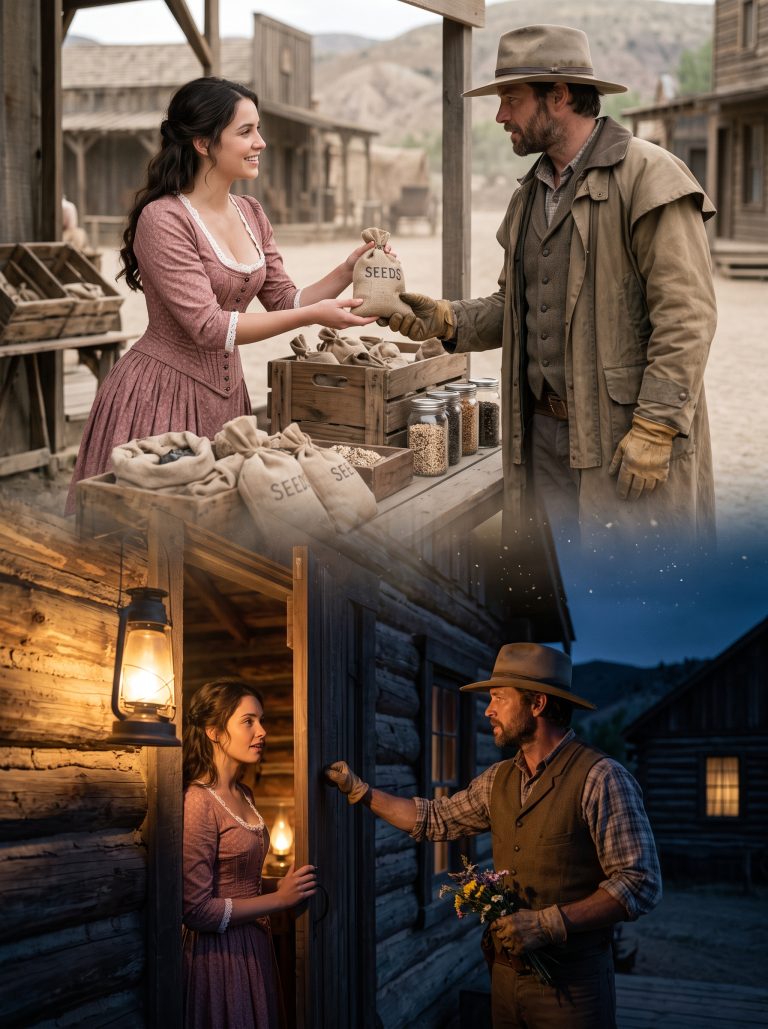
Kicked out, she vanished into an abandoned copper mine—while her uncle quietly drained her entire inheritance.

PART 1
Cora Whitfield had been living inside Blackspur Mountain for eleven days before she understood that silence could have a texture.
It was not the silence of a locked room, waiting for footsteps. It was thicker than that, older, pressed down by a hundred feet of stone. On the twelfth night, she woke to the sound of something that was not silence at all — a scrape of boots on gravel, far off, near the collapsed mouth of the drift she now called home.
She did not move. She did not breathe.
Six months earlier, she had owned nothing but a name nobody in Millbrook cared to use.
Her uncle, Silas Whitfield, had taken her in at eleven, the same week diphtheria emptied her parents’ house and left a hundred and eighty dollars sitting in a bank envelope meant for her future. The sheriff carried both the girl and the envelope to Silas’s door. Only the girl stayed in plain sight; the money went straight into a desk drawer that never opened for her again.
For seven years she rose before the sun, hauled water, scrubbed floors, and answered to nothing warmer than “girl.” Silas rarely said her name. It cost him nothing to forget it.
Then he married Prudence, a woman with a smile like a closed fist, who took one look at her new husband’s niece — too tall, too quiet, wearing her dead mother’s face like a grudge — and decided the household had no room for a ghost that walked.
The morning it ended, Prudence ordered Cora to boil a set of curtains that still carried her mother’s smell. Cora said no. It was the first no she had spoken since she arrived.
“Then go,” Silas told her, standing half in the doorway as always, never fully anywhere a decision was required.
She asked for her mother’s coat. He told her everything under his roof belonged to him. Prudence stood behind him wearing the dead woman’s apron, and Cora understood there was nothing left in that house that had not already been claimed.
She took only a battered copper kettle, the one object too worthless for Silas to want.
Millbrook lay downhill, full of people who would believe whatever story Silas gave them before they believed her silence. So Cora walked the other way, up the switchback road toward Blackspur, where the Ironclad Mineral Company had cut tunnels a dozen years before and abandoned them when the lower shaft flooded.
The headframe leaned like something exhausted. The stamp mill was a skeleton of gray timber. Drift Four opened in the rock face like a mouth that had stopped asking questions.
She walked in because a hole in a mountain was still more shelter than Silas had ever offered.
Eighty feet inside, the tunnel widened into a stope the size of a small barn, cool and constant, holding steady at some temperature that belonged only to the mountain. She struck a match. For one breath, malachite and azurite lit the walls in green fire, and on a shelf of waste rock she found a carved bone button, initials R.T. scratched into its face.
Someone had rested here before her. Someone had left proof of it.
She set the button back exactly where she’d found it and let the dark return.
That first night she cried without an audience for the first time since her parents died, and in the morning she began to build — a door from salvaged planks, a hearth beneath a fissure that breathed smoke up into the mountain’s own lungs, a shelf wedged into cracked stone.
Which brought her to the twelfth night, and the sound outside her door that was not silence.
She reached for the skinning knife she kept beside the sleeping platform and crossed to the crack of daylight at the second chamber, where a thin seam of dusk still showed above the rising snowline.
A figure stood on the mine road below, wrapped in a dark coat, utterly still.
Not passing through. Not lost.
Watching the mountain the way a man watches something he intends to come back for.
Then the light narrowed to nothing, and the figure was gone, and Cora Whitfield sat in the dark with her knife across her knees, certain of exactly one thing: whatever safety she had built for herself here had just been noticed by someone who did not know her name — and was not going to ask for it before he came to take it.
PART 2
The man in the dark coat did not come back that winter. Cora told herself it meant nothing and kept building anyway, because building was the only argument she trusted.
She learned to break creek ice at midnight with her mother’s kettle and a mining pick, learned what it cost her hands, and learned that the cost was proof she was still alive to pay it. She found a ruined crucible furnace in the old assay office, rebuilt it stone by stone, and taught herself to smelt the green copper veined through her own walls. The first four attempts gave her slag and, once, a burn that scarred her left forearm white from wrist to elbow. The fifth attempt gave her a bead of orange metal no bigger than a marble, and she laughed out loud in a mine that had never once heard her laugh.
By spring she had a garden, a trade in copper buttons and hooks, and a five-mile walk to a ranch where a sharp-eyed woman named Margie Doss stopped her at the gate one morning and nodded at the dented kettle in her basket.
“I know that pot,” Margie said. “Your mother stewed plums in it every August. I’d know it anywhere.”
Over bread cooling on Margie’s table, Cora learned what her silence had cost her without her permission. Silas had told Millbrook she’d run off to Denver. Then, months later, that she’d died there of fever. He had filed the papers himself, settled his dead brother’s estate, and collected the hundred and eighty dollars that should have followed his niece into adulthood.
He had not simply thrown her away.
He had buried her on paper so he could dig up what was left of her inheritance.
Cora sat with both palms flat on Margie’s table until her fingers went bloodless.
“What will you do?” Margie asked.
Cora looked toward the mountain that had kept her alive when her own family would not.
“I don’t know yet,” she said. “But he’s going to learn my name said out loud one more time than he ever bothered to.”
She was still turning that promise over three days later when three knocks — deep, deliberate, felt through stone rather than heard — landed on her plank door, and a stranger’s voice on the other side asked whether there was gold in her mountain, in a tone that made clear he already suspected the answer was something far more valuable than gold.
PART 3
“No gold,” Cora said through the door, knife low against her thigh. “Copper.”
“That’s the only answer that would’ve made me open it,” the voice answered.
The man who stepped inside when she finally did open it was old, white-bearded, with a rock hammer worn smooth on his belt and the unhurried patience of someone who had spent a lifetime listening to stone. Ezra Coldwell had seen smoke rising from a fissure on the mountainside and followed his curiosity uphill, and curiosity, Cora would learn, was not the same animal as the calculation she’d feared. Curiosity wanted to understand. Calculation wanted to take.
He stood in the doorway of the first chamber and turned slowly, taking in the hearth, the shelves, the copper hooks catching firelight, the way daylight fell soft through a crack in the ceiling onto a chamber no company had thought worth keeping.
“How long have you been up here?” he asked, setting his hammer down carefully against the wall, as though even that small motion required her permission.
“Going on a year. Alone.”
“Alone,” he repeated, like he was testing the weight of the word against what he was seeing. “You built all this alone.”
He didn’t tell Millbrook. He came back two weeks later with flour, coffee, salt, and a wool coat she wore for three winters after, paid in copper buttons he sold quietly in Cedar Junction without ever naming who’d made them. He never asked what had driven her up the mountain, and she never volunteered it, and for a while that unspoken boundary was its own kind of gift — the first person in her life who let her keep something back without demanding it as payment for his kindness.
On his third visit, over coffee she’d learned to brew strong the way he liked it, she finally asked why he kept climbing for a stranger.
“Had a daughter,” he said, after a long quiet, turning the copper cup in his hands. “Ruth. Fever took her at fifteen. She’d be about your age now, if fevers asked permission before they took things.”
Cora understood then that his kindness ran on grief the way a mill wheel runs on water — steady, useful, and not entirely about her. For a season that arrangement suited them both. He brought supplies; she filled his saddlebags with things he could sell. He talked about ore veins and old claims; she listened and learned the mountain’s bones from a man who’d spent forty years reading them.
It held together until the afternoon he found her sitting too still at the hearth, staring at nothing, and said, gently, “Ruth used to go quiet like that, when something was eating at her.”
“I am not Ruth,” Cora said, colder than she meant to. “And you are not my father.”
He left without finishing his coffee. Two weeks passed before he climbed the mountain again, and when he did, he set a slim, cracked-spined book of poems on her table instead of an apology.
“I know you’re not Ruth,” he said. “That’s why I came back. Ruth doesn’t need anything from me anymore. You might.”
She let him stay, on those terms — witnessed, not replaced — and the arrangement outlasted every winter after. Under his patient instruction she learned to read a vein of ore the way he did, by color and weight and the sound stone made under a pick, tapping her way along a wall until the note changed from dull to bright and told her exactly where to dig. He taught her to judge a timber’s soundness by knocking it with a knuckle, to smell water before she heard it dripping, to tell the difference between a mountain settling and a mountain about to fall.
She used what she learned to push the mine further than survival ever required. She raised a third chamber off a ladder through a narrow raise, lined it with polished copper sheet that caught winter daylight and threw it warm across beds of herbs and greens that had no business growing in a mine in February. She built copper tubing that coiled the length of the hearth chimney and carried hot water where she wanted it, so that for the first time since she’d left Millbrook she could wash without her whole body clenched against the cold. She hung dried lavender and yarrow from the plank walls until the whole first chamber smelled less like stone and more like a house somebody had chosen on purpose. None of it was necessary. All of it was hers, and that distinction had come to matter to her more than almost anything else she owned.
There were quieter days, too, that never made it into anyone’s report — afternoons spent teaching herself to read faster from Ezra’s slim borrowed books by the light of a tallow lamp, evenings when the two of them said almost nothing at all and simply sat with the fire between them, the kind of silence Cora had spent seven years fearing before she learned, on that mountain, that silence could also mean safety instead of threat.
It was, by any measure, a life built entirely without anyone’s permission — which was exactly why, in August of her third year, the man in the dark coat returned. This time he brought two others, and the three of them spent forty unhurried minutes inside Drift Four while Cora watched from the timber above, hidden and furious, unable to do anything but count the minutes strangers spent measuring what she had made with her own hands.
His name, Ezra learned that week in town, was Nathaniel Vance, an agent for the Granite State Ore Company, sent to survey old claims now that copper prices had climbed high enough to make abandoned ground worth fighting over again. His written report contained one line that turned Cora’s whole winter cold before it had even started: signs of unauthorized habitation, Drift Four — recommend investigation.
“He’ll be back in spring,” Ezra warned, “with men who’ll open every chamber you’ve built and price it by the pound.”
Cora set down the copper sheet in her hands and looked at the hearth, the shelves, the garden light falling through stone — nine months of work that had never once asked anyone’s leave to exist.
“Then I won’t hide from it,” she said. “I’ve spent enough of my life being invisible for other people’s convenience.”
Deputy Thomas Reeve came in April — a broad, quiet man whose lungs had given out on him in a Leadville shaft years before, who understood in his own body exactly what one person’s labor could carve out of rock, because he had spent years doing the carving himself before it nearly killed him. He stood in the first chamber a long time before he spoke, taking in the forge, the shelves of dried food, the sleeping platform, the daylight garden glowing above.
“How long?”
“Three years. Mostly alone.”
His report should have read trespasser, remove, three words that would have ended everything before summer. Instead he wrote occupied site, improvements substantial, further review required — not a rescue, but enough time for the truth to matter before the law caught up with it. Three weeks later the company’s lawyer, a narrow man named Wallace Greer, rode up with two silent men behind him and an eviction notice with thirty days written on it.
“The law doesn’t recognize improvement built on trespass,” Greer told her at the mine entrance, not bothering to come inside.
“Your company abandoned this ground for twelve years,” Cora said. “You didn’t want it until I made it worth wanting. And since we’re discussing what the law recognizes — does it recognize a man who declared his living niece dead so he could spend her inheritance?”
For the first time since he’d ridden up the mountain road, Greer had nothing ready to say back. He left the notice in her hand and rode down without another word, but the question had entered the air between them, and questions like that were difficult to bury once they’d been spoken in front of witnesses.
She rode to Cedar Junction the following week and laid a pouch of hammered copper bowls on the desk of a small, round-spectacled attorney named Everett Lowry. He held one bowl up to the window, ran his thumb along the seam where the metal had been folded and hammered smooth, and agreed to take a case that bigger lawyers in town had already laughed off as unwinnable.
“The company’s new claim is still pending, not granted,” he explained, spreading papers across his desk. “That puts your mountain in a gap nobody’s decided how to fill yet. Under homestead provisions, three years of continuous, documented improvement might be enough to hold it against them — might.”
“It isn’t certain,” he warned her, more than once. “You’re young. A woman alone. No name that means anything to the men who’ll be sitting in judgment of you.”
“I don’t need them to like me,” Cora said. “I need them to see me. I’ve spent my whole life being unseen by people who found it convenient. I’m done making that easy for anyone.”
The hearing was set for June in Larkspur, and by nine that morning the courtroom was already full of people who had heard some version of the story drifting down off the mountain — hermit, madwoman, prospector, genius — and had come to decide for themselves which one was true. A reporter from Cedar Junction had claimed a seat in the front row two hours early, pencil already sharpened. Somewhere behind him, ranch wives who had never once bought a copper button from Cora whispered to each other about the woman who’d apparently lived like an animal in a hole in the ground, and other women, quieter, who had bought her work and wore it, said nothing at all and simply watched the door.
Cora walked in wearing Ezra’s wool coat despite the June heat, clean boots, and the narrow copper bracelet she’d hammered for herself the winter she nearly lost her fingers to a frozen creek, worn deliberately over the white burn scar on her forearm rather than hidden beneath a sleeve. She had decided, somewhere on the ride down from the mountain, that she was done making herself smaller for a room full of strangers to feel comfortable.
Greer spoke first, and his argument was short and cold: unauthorized occupant, material impediment to a pending mineral claim, immediate removal warranted. Lowry answered with dates and statutes, abandonment and continuous improvement and honest trade, laid out with the patience of a man who had rehearsed every sentence twice. The room was drifting toward paperwork and polite disappointment when Margie Doss stood up in the third row without waiting to be called and asked to be heard.
The head commissioner, who valued Margie Doss’s cattle a good deal more than he valued his own patience, allowed it. She laid out, fact by unhurried fact, exactly how and when Silas Whitfield had filed a false declaration of death for a niece who was very much alive and living forty miles from where he’d sworn she’d died. She named the clerk who’d processed it. She named the churchwoman who’d overheard Prudence discussing the estate settlement.
A murmur moved through the gallery before anyone announced anything, the particular hush of a room noticing something before it fully understands what it is noticing. Then the courtroom doors opened, and Prudence Whitfield walked in alone.
She looked thinner than Cora remembered, the hard satisfaction gone out of her face entirely, replaced by something rawer that had clearly cost her a long walk to bring into that room. When she asked to speak, what came out was not an apology so much as a confession she seemed to have been carrying uphill for years — that she’d wanted Cora gone because Silas looked at his own niece in a way no uncle should, because Cora wore her dead mother’s face too well and too young, because obedience had felt like the only rent Prudence could afford to pay on the roof over her head, and silence afterward had felt like the price of keeping it.
“I can’t undo any of it,” Prudence said, turning finally to face Cora directly. “Apology isn’t enough, and I know it. But I can stop lying about it, here, in front of people who’ll remember.”
Cora didn’t forgive her. She wasn’t sure, sitting there, that she ever fully would. But she nodded once, because the truth, offered plainly and far too late, was still worth more than the silence that had swallowed seven years of her life before it.
Every face in the room turned last to Silas, sitting alone in the back row with his hat in his lap, waiting to see whether he would deny any of it, explain it, offer even one word that might soften what everyone in that room now understood about him. He stood, slowly, and looked at his niece for the first time in nine years — really looked, the way he never had when she was eleven and folding herself smaller every year to take up less of his house. Whatever authority Cora remembered in him was gone. There was only vacancy where it had been, a man who had built his whole life out of other people’s silence and now had nothing left to offer when the silence finally broke.
He turned and walked out of the courtroom. The door clicking shut behind him was louder than any confession would have been.
The commissioners didn’t grant Cora outright ownership of Blackspur Mountain that afternoon, but they denied the company’s eviction outright, ruled her occupation and improvements subject to full homestead review, and sent Lowry off with instructions to file her petition formally within the week. Three months later, Nathaniel Vance quietly withdrew Granite State’s application altogether; there were cheaper mountains elsewhere, and no company wanted its name attached any longer to a story now running in three counties’ worth of newspapers about the young woman the courts had refused to drag out of a home she’d built with nothing but her own hands and nine winters of stubbornness.
Silas returned the stolen inheritance through his lawyer within the month. No note came with it. No name. Cora used every dollar on new tools instead of banking a single cent of it — an anvil, planishing hammers, files, a swage block — and carried them up the mountain road herself in four separate trips, because money that had once vanished silently into a locked drawer was going to become something loud and permanent that no one could hide from her again.
Prudence left Millbrook that autumn with two trunks, and, among her belongings, the pale blue curtains and the flowered apron that had once belonged to Cora’s mother. Whether she carried them off as theft, as apology, or as proof that she too had finally learned to hold onto what mattered, Cora never found out, and eventually she stopped needing to know. Word reached her once, years later, secondhand through Margie Doss, that Prudence had remarried a widowed rancher near Grand Junction and raised his three children with a gentleness nobody in Millbrook would have predicted of her. Cora chose to believe it. Believing it cost her nothing, and it made the memory of that courtroom confession sit a little lighter.
Silas lived out the rest of his life alone in the house where he’d once kept a child behind the kitchen door, and when he died in 1903, no letter passed between them beforehand, no final word, nothing for the neighbors to soften afterward into a kinder story than the one that was true. A distant cousin handled what little estate remained. Nobody thought to write and tell Cora until months after the funeral, and when the letter finally reached her, she read it once, set it on the fire without ceremony, and went back to the piece she’d been hammering. Some silences are cowardice. His had always been. Cora’s, by the end, had simply become peace, and she was careful, even to herself, never to confuse the two.
Ezra’s lungs failed him slowly across the winters that followed, the way dust in a man’s chest always collects its debt eventually, a little more owed with every season no matter how carefully he rationed his breath. One October afternoon, sitting by her hearth with a blanket over his knees despite the mild weather, he unhooked the rock hammer from his belt and set it down on her table beside the old bone button marked R.T., the two objects sitting together like something finally arriving at the same shore after a long, separate journey.
“Won’t be needing this anymore,” he said, and it wasn’t surrender. It was a man setting down a search he no longer needed to finish, because he’d already found what he’d been climbing the mountain for, season after season, long before either of them had said so out loud. He lived several years more down in Cedar Junction, in a small room above a saddler’s shop that Cora paid for without ever telling him so directly, and came up the mountain when his lungs allowed it, less often each year, until the visits became letters instead, written in a hand that grew shakier but never once grew less warm. They sat by the hearth on the visits that remained and drank coffee and no longer needed to explain to each other what they had become to one another. When he finally died, in his sleep, in the small room above the saddler’s shop, it was Cora who buried him, and Cora who kept the rock hammer afterward on the same stone ledge where she’d once left the bone button marked R.T., two men’s worth of proof that someone had rested here before the mountain finally let them go.
Cora stayed on Blackspur Mountain nine years altogether. Her copperwork built a livelihood no factory in Denver could match — hooks and bowls and bracelets, ladles and lampshades that threw amber light across strangers’ kitchen tables, each piece carrying the faint, deliberate imperfection of a single hand and a single hammer, worth more for it rather than less. She refused to hire help while she still lived on the mountain, refused to expand past what one woman could make honestly, and customers learned to wait for her, and waiting became part of what they were paying for. Letters began arriving addressed simply to her name and the name of the mountain, nothing else needed, and the postmaster in Cedar Junction took to reading her name aloud every time he sorted the mail, the way no one in Millbrook had ever bothered to for seven straight years.
A reporter eventually rode up the mountain road and knocked on her copper-handled door, and put her on a front page under that same name: Cora Whitfield, printed in ink and mailed in envelopes and spoken aloud, finally, in towns that had never once heard of Silas Whitfield at all. The article spread to Colorado Springs, then Pueblo, then further east than Cora ever expected a story about a woman and a mountain to travel. She answered every letter that reached her, in her own hand, and filled every order slowly, on her own schedule, because she had learned on that mountain that a person who rushes to satisfy other people’s urgency rarely gets to keep any of her own peace.
At twenty-seven, she left the mountain — not because she had failed at anything inside it, but because she was, at last, completely finished with what it had asked of her. She had arrived with a stolen kettle, a knife, and nothing else in the world. She left with a trade in her hands, money of her own choosing in a bank, and the unshakable proof that she could build a life out of nothing wherever she chose to stand next.
She settled in Cedar Junction first, in a small house with a proper window in every room, glass she washed herself every spring simply because she could, and opened a workshop with a glass front so that people walking past could watch her hands moving over the anvil, which she came to enjoy far more than she expected. She hired one apprentice, then two, both girls the town had written off the way Millbrook had once written her off — one an orphan raised by a distant aunt who resented the cost of her, the other a rancher’s daughter with a stammer that made people assume, wrongly, that she had nothing worth saying. Cora taught them everything Ezra had taught her about reading stone and metal, and everything nobody had ever bothered to teach her about being believed. She never went back to Millbrook. She never saw her uncle again. And she never once regretted the winter she’d spent breaking creek ice with her bare hands rather than accept a room in his house that had never truly been offered to her in the first place.
The bracelet she’d made for no reason but beauty outlived her hiding, her hearing, and her uncle’s entire house of silence. Years afterward it rested behind glass in a small mountain-town museum, beside a photograph of a tall young woman standing squarely at a dark mine entrance, shoulders straight, scar and bracelet both in plain view, refusing nothing. The card beneath it named only her — no uncle, no theft, no false death certificate that should never have existed in the first place, no windowless room behind anyone’s kitchen.
Schoolchildren from Cedar Junction were sometimes brought to stand in front of that glass case, and their teachers told them a shortened, tidier version of the story — a young woman, a mountain, a mine nobody else wanted — and most of the children moved on to the next case within a minute or two, the way children do. But a few, every year, lingered a little longer than the rest, studying the raised white line of the burn scar and the narrow copper band worn over it, and something in the arrangement of those two objects together seemed to tell them more than the placard ever could: that a wound and a chosen ornament could sit on the same arm, in plain sight, and neither one needed to apologize for the other.
The mountain had kept her secret for exactly as long as she needed it to, and not one day longer. And somewhere inside it still, in a chamber where green stone once caught the light of a single struck match on her first terrified night, something of that stubborn, frightened eighteen-year-old girl is warm even now — not hiding anymore, and never asking anyone’s permission to stay.