“Please Don’t Do This,” She Said… But the Warrior Crossed the Line and Lost Himself in an Instant

Part 1
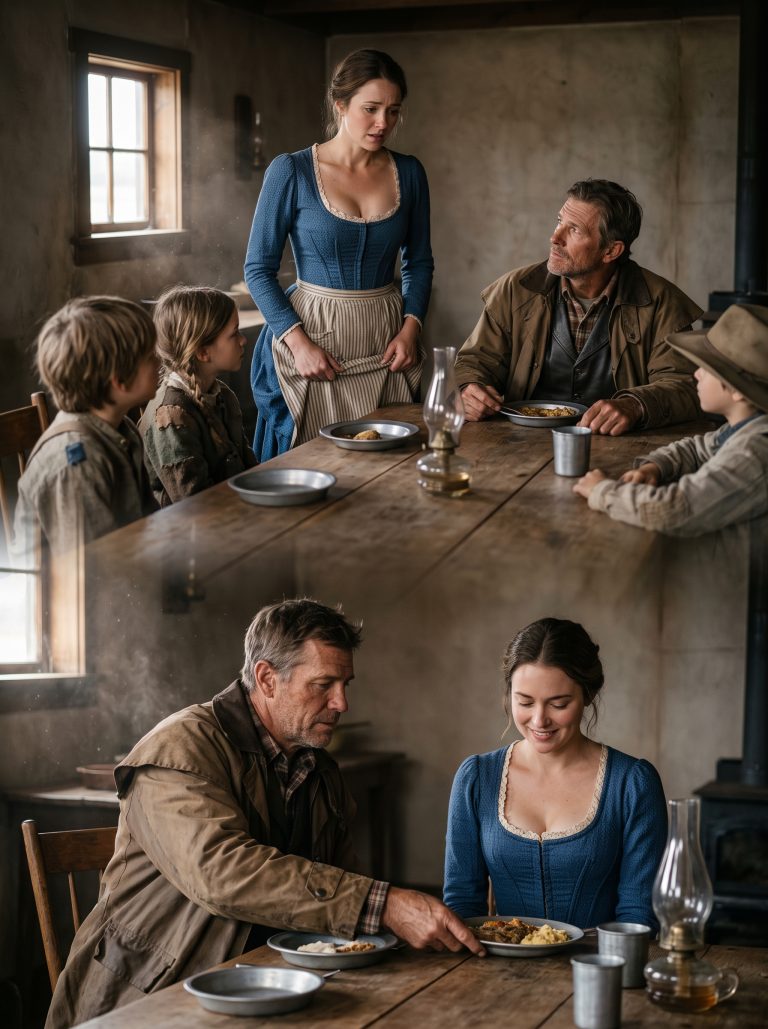
Dust moved through Stone Hollow like a held breath — slow, patient, impossible to escape. In the spring of 1881, the Arizona Territory was all hard edges and harder truths, and Kellan Wolfe knew both better than most.
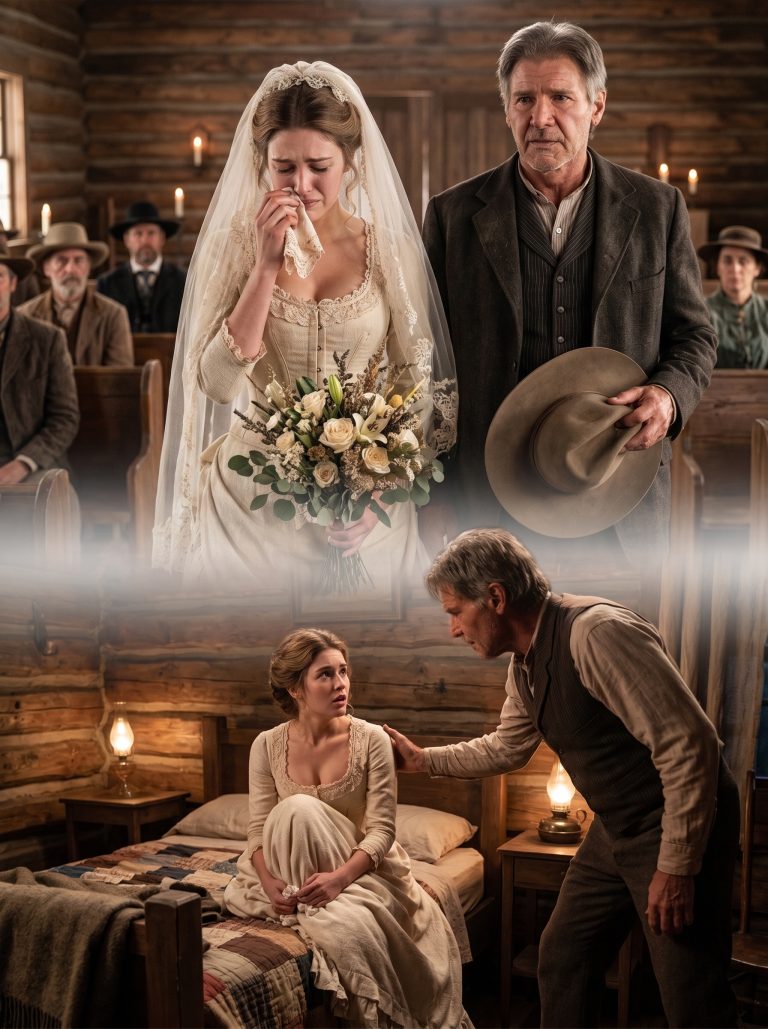
He stood outside the Voss estate with his arms folded, leaning against the porch rail while lantern light swayed above him. Piano notes and laughter spilled through the open windows. It was Adalyn Voss’s engagement supper — she was being promised to Thaddeus Merrick, the mayor’s son.
Kellan had not been invited. He never was.
For eight years he had served Judge Elias Voss as tracker, fixer, and enforcer. His loyalty had value. His silence had value. But to the judge, Kellan remained what he had always been: a half-Comanche man, useful and never quite trusted.
Everyone in Stone Hollow called Adalyn “the judge’s daughter.” Only a few knew the truth — that she was his niece, the only child of his late brother Caleb, taken in fifteen years ago when Caleb died and raised under the Voss name because it was easier, and because whatever came with her — land, standing, a dead man’s claims — came easier that way too.
Kellan had known her since she was a girl running barefoot through the orchard. Now twenty-three, her beauty was sharpened by restraint, her eyes holding that same quiet resistance. Through the tall window, he watched her nod at something Thaddeus said, her smile empty as a held coin. For one moment her gaze found his. He looked away before it could become anything more.
Later, after the guests thinned, Kellan noticed something odd: Adalyn’s usual night guard, a stableman named Perkins who slept outside her door every night without fail, was nowhere in sight. The judge had sent him to town on an errand that could easily have waited until morning.
Kellan didn’t think much of it — until he heard the thud.
A muffled scrape near the servants’ entrance. Voices quickly smothered. He moved fast, knife drawn, and found fresh boot tracks in the dirt — three sets, deep and even, and a fourth, lighter print dragged rather than walked. A scrap of pale blue silk hung from a thorn branch.
Adalyn’s.
The tracks led east, toward the badlands, where the law didn’t reach. He saddled his mustang, Shadow, taking only rifle, knife, and an anger too cold to be called rage. Passing the main house, he heard voices through a cracked window.
“She’s gone. Taken.”
A pause. Then Judge Voss, flat as a closed ledger: “I know it’s done.”
“But sir — the Merrick alliance —”
“Let it be done,” Voss said again, quieter, like a man repeating an order to make himself believe he’d given it.
Kellan stopped breathing for a moment. It wasn’t the voice of a man surprised by bad news. It was the voice of a man who had sent Perkins away himself. He filed that away and rode into the dark.
By dawn he was reading the land the way only he could — one horse’s prints biting deeper into the dirt than the others, carrying more weight than a rider alone should. She’s on that one now. Alive enough to be carried, not dragged. That was enough to keep him moving through the day’s worst heat.
By midday he reached the old mining trail, where the tracks stopped hiding themselves. He tethered Shadow and went on foot toward a mine shaft half-swallowed by brush. Two voices inside, careless — and, further off, hoofbeats circling: a third man, scouting the ridge above.
“Hold her still.” A laugh. “Girl don’t even have sense to scream no more.”
Kellan came through the brush low and fast. The first man barely turned before the knife found him, clean and silent. The second wasn’t so quiet dying — he got out half a shout before Kellan’s hand closed his throat, and the sound was enough. Above the shaft, the circling rider wheeled his horse hard toward the noise.
Kellan didn’t have time to finish inside. He stepped back out into the light just as the third man came off his horse at a dead run, pistol already rising. They came together hard — a graze of a shot past Kellan’s ear, then the two of them grappling in the dirt until Kellan got the knife arm free and ended it the only way the moment allowed.
Then, finally, the cave went silent, except for breathing — hers, shallow and ragged, somewhere in the dark behind him.
Adalyn lay on the dirt floor, wrists bound above her head, dress torn, bruises darkening her skin.
“Adalyn. It’s me.”
She blinked, focusing. He cut her free, and as he did, saw a dark stain at her hem. His stomach dropped.
“Are you hurt?”
“No,” she said quietly. “It’s just my time. That’s all it is.”
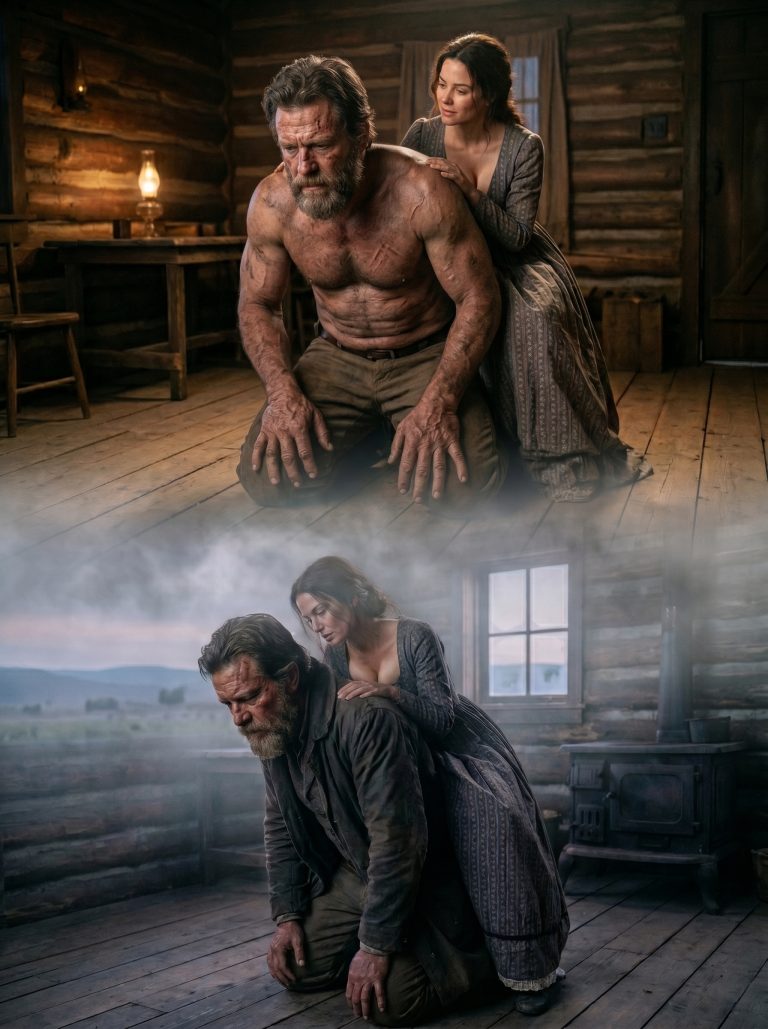
Relief went through him like a held breath finally let out. He said nothing more, only wrapped his coat around her shoulders.
“I thought you wouldn’t come,” she whispered.
“I did.”
When her knees buckled, he lifted her into his arms and carried her out into a sky almost too bright to bear.
Part 2
They made camp in a narrow arroyo. Adalyn drank slowly from a tin cup, still wrapped in his coat.
“Why did he do it?” she finally asked.
“I heard him talking,” Kellan said. “It wasn’t hate in his voice. It was fear. A man doesn’t sound like that unless something’s got a hold of him.”
“He always looked at me like I was a debt he hadn’t finished paying,” she said.
“Do you believe people can change?” she asked later, watching the fire.
Kellan thought a long moment. “No,” he said. “But I believe they can choose who they become next. Your uncle chose a long time ago. Tonight was just him living with it.”
They reached Silas Rourke’s cabin the next evening — a former ranger, sharp-eyed, trusting no one since the day he’d quit rather than burn another village.
“You realize whose ward she is,” Silas said.
“Not anymore,” Adalyn said quietly.
That night Silas produced a folded page from a courthouse clerk who owed him a favor — a copy of a land transfer, her mother’s parcel, moved into Elias Voss’s name.
“Look at the date,” Adalyn said, her voice going thin. “Two months after she died. And that witness signature — that’s old Hobbs. He was already dead by then. I remember, because he died the same week as the frost that killed the orchard.”
Silas let out a slow breath. “A dead man can’t witness a signing. That’s not sloppy paperwork. That’s forgery.”
“If he lied about this,” Kellan said, “he’s lied about more.”
Adalyn looked at him. “There’s a safe in his study. Under the floorboards. I know the combination — my mother’s birth year. He never changed it because he never thought I’d use it against him.”
“Then we go tonight,” Kellan said. He turned to Silas. “If this goes wrong and you don’t hear from us in three days, ride for Prescott. Judge Wren Halloway. I escorted him once — he’s the one man in this territory Elias Voss can’t buy. Tell him what you know about that transfer.”
Silas nodded once and pressed a spare pistol into Adalyn’s hand before they left.
Part 3
They left the horses tied beneath the ridge and crossed the grass on foot. Most of the house was dark. They slipped through the rear servants’ door.
The study smelled of whiskey and gun oil. Kellan pried up the floorboard, and the safe sat there, squat and black. Adalyn’s fingers shook as she turned the dial to her mother’s birth year. The lock clicked.
Inside: bundled cash, a stack of forged deeds, and a small ledger. Kellan opened it — page after page of names, payments, red-ink markings. One entry near the back caught his eye: a bank draft, folded flat, paid out three days before the engagement supper to three names Kellan recognized without wanting to — the men from the mine shaft. The draft was signed T. Merrick.
“He paid them,” Kellan said. “Before she was even taken. This isn’t a guess anymore. This is proof he ordered it.”
Beneath the ledger lay a folded letter in her mother’s hand, and beneath that, a second letter in a different hand, sealed with a wax stamp pressed in the shape of a hawk.
“That’s a Merrick seal,” Adalyn said slowly. “Thaddeus’s family crest. I’ve seen it on the letters he sent courting me.”
She unfolded it. The handwriting matched those courting letters too closely to be anyone else’s.
Elias — the parcel you took from your brother’s widow, signed over to my name and properly recorded, or the whole territory learns what really happened to Caleb on the ridge trail in ’66, and what you did to make yourself rich off two dead people instead of one.
It rearranged everything, and it made Kellan’s stomach turn colder than the draft had. Fifteen years ago, Elias and Caleb had argued on the high ridge trail above Stone Hollow — not over pride, but over money. Elias had already borrowed heavily against their father’s cattle contracts to cover gambling debts in Tucson, debts that would have ended his judgeship and his name both if called in. Caleb, the elder brother, had refused to sign away his half of the herd to cover it. The argument turned to blows. Elias struck him once with a fence post, hard enough to put him down, and let him lie at the base of the ridge until there was no question of waking. He paid the coroner to write it as a fall, and stepped in as guardian of Caleb’s daughter and everything Caleb had owned — not out of grief, but because a dead brother’s estate was the only thing standing between Elias and ruin.
Years later, when Adalyn’s mother died and her small parcel was meant to pass directly to Adalyn in trust, Elias forged that transfer too, for the same reason he’d done everything else: the debts had never truly gone away, only slowed. He had been quietly bleeding both inheritances for over a decade to keep his name off a foreclosure notice.
Thaddeus had found the coroner’s original report — kept, not destroyed, by a clerk who’d sold it to the highest bidder — and used it exactly the way Elias himself had once used his brother’s death: as leverage. Once the parcel was recorded in Thaddeus’s name, his claim would look clean on paper, provided no one ever traced it back far enough to find the fraud beneath it. Adalyn was the one person alive with both the motive and the knowledge to make that trace — and a missing bride could never stand before a judge to do it.
It didn’t make Elias innocent. It made him a man who had spent fifteen years building his whole life on top of a body at the bottom of a ravine, and who, when the bill finally came due, had paid it with his niece instead of his own name.
A floorboard creaked in the hallway. Sheriff Marsh Colt stepped into the doorway, revolver raised, two deputies behind him.
“Merrick’s had me posted on this house every night since the engagement,” Colt said. “Man doesn’t trust a paper trail he can’t watch over.”
“Then you already know what’s in that safe,” Adalyn said.
“I know it doesn’t leave this room,” Colt answered, and fired.
The shot went wide, splintering the doorframe behind them. Kellan hauled Adalyn down behind the desk as the deputies fanned out, one circling toward the window, the other toward the bookshelf to cut off the far door. There was no clean way out — only the one Kellan made.
He shoved the ledger and both letters inside his coat, then hurled the desk lamp toward the far curtains. Flame caught fast, climbing the fabric in a sudden roar, and for three full seconds every man in the room flinched toward the fire instead of the fight. It was enough. Kellan came up firing his own revolver into the smoke, driving the window deputy back through the glass, and closed the distance to the second before the man could bring his shotgun to bear, driving him into the bookshelf hard enough to split the wood.
Colt fired again. The bullet caught Kellan along the ribs — a hot line of pain that dropped him to one knee. Adalyn’s pistol cracked beside him, and Colt staggered back with a cry, clutching his forearm, his revolver skidding across the floor. Kellan forced himself up through the pain and closed on him anyway, driving the knife in once, low along the ribs — not deep enough to kill, only enough to fold him over and buy the seconds they needed.
“Go!” he shouted, and this time they went together, smoke rolling thick behind them, shouts rising across the grounds as the fire caught the curtains higher and lanterns began flaring awake in the servants’ quarters. A rifle shot cracked from somewere near the stables, and splinters kicked up from the porch rail an arm’s length from Adalyn’s shoulder. They didn’t stop. They reached Shadow at a dead run and were moving before the first real posse had even found their horses.
Kellan cut the mustang hard into a dry creek bed that swallowed hoofprints whole, doubled back along a rock shelf too narrow for a full posse to follow at speed, and let the fire behind them buy confusion no rider could out-argue. Twice they heard riders pass close on the ridge above, close enough to hear voices, and both times Kellan held them still in the shadow of the rock until the hoofbeats faded. By the time Merrick’s men finally found the creek bed empty, Kellan and Adalyn were already two ridgelines away, riding for Prescott under a sky just beginning to gray.
Three days later, Kellan’s side stitched and aching under a whiskey-soaked bandage, they reached the homestead of Judge Wren Halloway outside Prescott — a man known through the territory as one judge who couldn’t be bought.
Adalyn laid it all before him: the ledger, the bank draft paid to her own kidnappers, her mother’s forged transfer, the Merrick letter with its hawk seal, the truth of what had happened to her father on that ridge in ’66. Halloway read for a long time without looking up.
“This is enough to hang Thaddeus Merrick for extortion, conspiracy, and murder for hire,” he finally said. “And enough to put your uncle in a cell for the rest of what he’s got left.”
Silas rode in three days after that, exactly as Kellan had told him to if no word came — carrying the clerk’s copy of the land transfer and his own account of the dead witness’s impossible signature. His testimony closed the forgery case beyond any doubt.
Thaddeus Merrick was caught trying to cross into Mexican territory with the refiled deed already in his saddlebag. The bank draft in his own hand, paid to three dead men, was what finally hanged him that autumn — extortion and forgery alone might have bought him a long sentence, but a signed record of paying for a kidnapping bought him a rope. Sheriff Colt, testifying against him to save his own neck, received fifteen years. Judge Elias Voss, having cooperated fully and surrendered every forged document he still held, avoided the gallows but not a courtroom’s judgment — twenty years for forgery, fraud, and the manslaughter of his own brother, with no chance of an early release. It was not mercy. It was simply what the law allowed for a man who had confessed instead of fought.
Adalyn testified last, the ledger closed on the table beside her.
“I spent years trying to be worth loving by a man who had already decided what I was worth to him,” she told the court. “I know now that isn’t a debt anyone should have to pay. Blood didn’t save me. A man with no blood claim on me at all did that, because he chose to.”
They left Prescott that autumn, her mother’s land restored by the court’s own hand. They built on that reclaimed ground, where the orchard still grew wild.
“You still believe people can’t change?” she asked him one evening, remembering the arroyo.
“No,” Kellan said. “But I still believe they choose who they become next.”
“And what did you choose?”
“To stop being someone’s useful thing,” he said. “And start being someone’s family.”
She took his hand, and for the first time since the dust first rose over Stone Hollow, neither of them was running from anything at all.
The End