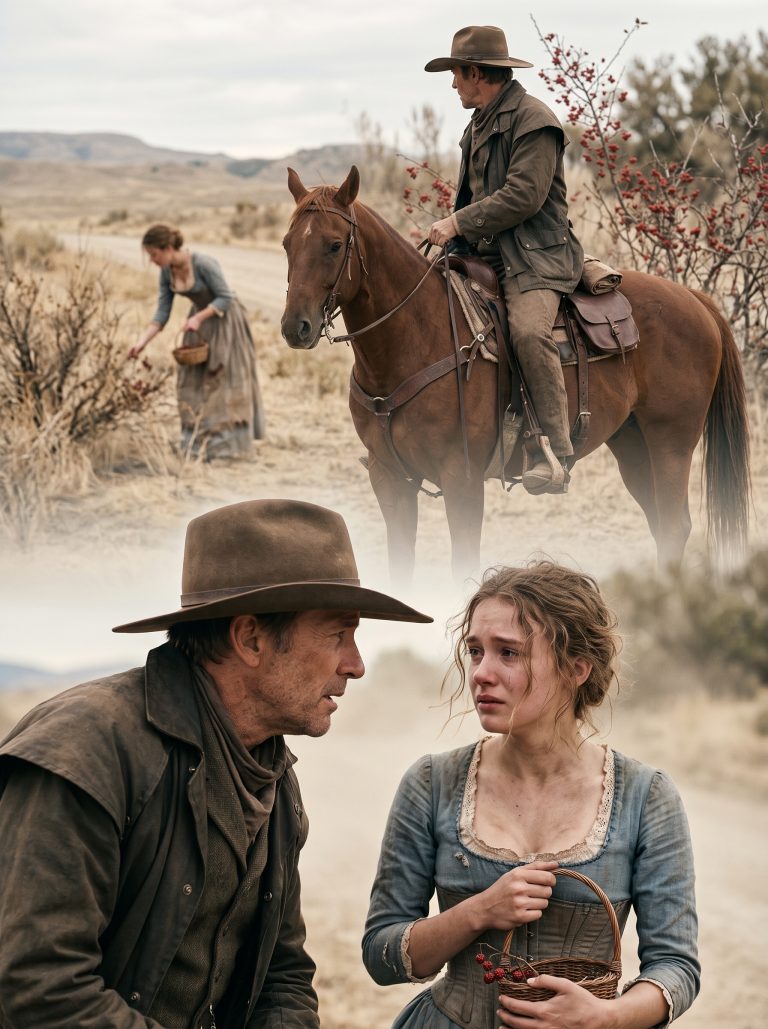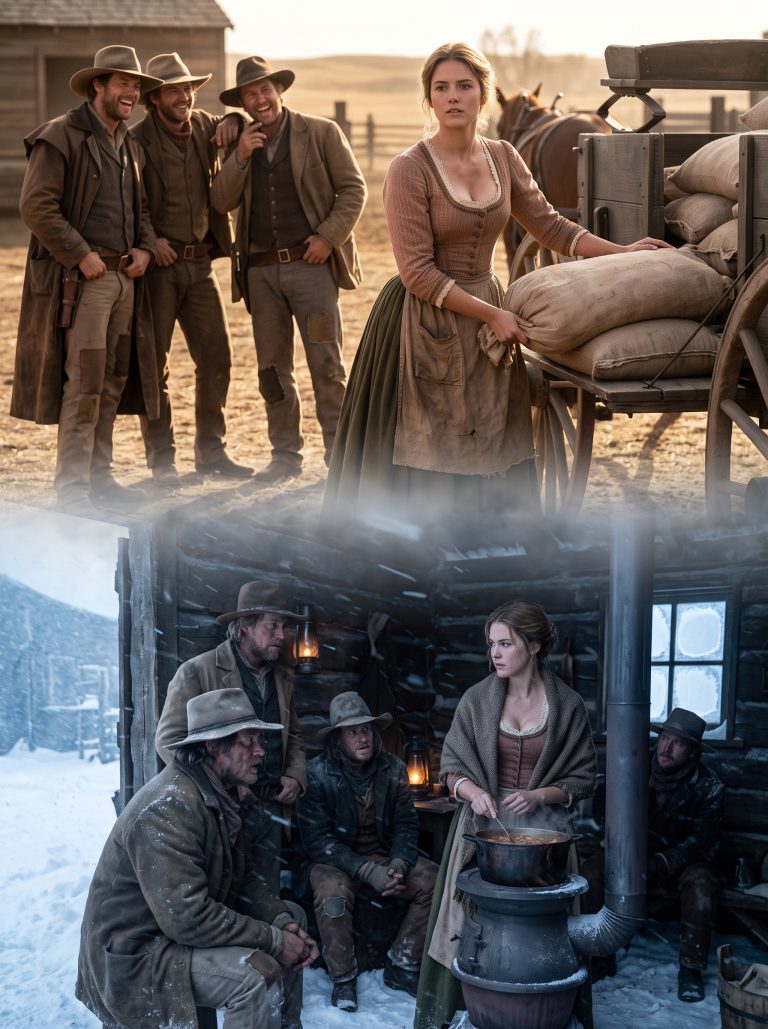
The Cowboy Wanted a Virgin Bride — But Froze When She Taught Him The First Night

PART 1
Boon Slater spent three months searching for a bride who knew nothing.
Not a woman who was foolish. Not a woman who was weak. A woman who had never learned the one lesson that had broken him — that the people closest to you are the ones best positioned to destroy you.
He wrote the advertisement himself, crossed out the word virtuous, wrote it again. He interviewed no one. He answered letters instead, choosing the shortest ones, the plainest ones, the ones that asked for nothing and promised nothing back. Calla’s letter was four sentences long. He read it eleven times before he understood why he’d kept it.
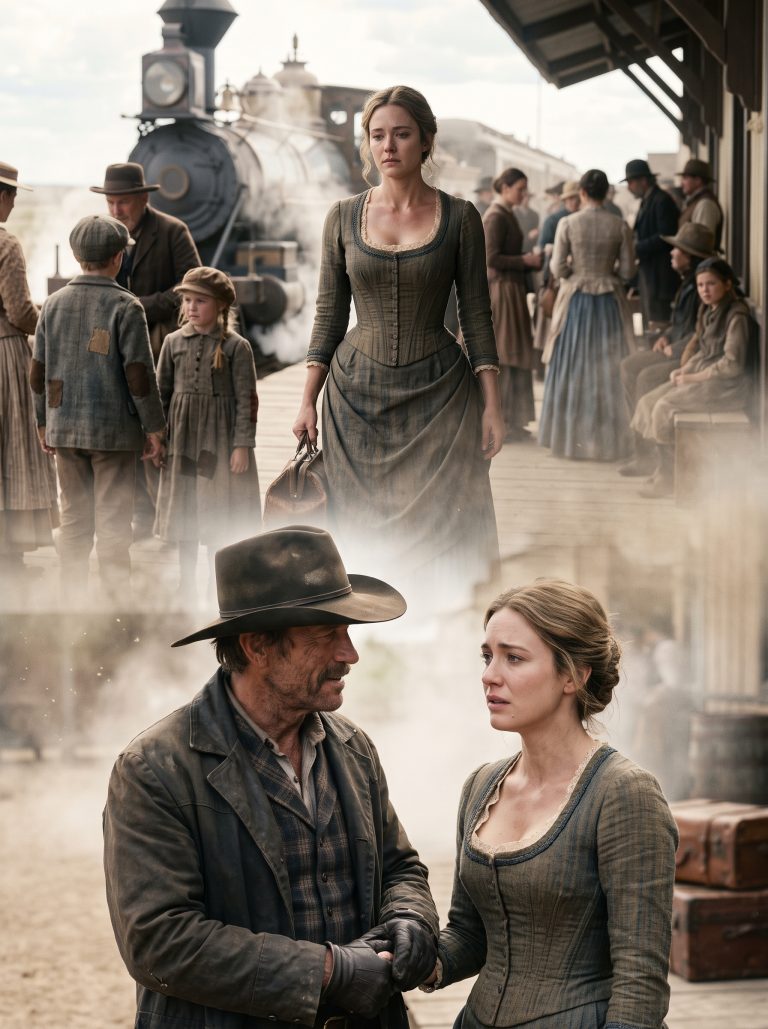
She arrived on the afternoon stage carrying a single bag that looked older than she was. He watched her step down onto the platform and scan the street the way a person scans a room they intend to remember — not with excitement, not with fear, but with calculation. Her eyes moved once, twice, and settled on him.
“Mr. Slater,” she said. Not a question.
“Miss Whitfield.”
That was the whole of it. No handshake. No smile traded like currency neither of them wanted to spend.
The ceremony took eight minutes. Three witnesses he barely knew sat scattered in the pews like afterthoughts, present because the law demanded a number, not because anyone had asked them to come. The preacher’s voice moved through the words the way water moves through a channel it has worn a thousand times before — automatic, indifferent, already thinking of supper.
When the preacher asked if he took this woman, Boon said yes without a beat of hesitation, because hesitation was a door, and doors could be walked through.
When he asked Calla, she waited three full seconds before she answered.
He felt that pause the way a man feels weather changing in an old injury — a warning below the surface of things, arriving before the eye can name it.
They signed the papers at a small table near the door. Her handwriting was too clean for a woman who’d written a four-sentence letter and called it a proposal of marriage. He noticed it and said nothing. He was already learning, without wanting to, that there were things about this woman that did not add up — and that he had married her anyway, because the alternative had been to keep waiting, alone, in a house too large for one man’s silence.
They walked the two miles to his ranch with his horse between them, neither of them speaking, neither of them offering the other the saddle. The house came into view the way it always did to him — bigger than it needed to be, built that way on purpose, a fortress disguised as a home. Calla stopped at the edge of the yard and studied it for a long moment, her face giving away nothing.
Then she walked in first.
Inside, she moved through his kitchen like she was reading it. Fingers along the table’s edge. The cupboard door opened without asking. Six whiskey bottles stood behind it — two empty, one half gone, three still sealed — and she counted them without a word, her eyes lingering half a second too long before she closed the door. He stood by the stove and watched his new wife catalog his life in under ten minutes, and understood, with a cold drop in his stomach, that he had made an arrangement with a woman who saw far more than her letter had let on.
There were stains under her fingernails, dark and pressed into the skin, the kind that didn’t come from a stagecoach or a church pew. When she caught him looking, she only said, “Crushed root. It doesn’t wash out easy,” and went back to reading his kitchen like nothing had been asked.
That night, when he told her which room upstairs was hers, she looked at him a moment too long before she spoke.
“And you’ll never have cause to come through that door without knocking first?”
He had no clean answer. The room had been prepared for a stranger he hadn’t quite believed would become real.
Later — after supper eaten in a silence that was starting to feel less like distance and more like something being measured — she dried her hands on a cloth, looked at him across the lamp-lit kitchen, and said the sentence that stopped his breath in his chest.
“Let me see your hands before you sleep. I’ve been watching you flinch since the church.”
He followed her up the narrow stairs, past the room he’d told her was hers, all the way to his own door — and what waited for him on the other side of it would be the first crack in five years of walls he had built with his own two broken hands.