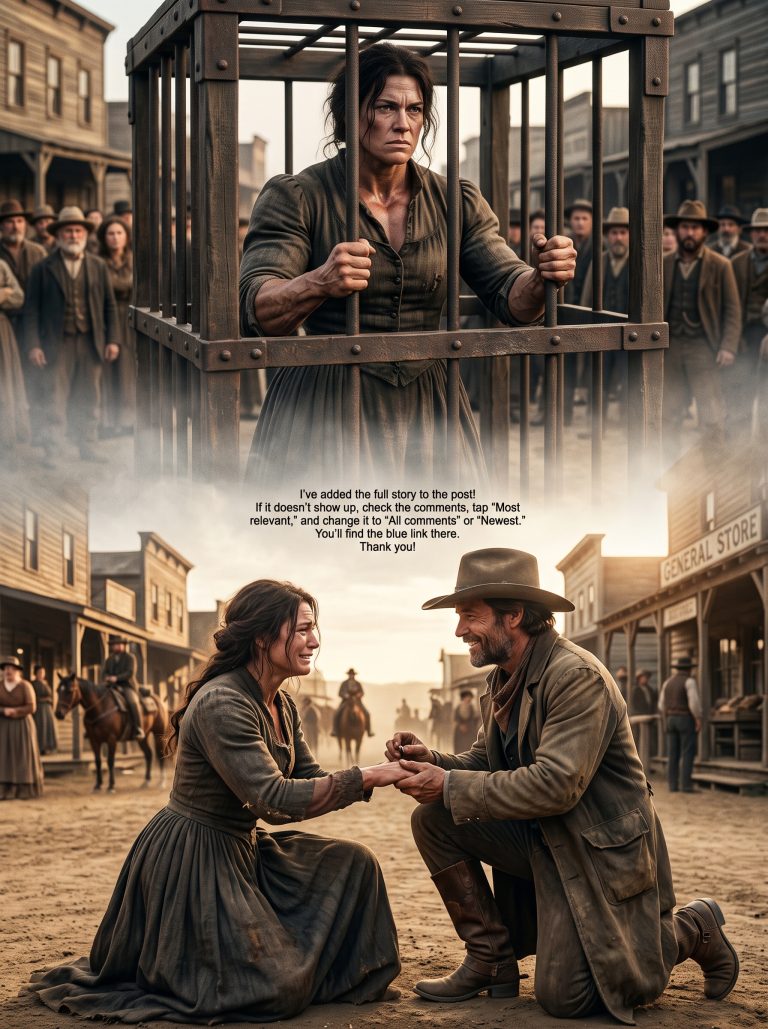
Every rancher in the valley rejected her at sunset — until the quietest man opened his gate and changed everything she was meant to become

Part 1
I have been asked more than once why I opened the gate for her.
Why I did not send her on down the road the way every other man in Widow’s Notch had done before she reached my fence line. Why I did not ask her name, her business, her people, or what kind of trouble follows a lone woman riding at dusk with a dun mare and a bedroll tied behind the cantle.
I never had a tidy answer. After a while I stopped trying to give one.
Truth was, I did not think much before doing it. A woman stood at my gate in the failing light, road-worn and straight in the spine, and I opened it. That was the whole of the matter. It did not feel like deciding anything at all.
I was splicing wire on the east fence when I heard the horse. September had turned early that year, not into snow but into a wind with teeth in it, and the cottonwoods along the wash had already gone the color of old coins. I had cracked a hinge before noon, chased two heifers out of a slack line before supper, and had no appetite left for company.
Then I heard the mare. Not livery stock. A single horse coming up the lane slow, the rider sparing her.
I set down my pliers and walked to the gate.
She sat that mare without fidgeting, which was the first thing I marked. Most folks riding into a stranger’s yard after dark give themselves away by how they sit — too watchful, or too loud about not being watchful. She only sat still and let me come to her.
Her coat was dark wool, patched at one elbow with scrap hide. Her hair was braided under a plain scarf, strands loosed by the wind. Her eyes were dark and did not drop when mine met them.
“What do you need?” I asked.
“A night’s shelter,” she said. “The barn will serve. I ask for nothing more.”
No apology in it, no softening. Just fact, laid down plain for a man to take or leave.
I opened the gate.
Her name was Wren. She had been riding two days after her winter camp scattered over a dispute at the southern pass, sent east to carry word to a cousin near the Crane’s Ford trading post before the high roads closed. I had traded with her people, the Absaroka bands that wintered along my south range, going on nine years — long enough to have learned some of their tongue badly, and a good deal more from simply watching. A man does not need a stranger to explain her worth to him if he keeps his mouth shut and his eyes open.
I fed her. She ate without hurry, thanked me once, and did not wear the thanks out afterward, which suited me. She told me the shape of her errand — a cousin, Mary at the trading post, though the traders had renamed her that the way traders rename everything to make it easier to own. She would ride on at first light.
“Road’s clear to the ford,” I told her. “After that keep north of the dry wash. The south cut looks shorter and isn’t.”
She studied me across the table as if weighing whether the advice carried a hook.
“You don’t ask many questions,” she said.
“Found they mostly get in the way.”
She left at dawn, as she’d said she would, and I watched the gate swing shut behind her and told myself that was the end of it.
It had been three years since my wife Clara died of lung fever while I was gone fetching a doctor who came too late. Three years I had called the quiet in my house peace, because the truer word cost more to say.
Eleven days later I heard the dun mare again.
Wren stopped at the gate, not past it. Her cousin had taken sick and could not travel. She needed shelter another fortnight, maybe longer, and she said she could pay in work — snares, mending, stock — she did not intend to eat a stranger’s charity without matching it.
“I know,” I said, and opened the gate.
She stayed in the barn three nights before I cleared Clara’s old sewing room and left a key on the washstand. She looked at that key a long moment.
“Your house has ghosts,” she said.
“Yes.”
“I’ve no quarrel with ghosts that keep to themselves.”
She moved through my days like weather — steady, unclaiming, correcting my bad knots and my worse grammar in her language with no patience to spare. The house, which had gone quiet in the wrong way after Clara, went quiet in a different way now. I had not known there were two kinds until she showed me the second.
Trouble found us anyway, the way it finds any arrangement men decide isn’t their business to leave alone. The county land agent, a narrow man named Farrow, rode out on the strength of “concerned parties” wanting to know why a Absaroka woman was sheltering on my land. I sent him off with less courtesy than he’d brought. And Silas Crane, who ran the biggest outfit south of the creek and had wanted my north bend — the cottonwood water and winter shelter of it — for three years running, started telling folks in town that my patent might not hold up if a man looked closely.
I did not think much of it at first. Paper trouble was slow trouble.
I was wrong about how slow.
Part 2
Wren found the flaw before I did.
We had the deed box open on the kitchen table one night, working by lamplight through nine years of my father’s filings, when her finger stopped on the oldest map.
“This mark is not the same as here,” she said, and turned the newer copy toward me. On the first map, the cottonwood bend sat plainly inside my father’s original purchase. On the copy filed later — the one Crane’s counsel would use — the same bend sat squarely on the boundary line, disputable, available.
“Could be a mistake,” she said.
“Could also be trouble.”
It was trouble. I rode for copies the next morning. The young clerk at Crane’s Ford, a nervous boy named Eli who dropped his pencil twice in Wren’s presence before deciding she frightened him less than his own ledgers, pulled every filing tied to the north strip without complaint once I paid him and promised to fix his stovepipe before frost.
Crane came himself in November, two riders behind him and more confidence than the visit earned.
“Sell me the bend before the office takes it,” he said, “and I’ll pay fair.”
“No,” I said. “For the first time in years, I’ve chosen good company, Crane. I don’t intend to sell my way out of it.”
He rode off promising winter would lock me in with regret. Wren, standing near the barn with a coil of harness in her hands, did not say anything about the words I’d let slip in front of him. She only asked me later, quiet, whether I’d meant them.
“Yes,” I said.
“Then be careful after,” she told me, and that was warning enough from a woman who had learned the hard way what unguarded words cost.
I checked her mare’s soundness most mornings after that — not because the horse needed it, but because a woman cannot freely choose to stay if leaving has been made impossible for her. She noticed. She always noticed.
Her cousin mended enough to ride north with a trader caravan by the second week of November. The errand that had first brought Wren to my gate was finished.
She did not leave.
She came to the barn before sunrise instead, blanket around her shoulders, and told me the ranch was useful and my company bearable, and that she would stay through the work of winter if I would have her.
“I prefer you stay,” I said.
She studied me the way she studied a bad knot, deciding if it would hold. Then she nodded once.
“I will stay,” she said, and we made no ceremony of it, because that was never our way.
Part 3
The land matter came to a head three days before the first hard snow.
I rode to Crane’s Ford with every deed, map, and receipt I owned packed in oilcloth, and Wren rode beside me though no one had asked her to. In the land office, young Eli laid out the old map with hands that had stopped shaking sometime in the last month, and Crane’s hired counsel — a man in city boots who had never once stepped in a cow path — argued the newer filing was the binding one.
It was Eli, not Wren, who found the second flaw. He had been going back through the office’s own recording ledger the week before, fixing an unrelated error, and had noticed the newer copy of my father’s map bore the same clerk’s hand as three other disputed filings from that decade — all of them, without exception, redrawing a boundary a few rods in Silas Crane’s favor.
“The land agent before Farrow,” Eli said, pale but steady, “was named Wexler. He resigned sudden, four years back. Nobody asked why.”
I had never once thought to ask why myself. A man does not question the ground he’s stood on his whole life.
Wren looked at me across the table, and I understood, in that moment, something I had not let myself understand before: she had not caught the discrepancy on the map by luck, or by a stranger’s sharp eye alone. Her people marked their own boundaries by stone and by memory the way white paper never had to, because paper could be bought and stone could not. Crow Step, the old man who had told her, before she ever left camp, that there was a rancher in Widow’s Notch who traded straight — Crow Step had known Wexler’s name too. Her people had watched the north bend dispute for years, the way a neighbor watches a fire on the far ridge, deciding whether it was close enough to be their trouble.
She had not ridden to my gate only for shelter. She had ridden toward a man her elders had already marked as worth trusting, to see for herself whether the mark still held.
I did not learn all of this that day in the land office. I learned it slower, in pieces, the way I learned most things about her — a sentence dropped over supper, a silence that meant more than a sentence would have. But I understood enough of it by the time the clerk stamped my corrected patent to know that the kindness I’d shown a stranger at a gate had been, without my knowing it, a kind of test I had passed before I ever knew I was sitting for one.
It did not make the kindness smaller to learn that. If anything it made the gate matter more. A man does his honest thing without an audience, and it turns out the road was watching anyway, and remembers.
Crane’s counsel gathered his papers and left with the sour look of a man whose fee had bought nothing. Wexler’s name went into a county inquiry that, by spring, cost Crane two of his own north filings and cost Farrow his post besides, once it came out he’d known and stayed quiet for a fee of his own.
We married before the deep snow came, at the same land office, with Eli standing clerk and a Absaroka elder named Two Feathers — kin to Crow Step by marriage — standing witness on Wren’s side. Word came back from the north camp before the ceremony that Crow Step, hearing of it, had said only: the road remembered faster than the man did.
I did not fully understand what he meant until winter had properly set in and I had time to sit with it. I had thought, all those months, that the story of Wren and me began at my gate, with a decision that had not felt like a decision. But it had begun earlier than that, in a season I knew nothing about, when men I never met chose to trust me from a distance because of small honest things I’d done and never thought twice about — fair trades, an open hand, a silence kept when silence was owed.
A man rarely gets to see the whole shape of his own reputation. Mine had ridden ahead of me for years, unnoticed, doing quiet work on my behalf long before Wren ever reached my fence line.
That winter, a storm came down from the north with little warning, and I stood at the door with my coat half on, set on finding a steer I’d left too long in the lower draw.
“No,” Wren said, behind me.
“He’ll freeze.”
“So will you, walking blind.”
“I know the draw.”
“The storm doesn’t care what you know.”
I nearly answered with something foolish about duty. She stepped closer instead of letting me.
“Don’t make me a widow in the first winter because pride wore a rancher’s coat,” she said.
I took the coat off. We found the steer alive at first light, shivering in blackthorn brush but breathing, and Wren did not say she’d been right. She never needed to.
By spring the valley had mostly grown tired of talking about us, the way gossip tires when it isn’t fed. Some never came around — Crane looked through me in town like smoke, and a few others kept their distance out of habit more than conviction. But Eli greeted Wren with plain respect now, and Two Absaroka traders camped three nights on my land in March without the sky falling in on anyone.
One evening in October, near a year from the night she first rode up my lane, we sat on the porch while the sun went down copper and then rose and then a deep cold purple over the ridges. I had been hauling wood and left the gate standing open.
“You left it open,” Wren said.
“I’ll close it.”
“Not yet.”
So we let it stand open a while, the road beyond it running east toward the ford, north toward her people, south toward men who had once turned her away and one who had tried to steal a bend of creek water out from under me by a stroke of a dishonest pen. The road could still carry trouble to my door. It could still carry Wren away on visits and bring her home again. That was as it should be. A gate kept shut all the time is only a fence around a grave.
I have thought since about what I would tell a man who asked me, straight, why I opened that gate the first night, knowing nothing of her, owing her nothing.
I would tell him this: a kindness given without expecting return is still, somehow, never wasted. It travels further than the man who gives it can see, further than a single night’s shelter or a single stranger’s thanks. It rides ahead of him on roads he has never traveled, is spoken of by people he will never meet, and comes back to his own gate years later wearing another woman’s face, asking only for the same plain thing he once gave without being asked.
You do not have to understand the whole shape of it to do the right thing in front of you.
You only have to open the gate.