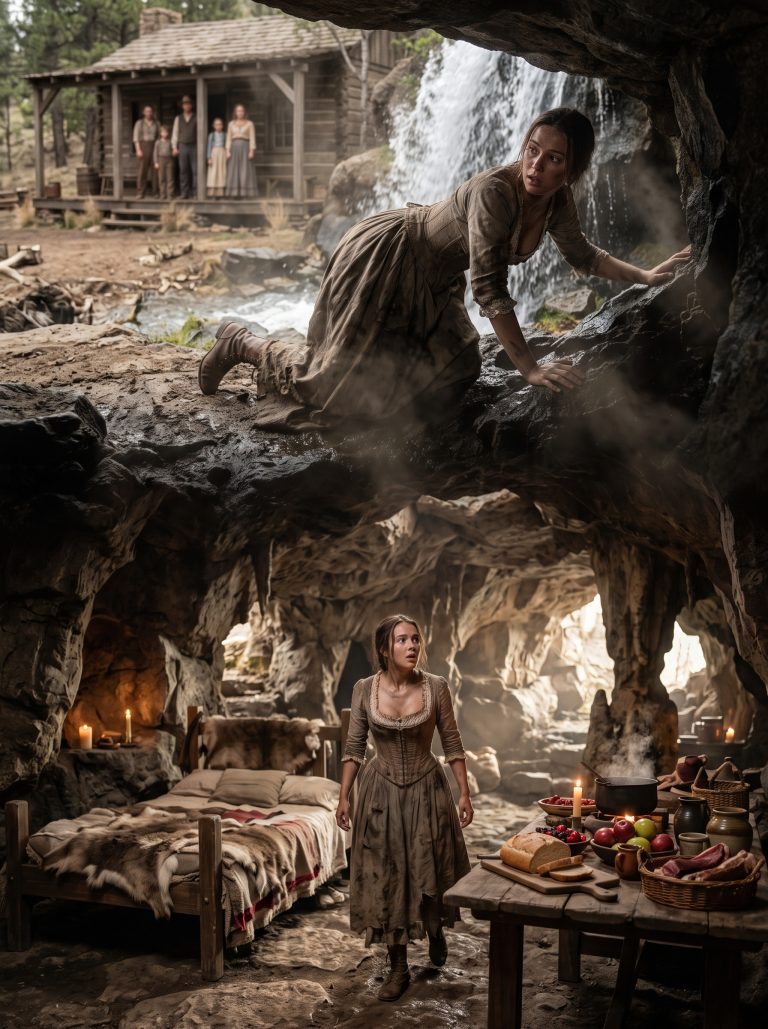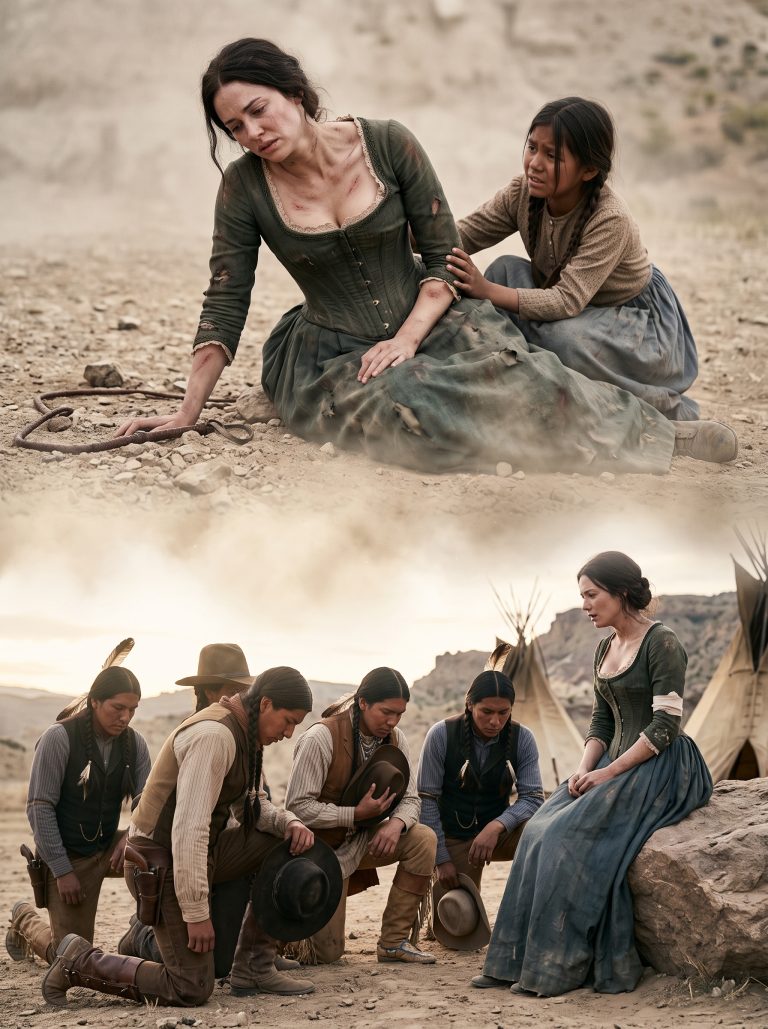
The Mail-Order Bride Spent Her First Night With the Rancher Who Swore He’d Never Have Children—But What Started Growing Inside Her Changed Everything the Town Refused to Believe

Part 1
Thomas Hale had written and burned four letters before he let the fifth one stand.
Rancher, thirty-four, widowed, one small son. Seeks a capable wife for a plain but honest home. No romantic promises made. Only shelter, respect, and steady work.
He posted it to a newspaper in Ohio because Ohio was far enough away that no one there would know his late wife’s name, or how she had died, or the year of silence that had followed. Wyoming winters were long, and grief was longer still, but a five-year-old boy could not be raised on grief alone. Someone had to braid hair that wasn’t there to braid and answer questions Thomas didn’t have words for.
Six weeks later, a reply came from a woman named Margaret Ellis.
Her letter was careful and plain, the handwriting a little too neat, as if each word had been considered twice before it touched the page. She said she had no family left in Ohio, that she was accustomed to hard work, and that she would come without complaint if he would have her. She said nothing about love. Thomas appreciated that. Love was not what he was hiring for.
He met her stage in Buffalo, Wyoming, on a hard blue October afternoon, his son Eli gripping two fingers of his father’s hand.
The woman who stepped down was younger than her letter had made her sound — perhaps six-and-twenty — with dark hair pinned beneath a gray traveling bonnet and eyes the color of creek water in shadow. She carried one trunk and one small case, and when she saw Eli peering out from behind his father’s coat, something in her face opened, gentle and unguarded, before she caught herself and smoothed it back into composure.
“Mr. Hale?”
“Miss Ellis.” He touched his hat. “This is Eli.”
She knelt right there in the mud without seeming to notice it was mud. “Hello, Eli. I like your boots.”
Eli, who had said perhaps eleven words to a stranger in the past year, said, “They’re new,” and that was the whole of it. Thomas felt something loosen in his chest that he hadn’t known was tight.
The ranch was two hours’ ride from town, and Margaret spent most of it watching the country go by — the long gold grass, the far blue teeth of the mountains — with an attention Thomas found himself watching more than the road.
“It’s a hard land,” he warned her.
“I’ve known harder,” she said, and did not explain, and he did not ask.
She settled into the house the way water settles into a cracked jug — quietly, finding every low place. Within a week there were curtains where there had been none. Within two, Eli was falling asleep to a voice reading aloud from a Bible with a broken spine, and Thomas found himself standing in the hall each night just to listen, unwilling to admit how much he needed the sound of it.
She was, he came to notice, oddly careful with any document that required her signature. She wrote Margaret Ellis slowly, like a girl practicing letters, and once, when the county clerk asked her to spell her middle name for the marriage record, she paused a full three seconds before answering, “Anne.”
He told himself it was nerves. Many things about a new life could make a person nervous.
They were married in November by a circuit preacher who charged two dollars and did not linger. It was not a match made for romance, and both of them said so plainly to each other on the ride home, almost as a kind of promise — we will not pretend this is more than it is.
But plain arrangements have a way of growing complicated.
By December, Thomas had learned that Margaret hummed when she kneaded bread, that she flinched, just slightly, at raised voices, that she had a scar along her left forearm she kept covered even in the heat near the stove, and that she loved his son with a ferocity that seemed to surprise her as much as it surprised him. By January, he had learned that when she thought no one was watching, she sometimes stood at the window with her hand pressed flat against the glass, watching the road east, as though she expected it to bring something toward her that she both wanted and feared.
One night, mending a shirt by the fire, she looked up and caught him watching her.
“You study me like I’m a fence line with a break in it somewhere,” she said, not unkindly.
“Maybe I am,” Thomas admitted. “You’re careful in ways a woman with nothing to hide doesn’t need to be, Margaret.”
Her needle stilled. For a moment he thought she might tell him something. Instead she said, very softly, “Ask me again in the spring. I may have an answer by then.”
He let it go. He was, after all, no stranger to keeping his own locked rooms.
But something had begun to grow between them that had nothing to do with the bargain they’d struck — in the passing of plates, the brushing of hands at the washbasin, the way Eli now called her nothing but Mama and she wept the first time he said it, alone in the barn, believing herself unseen. Thomas found her there, said nothing, and simply stood beside her until the crying passed.
“I didn’t expect this,” she whispered.
“Neither did I,” he said. “I only expected help. I did not expect to want you to stay.”
She looked up at him, water still standing in her eyes.
“Don’t say that,” she said, “until you know why I really came.”
Part 2
The stranger arrived on a raw March morning, three weeks before Margaret’s confession would have come on its own.
He was a lean man in a city coat, unsuited to the mud, asking questions at the mercantile about a woman of a certain description — dark-haired, soft-spoken, traveling alone from Ohio the previous autumn. He said he was a Pinkerton man. He said the name he was looking for was Grace Whitfield, not Margaret Ellis, and that Miss Whitfield was wanted for questioning in the death of a man named Elias Cobb.
Word reached the ranch before the man did.
Margaret went white at the name Cobb, then went very still in the way of someone bracing for a blow they’ve expected a long time.
“Is it true?” Thomas asked her that night, not gently, but not cruelly either. “Are you this Grace Whitfield?”
She did not lie to him. She had promised herself, somewhere on the road west, that whatever else she became, she would not be a woman who lied to a man who had given her his name.
“Yes,” she said. “And I did not kill him. But I understand why it looks as though I might have. Sit down, Thomas. I owe you the whole of it, and I should have given it to you months ago.”
Thomas sat. Eli was asleep. The fire cracked low in the grate, and outside the wind pressed against the shutters the way it always did, indifferent to the shape of a person’s fear.
“My name is Grace,” she said. “Grace Whitfield. Margaret Ellis was a real woman — a stranger I met on the train out of Cincinnati, going west to answer the very same advertisement I later answered myself. She took a fever three days from Cheyenne and died in my arms in a boardinghouse with no family address on her, no next of kin, nothing but a letter from a rancher in Wyoming folded into her trunk.”
Her hands twisted together in her lap.
“I took her name because mine had become a rope around my neck.”
Part 3
Thomas did not move. “Tell me the rest.”
Grace’s voice was low and steady now, the voice of a woman who had rehearsed this confession in the dark so many times that the words had worn smooth, like river stones.
“I was engaged to Elias Cobb for two years,” she said. “My father owed him money before he died, and Elias collected the debt by deciding I would marry him instead. He was respected in Cincinnati. Deacon of his church. Generous with the poor, in public. In private, he broke two of my ribs the winter before I ran, and told the doctor I’d fallen from a ladder, and the doctor believed him, because everyone believed him.”
Thomas’s jaw had gone tight enough to ache.
“The night I left,” Grace went on, “he found me at the depot. He grabbed my arm hard enough to leave the mark you’ve seen on my wrist. I pulled away. He was drunk, and the platform was icy, and he went backward down the stairs to the lower track before the train had even cleared the station.” Her voice caught. “I did not push him, Thomas. I have asked myself every night for a year whether I might have, in some small hidden corner of my heart that wanted him gone, and I do not believe I did. But I ran before anyone could ask me the question aloud, because I already knew what answer a deacon’s family would prefer, and what answer a poor dead man’s fiancée would be given.”
“So you took a stranger’s letter,” Thomas said slowly, “and a stranger’s name, and came here.”
“I came here a coward,” Grace said, “and a thief of a name that wasn’t mine to use. I have prayed on it more nights than I can count. I told myself I would confess in the spring, once I understood whether this — ” her hand moved, helpless, toward the space between them, toward Eli’s door down the hall, toward all of it — “whether this was a life I was permitted to want, or one more thing I’d stolen that would be taken back from me.”
The room was quiet a long moment. The fire popped. Somewhere in the dark, a horse shifted in the barn.
“The Pinkerton man,” Thomas said finally. “Who hired him?”
“Cobb’s brother, I’d guess. He’d want it to look like murder. It protects the family name if a woman hangs for it instead of a drunk man falling down icy stairs of his own foolishness.”
Thomas stood, and for one terrible second Grace thought he meant to walk out the door and not come back — that she had finally handed him the one truth heavy enough to break what they had built. Instead he crossed the room and knelt in front of her chair, the way he had the night he’d found her weeping in the barn.
“I married a woman named Margaret Ellis,” he said, “because I needed someone to help raise my son. I have come, these past months, to love a woman named Grace Whitfield, because of who she has shown herself to be in this house — patient with a boy who wasn’t hers, honest with me when honesty cost her something, brave enough to run from a man who’d have broken her slowly instead of staying to be broken. The name on the county record was never the thing I fell in love with, Grace. I don’t care what name is on the paper. I care what’s true, and you have just told me the truest thing anyone has told me in this house.”
“They may still come for me,” she whispered.
“Then we’ll meet them standing, not running,” he said. “You’ve done enough running. Let me stand somewhere for once, for you.”
The Pinkerton man came to the ranch two days later. Thomas met him at the gate with Eli’s small hand in his and Grace beside him, chin lifted, refusing to hide behind either of them.
“I’m the man you’re looking for’s wife,” Grace said, before the detective could speak. “I won’t run, and I won’t lie to you. Ask your questions.”
It took the territory’s circuit judge the better part of two months to sort truth from rumor. A porter from the Cincinnati depot came forward, unprompted by either side, and testified that he’d seen Elias Cobb drunk and staggering that night, that the woman had been pulling away from him, not toward him, when he fell. A second witness — a maid in the Cobb household who had finally found the courage the family’s money hadn’t been able to buy — testified to bruises she’d dressed on Grace more than once over two years, unasked, unremarked upon, filed away in memory the way frightened people file away evidence of things they cannot yet safely say aloud.
The judge dismissed the matter as death by misadventure and warned Cobb’s brother, in language plain enough for a courtroom, against pursuing vengeance dressed as justice.
Grace stood in the little Buffalo courthouse when the ruling was read, Thomas’s hand wrapped around hers, and for the first time in two years she did not flinch when a door closed loudly somewhere down the hall.
They held a second wedding that June, though the first had never been undone — this one by the creek behind the ranch house, with neighbors who had heard the whole ugly, honest story and had decided, in the way small towns sometimes surprise a person, to stand with her rather than away from her. Mrs. Bell from the mercantile brought a cake. Eli, six now and solemn with the importance of his task, carried a small ring on a piece of blue ribbon and did not drop it, though he told everyone afterward that he had been “very worried” about it the whole way down the aisle.
Thomas said his vows to a name that was, at last, entirely true.
“I marry Grace Whitfield,” he said, loud enough for the whole gathered county to hear, “not the name a dying stranger left behind for her to borrow, not the woman a cruel man tried to make her believe she was. I marry the woman who told me the truth when the truth was dangerous, and stayed when staying was harder than running. I have learned this year that a life built on a borrowed name can still become an honest one, if the heart living inside it is honest enough to fill it.”
Grace, weeping openly now, did not try to hide it.
“I promise you,” she said, “that I will never again believe I have to disappear to be safe. You taught me that. This house taught me that. I came here hiding, Thomas Hale, and I am leaving this creek bank found.”
They raised Eli together, and two daughters after him, on the same stretch of Wyoming grassland Thomas had once thought too wide and silent for one grieving man to fill. Grace kept, for the rest of her life, a small tin box in the bottom of her trunk containing a single faded letter — the real Margaret Ellis’s original letter to Thomas, the one she had carried west in a stranger’s place — and every year, on the anniversary of the stranger’s death, she and Thomas rode out to the little unmarked grave near the Cheyenne road and left flowers for the woman whose name had once been the only shelter Grace had.
“Do you ever wish,” Thomas asked her once, many years later, silver-haired now, watching their grandchildren chase fireflies across the same yard where Eli had once worried over a ring on a ribbon, “that you’d never had to borrow her name at all?”
Grace considered this for a long moment, her hand resting easy in his.
“No,” she said finally. “I wish I’d never needed to run. But the name wasn’t the lie, Thomas. The lie was believing I deserved what Elias did to me, and that no honest man would ever want me once he knew the truth of where I’d come from. You taught me that the truth doesn’t have to be the thing that ends a story. Sometimes it’s only the thing that finally lets it begin.”
She looked out at the wide gold land, no longer silent, never silent now — full of children’s laughter, full of a life built twice over, once on a borrowed name and once, finally, on her own.
The End