The Widow Sold Him Seed… Then the Rancher Came Back Every Night

Part 1
The soil under Clara Boone’s hand was cold in the right way. That kind of cold meant the moisture had held through a dry September. She pressed her thumb into the row, felt it give, and moved on to the next hill of beans. Two bushels still needed pulling, and the squash along the fence had been ripe since Sunday. But a farm swallowed you whole if you didn’t take it one row at a time.
She straightened when she saw the smoke.
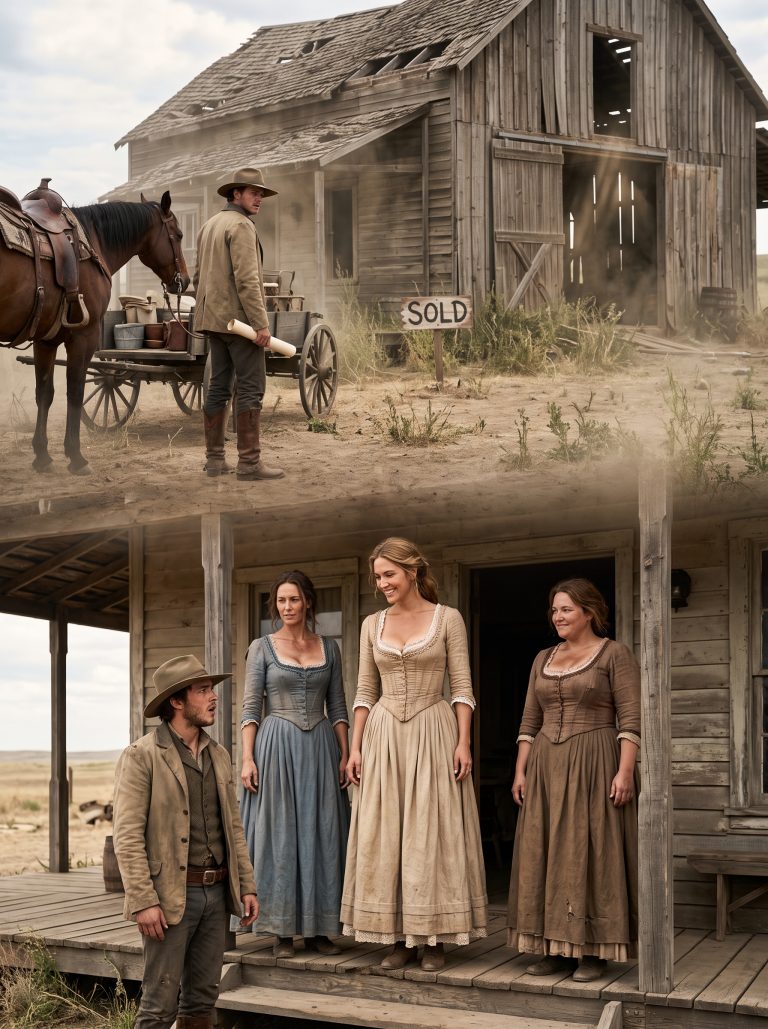
It rose thin and gray over the old Whitmore place, a house that had stood empty for three years, since the widow packed her sewing machine and her grief into a wagon and went to live with her sister in Lincoln. Clara had watched that chimney go cold the autumn it happened. She stood now and watched it come back to life, and then she went back to her beans, because smoke on someone else’s land was someone else’s business.
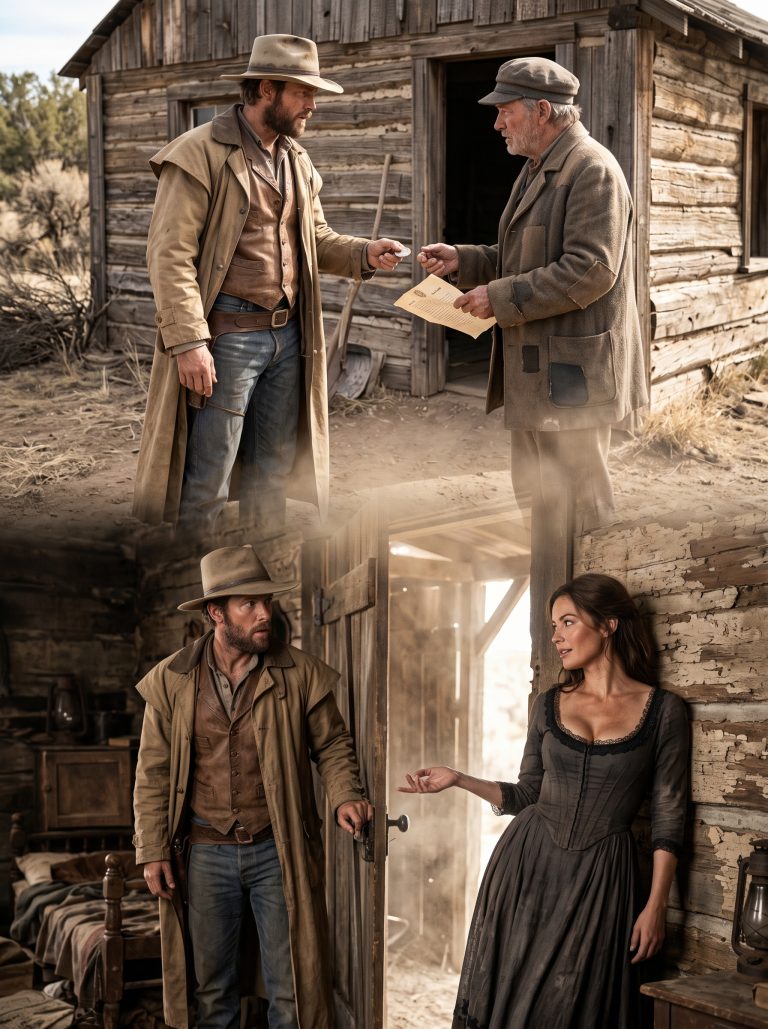
He came on foot. That was the first thing she noticed, three days later, when he appeared at the fence line between the two properties. Men with cattle money rode horses out here — it let them survey a place from a height that suggested ownership before they’d earned it. This one walked the whole distance from his new house to her garden and stood at the post with his hat in both hands, waiting to be noticed rather than announcing himself.
She had heard his name already, from the postmistress, delivered the way small towns deliver everything — as a fact that had already been judged. Ezra Hale. Cattle money. No wife. Bought the Whitmore place sight unseen, which some people found bold and others found foolish, depending on how much they liked him already.
He was older than the rumor had suggested, broad through the shoulder in the way of men who had spent thirty years making decisions outdoors, and when he finally spoke, he didn’t look at her. He looked at the rows of beans behind her, studying them the way a man studies a sentence in a language he almost understands.
“Wondering if you’d sell seed,” he said.
“What kind.”
“Winter wheat, if you have it. And whatever else you think that ground wants.”
She looked at him a beat longer than the question required. Not what he wanted planted. What the ground wanted, and he was asking her to be the one who knew.
“Come back in two days,” she said. “I’ll have it sorted.”
He touched his hat and walked back the way he’d come, and Clara stood in the yard longer than she needed to before she returned to her beans.
By the time he came back, she had done more than sort seed. She had walked the fence line of his new property in the gray hour before sunrise, reading what she could from what grew wild at its edges — foxtail crowding in thick along the east border where it had no business being that heavy, a low corner near the eastern field that would hold spring rain wrong. She had a bag of dry beans set aside for a kitchen garden on his south fence, ground that caught the afternoon sun the way she’d watched it do for thirty years from her own porch, without ever having reason to mention it to anyone.
And she had written him two pages of notes on the east field, and then almost hadn’t given them to him.
She gave them to him anyway.
He read the notes without hurrying, turned to the second page, read that too, folded the paper with care, and put it inside his coat.
“You walked my line this morning,” he said. It wasn’t a question. Something moved across his face and closed again before she could name it.
She told him the wheat needed to go in before the month’s end, that it looked wrong to plant seed into ground that was cooling toward winter, but that was the nature of the crop — it needed the cold to do what it was built to do. He listened the way people listen when they intend to keep what you’ve told them, not simply wait for their turn to talk.
At the door, he stopped with his hand on the frame.
“If something doesn’t take,” he said, “I’d rather know sooner than later.”
“I’ll tell you.”
The door swung shut behind him, and the kitchen held the smell of woodsmoke and the cold he’d carried in on his coat.
He came back because the questions kept getting better. The first week it was depth — how far down to run the drill on ground like his. Practical. She answered it plainly. The second week it was rotation, how she moved her crops between fields year over year so the land didn’t give out from under her. Less practical. The kind of question that treated land as something with a future, not only a present to be used up.
She sat down at the table for that one and drew it out on the back of an envelope — this field, this year, then this, then this — and he sat across from her and followed the pencil without interrupting. When she looked up, he was watching her hands, not the paper.
She set the pencil down. He asked one more question, thanked her, and left, and the envelope sat on the table after he’d gone. She turned it face-down and went to check the stove.
October moved across the farm the way October always did — the garden coming in faster than two hands could keep up with some days, the root cellar filling row by row, the fields going quiet once the plowing was finished. Clara hired out the heavy plowing every August and the threshing when the harvest ran deep enough to need a second set of hands. The rest — the ditches, the rotation, the seed — she had done herself for eleven years, since her husband Silas had left her this ground and a debt that took four years to clear, and she had learned the rhythm of the land the way she knew her own breathing.
She was in the barn one afternoon when she heard him at the fence, though she hadn’t heard him cross the field to reach it.
“I owe you an apology,” he said, hat at his side. “Ran the drill too shallow on the north forty. First pass. Thought I knew better.”
She did the arithmetic in her head. “It’ll still take. Come spring you’ll see it thin in patches, and you’ll know which ones are yours to blame.”
“Yes, ma’am.” He put his hat back on and crossed the field the way he’d come, and Clara picked her fence tool back up and went on with her afternoon, though she found herself listening for his boots longer than the moment required.