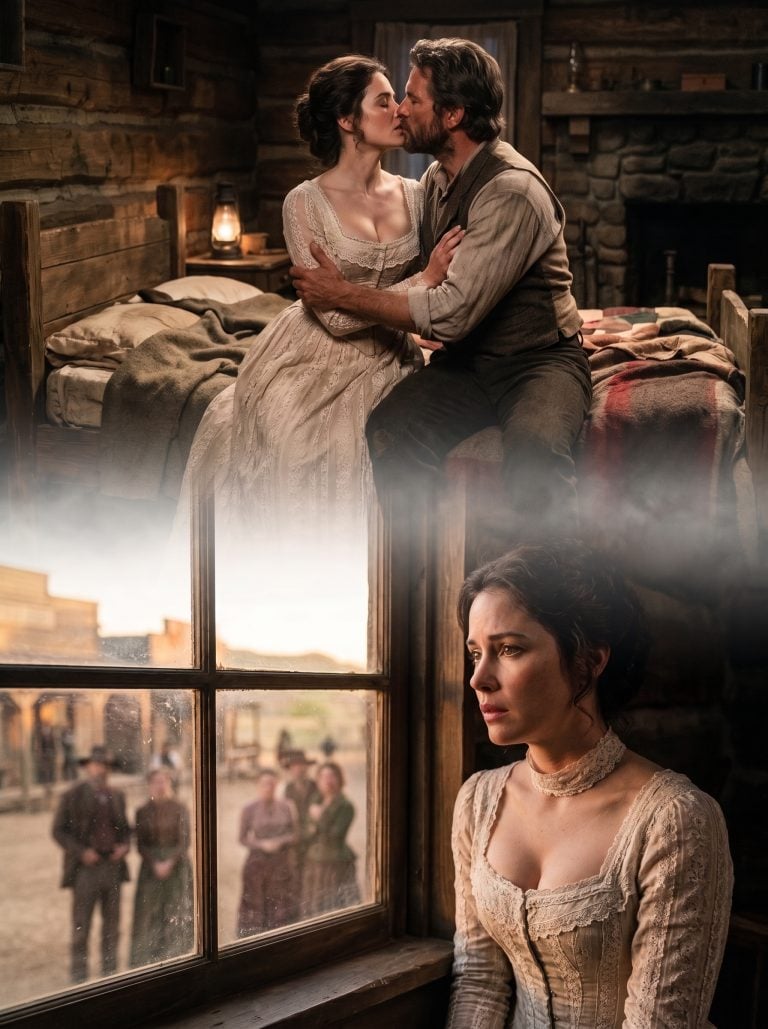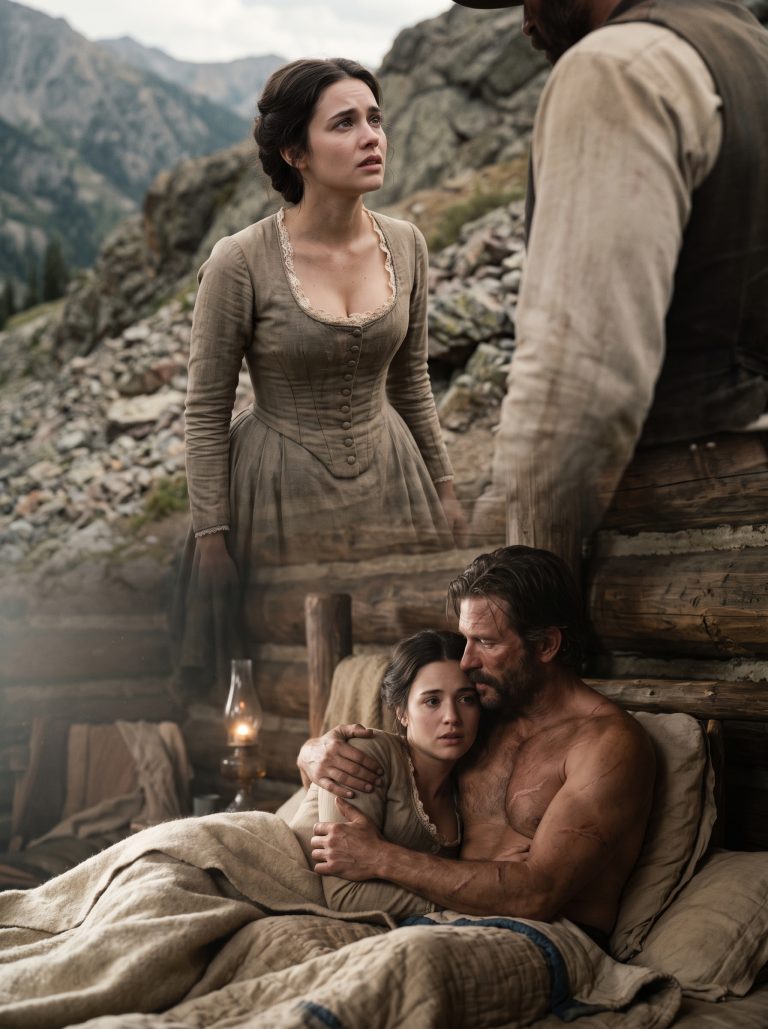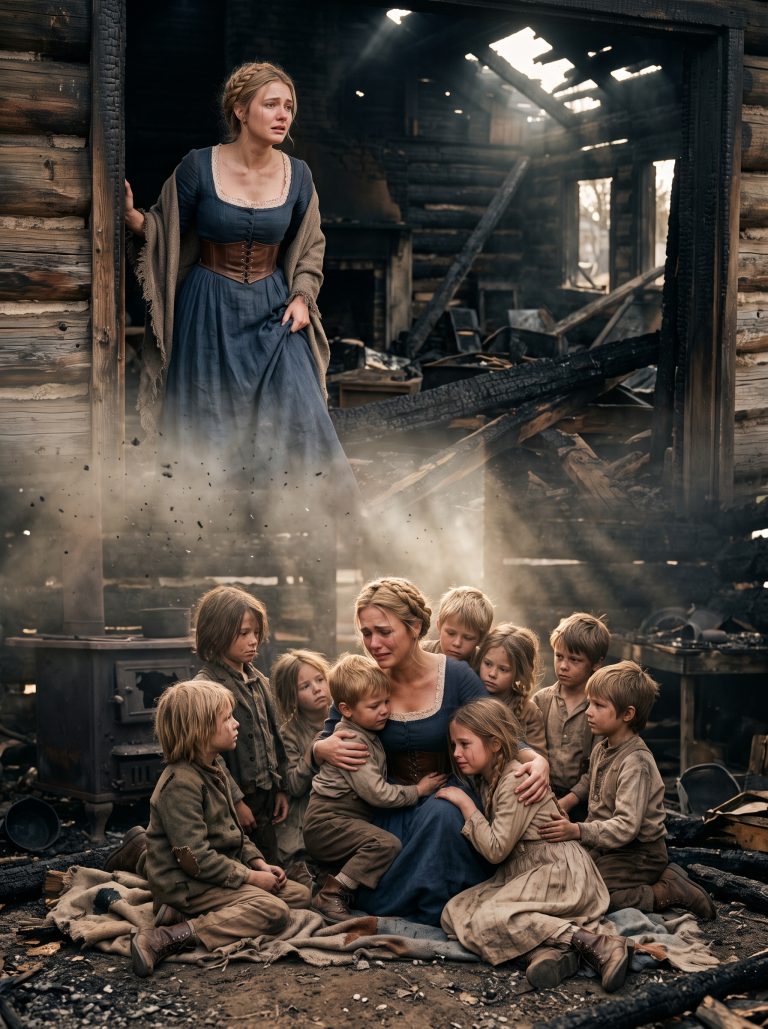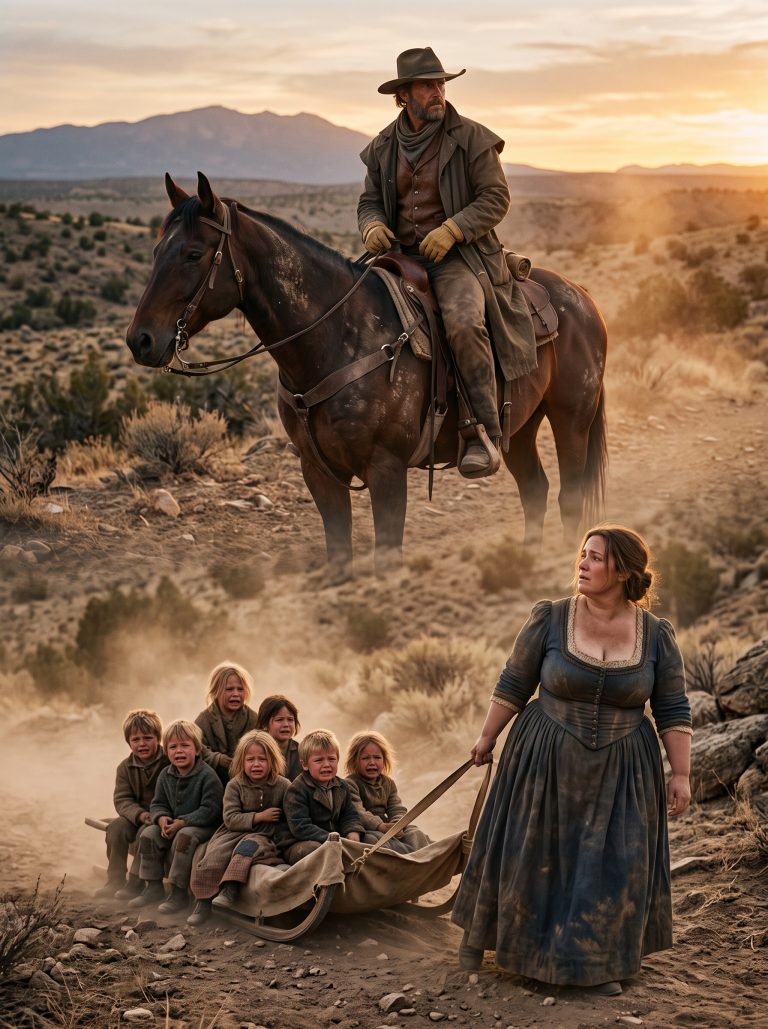
A Grieving Widow Turned Sheriff—But Her First Target Shocked the Entire Town

Part 1
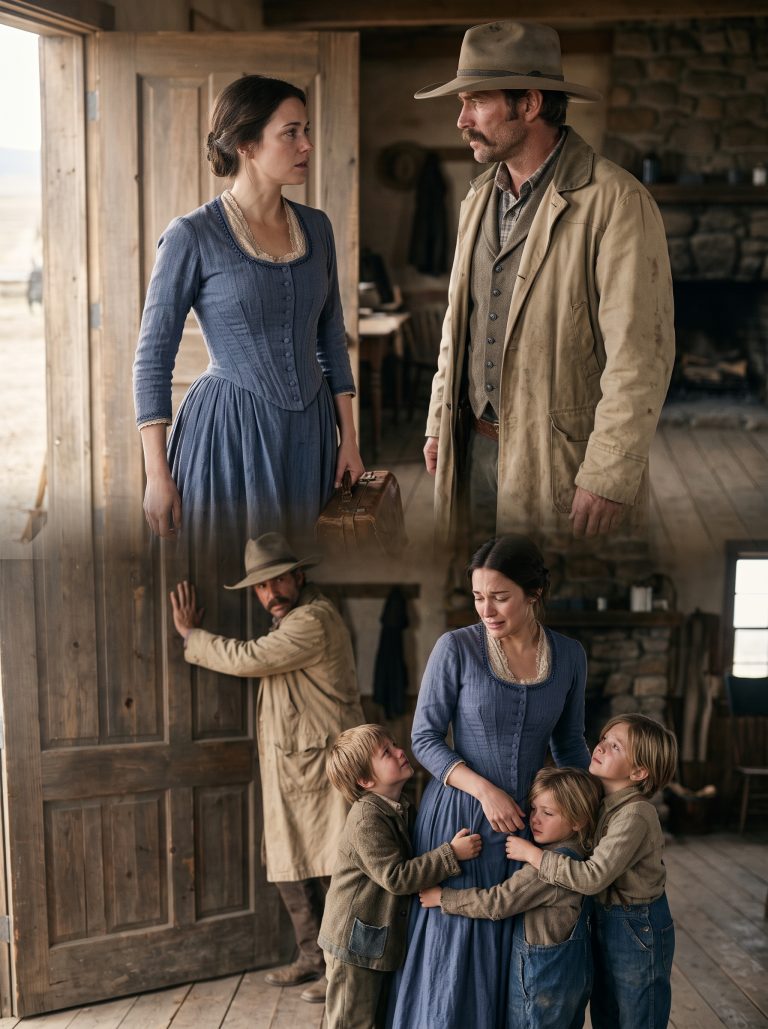
The broth had gone cold twice before Josephine Calloway finally drank it, because Marshal Cole Hendricks kept asking questions between spoonfuls, and she kept answering them slower than she needed to, just to watch him wait.
“You lost near thirty head to the flooding,” he said. “Another dozen to rustlers working the breaks. That leaves you with barely enough cattle to call this a ranch instead of a garden.”
“You come a long way to insult my arithmetic, Marshal.”
“I come a long way to offer you work.” He set his cup down. “I need a tracker. Someone who can read this land better than my own deputies. I hear you spent three years with the Muscogee before you ever married, learned to read sign like they do.”
Joss set her jaw. Her mother, standing at the stove with her back stiff as a fence post, made a small sound of disapproval that needed no words.
“And what exactly are you tracking, Marshal?”
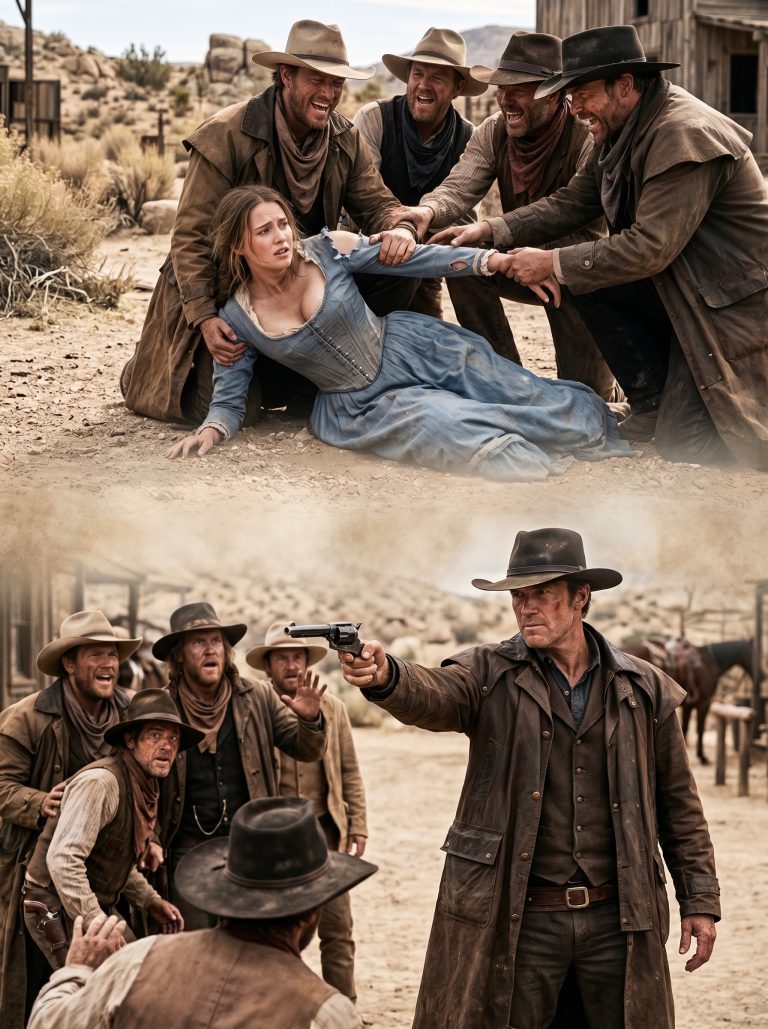
“A man named Elijah Cross. Rode with a gang that robbed the Union Pacific outside Gibson Station three weeks back. Killed two guards doing it. Before that, cut a trail of dead lawmen clean across the Territory.” Hendricks leaned forward. “Word is he’s headed toward Anadarko, maybe farther west, toward the New Mexico line. I need someone who can find a needle’s shadow in a haystack at midnight. That’s you, from what I hear.”
Joss studied him a moment — the mud dried stiff on his stirrup leather, the unfamiliar gelding tied outside that didn’t match the tack he wore. “You crossed the river west of Purcell,” she said. “Your own horse threw a shoe in that mud, so you swapped mounts at the relay station. Means you’d already been following Cross north a fair piece before you doubled back here to find me.”
Hendricks glanced down at the borrowed horse as though he’d forgotten it wasn’t his. “You’ll do fine, Miss Calloway.”
“And what’s it pay?”
“Sixty a month, and a cut of the reward money.”
Her mother turned from the stove. “Josephine, we have a ranch to run—”
“We have a ranch that’s bleeding money, Momma, and you know it.” Joss looked back at the marshal. “I’ll need two days to see the herd settled and hire a hand.”
“You have one.”
She almost smiled. “Then I suppose I’m your tracker.”
The following morning, riding beside Hendricks on the flat golden country north of the Canadian River, Joss finally asked the question that had been sitting behind her teeth since supper.
“Tell me about this man. Cross. What kind of man robs trains and kills lawmen?”
“The kind who used to have something and lost it.” Hendricks kept his eyes on the horizon. “He was a slave before the war, belonged to a plantation man named Colonel Harlan Voss, down in Texas. When the Union troops came through freeing slaves, Voss didn’t want to lose his property to Northern paperwork. Locked every last one of them in a barn and burned it to the ground rather than let them walk free.”
Joss felt something cold slide down her spine. “And Cross survived that?”
“He did. Lost his wife and his daughter in that fire. Been outlawing ever since — some folks say to feed a grudge, others say just because outlawing pays better than farming a burned man’s memory.” Hendricks spat into the dust. “Either way, he’s killed eleven men I know of, including two deputies who strapped dynamite to their own chests just to buy him five minutes to run.”
“That’s not outlawing. That’s a man drowning in a debt nobody can ever pay him back.”
Hendricks looked at her sideways, something unreadable behind his eyes. “You sound like you feel for him.”
“I feel for anybody who watched their family burn and had nobody stop it.” She met his stare. “That doesn’t mean I won’t help you catch him.”
“Good. Because Cross isn’t riding alone. He’s got a man named Silas Crane riding with him — meaner than Cross by half, and twice as fond of killing for the pleasure of it. Crane’s the one you want to worry over.”
Joss said nothing to that. She only touched the pocket where she kept a small silver watch, dented on one side, its chime bent flat on a single note — half of a matched wedding pair, silver for her and gold for him, that she and Jim Calloway had bought each other the week they married. The gold half had gone missing eight months back, off her husband’s own body, when two highwaymen shot him and her father dead on the Amarillo road and took everything of value they carried.
She had told no one the real reason she’d said yes to this job. Not her mother, not the marshal, not even herself, most nights.
But somewhere out past the tree line, in a country that ate men whole and rarely gave back their bones, she intended to find out who had killed her husband — and whether the law’s slow justice, or her own quicker kind, would be the one to answer for it.