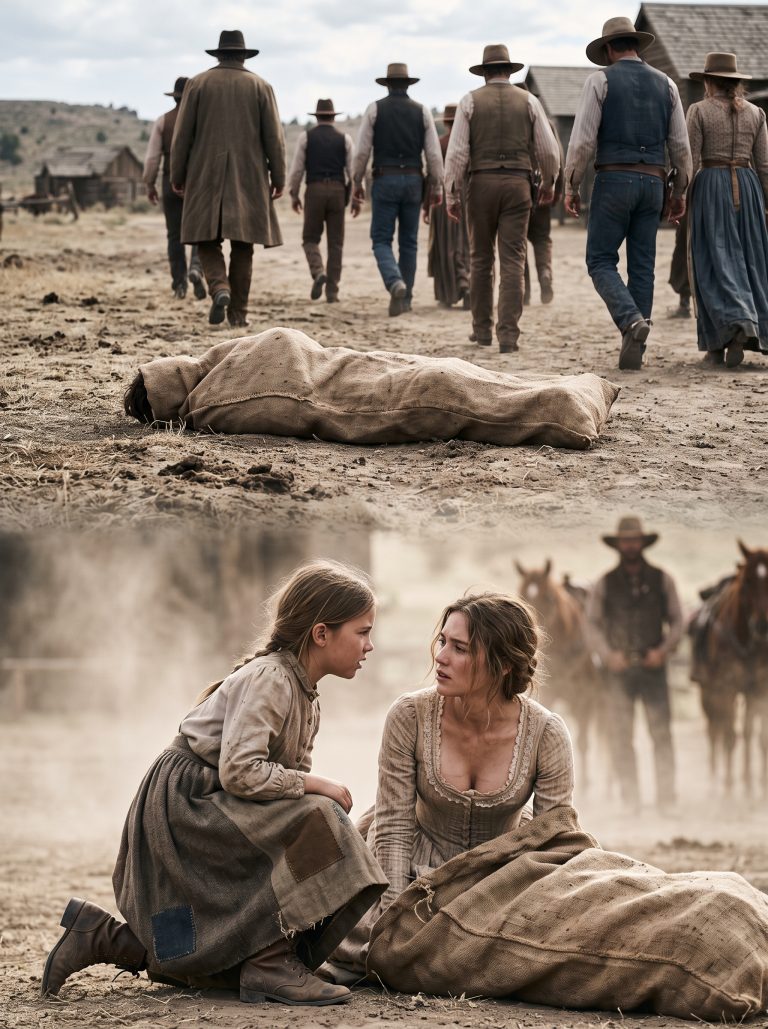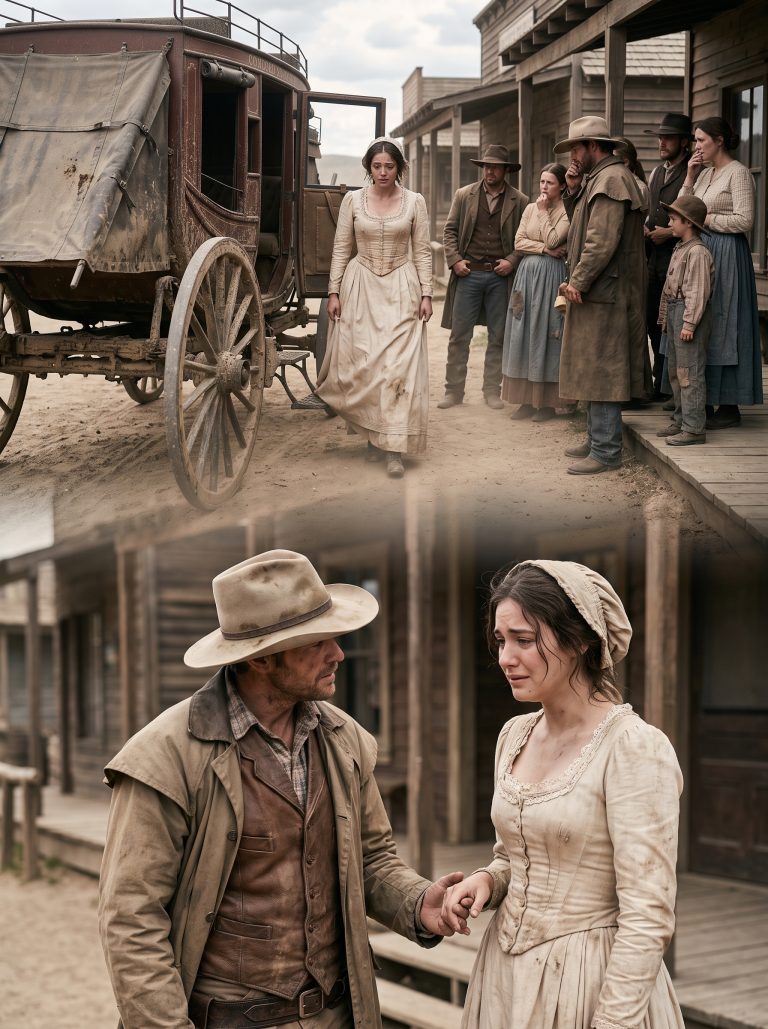
“Government wards don’t get to choose a father,” Agent Crenshaw sneered as he reached for the starving Cherokee children — until I showed him the court order that changed everything.

PART 1
Elias Granger had not cried since he buried his wife and son on the hill behind his house. Three winters had passed since then, and in that time the ranch had learned to run itself around the shape of his silence — cattle fed, fences mended, supper cooked and eaten alone at a table with eight chairs, only one of them ever pulled out.
So when the shadows started showing up along the tree line that November, he almost didn’t trust himself to have seen them at all.
Small. Quick. Gone before the mist finished dragging itself across the pasture.
A lesser man might have gone for his rifle. Elias went for the milk pail instead.
He didn’t call out. Hunger is proud even when the body’s given up — he knew that the way you know things you’ve never had to be taught, and he wasn’t about to spook something that hungry into running further into a Montana winter than it could survive. He left the pail on the stump, half a loaf of bread beside it, and walked into the barn without looking back.
By dusk, the milk was gone.
By the third night, the jug came back rinsed and the blanket he’d added — cedar-chest wool, the last thing that still smelled faintly of his wife Sarah — came back folded into a perfect square on the stump, like a note left by someone who didn’t want to owe him anything.
Whoever’s out there has manners, he thought. Even starving.
The boy who finally stepped into his barn doorway three nights later had his spine straight and one hand resting near a small knife at his belt, like he’d rehearsed the posture of a man even though his voice cracked once, right in the middle of the only sentence that mattered.
“There are twelve of us.”
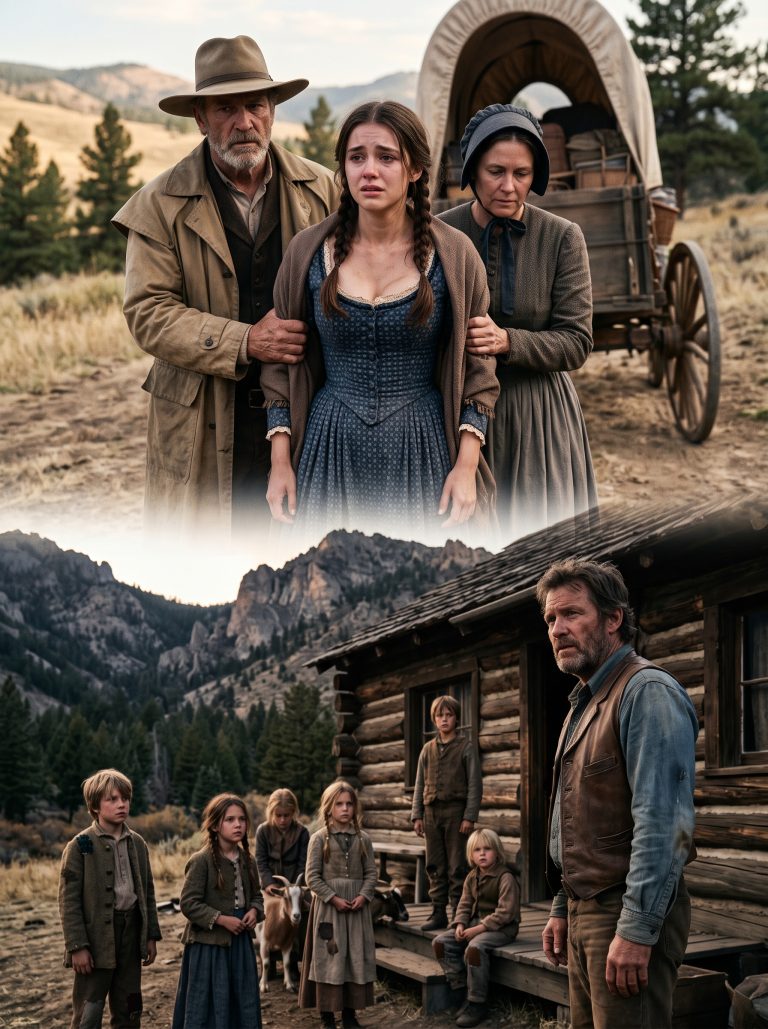
His name was Caleb Red Feather. Fourteen, trying hard to be older. Behind him, in a line that seemed to go on forever in that lantern light, came his sister Kai, then Alina, Ruth, Naomi, Marcus, Samuel, Benjamin, David, the twins Thomas and Joshua — and last, a small girl clutching a corn-husk doll against her ribs like it was the only warm thing left in the world.
She looked up at Elias like he was a mountain that might fall on her.
“We’re starving, sir,” she whispered.
Her name was Tessa. And something in Elias that had been frozen solid since a small coffin went into the ground finally, quietly, began to crack.
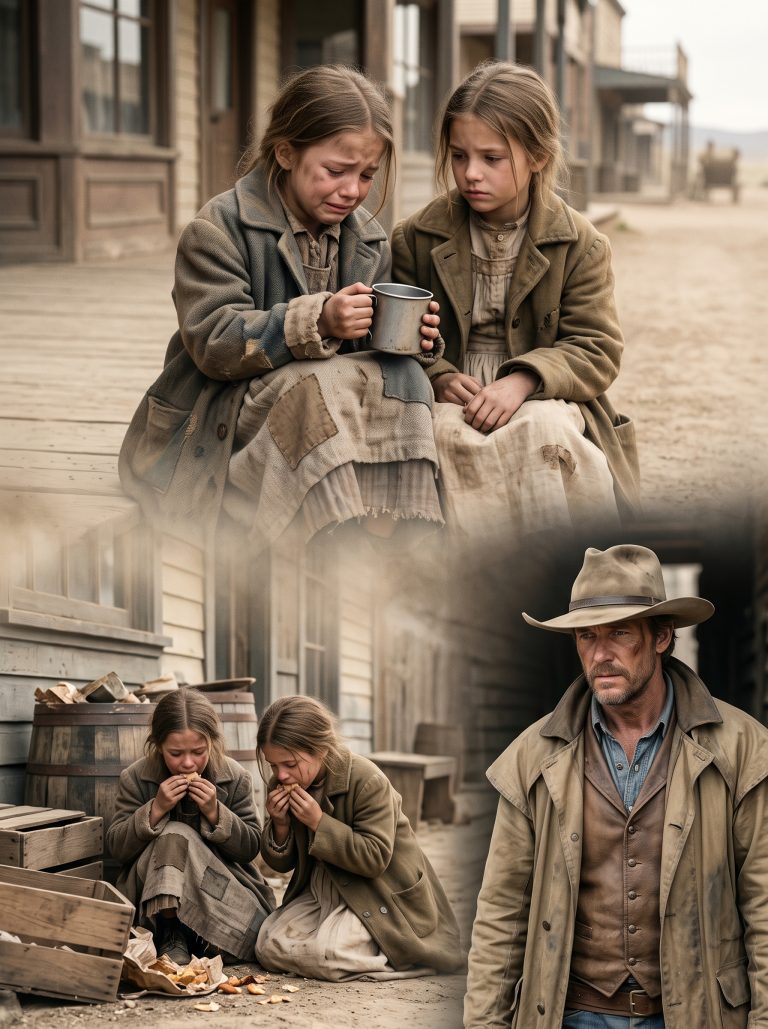
He dragged in benches from the porch and turned two feed crates on end so all twelve of them could fit around Sarah’s big table — the one he hadn’t set for more than one person in three years. They ate the way people eat when they’ve learned a second helping might not come. Nobody spoke much. Caleb stayed near the door. Kai watched Elias with the flat, careful eyes of someone measuring exactly how fast she could get eleven other children out a window if this went wrong.
It took most of the night for the story to come out in pieces. They had been gathered from families scattered through Indian Territory, then marched and wagoned north and west to join a larger rail convoy — the agency’s way of moving children through country too thin on witnesses to ask questions — before the line was meant to turn east again toward a “boarding school” in Pennsylvania that took names, cut hair, and beat a language out of a child’s mouth one slap at a time. It was during that long westward leg, deep in Montana territory, that the wagon lost them. Seven weeks of hiding by day and walking by dark, surviving on nothing, running toward nowhere in particular except away.
“Nobody takes food from a child in this house,” Elias told them. “Not tonight, not ever, long as I’ve got a stove that lights.”
Tessa put her small hand on his sleeve.
He had to turn toward the feed bins so they wouldn’t see his face do something he hadn’t let it do in three years.
By morning, there was a plan, thin and dangerous and the only one that fit. In town, they’d be his late wife’s orphaned kin from back east. In the house — behind closed doors, at night, around the stove — they would keep everything. Their real names. Their songs. Their prayers. Every story their mothers had given them before those mothers were scattered, jailed, or lost.
For nearly three months, the ranch didn’t just survive. It lived. Caleb took to cattle work faster than any grown hand Elias had ever hired. Kai knew more about fevers and herbs than the doctor in town with the framed certificate on his wall. Alina ran the kitchen like Sarah had left her a set of instructions folded into the flour bin. Martha Patterson, the widow from the next ranch over, started riding in every Thursday with a sack of coat scraps and sewing needles, never asking more than the children were willing to say. At night, twelve children sang songs in Cherokee in the parlor, and Elias sat there with his old guitar across his knees, mangling the words on purpose sometimes just to hear them laugh, thinking — Sarah would’ve had every door in this house open before I even found the key.
He let himself believe, for nearly three months, that maybe this was simply going to be his life now. Loud. Crowded. Alive.
Then, on a gray morning with frost still on the porch rail, he heard horses coming up the drive — three sets, moving at the pace of men who already believed they’d won.
He looked out the window and saw a badge catch the light.
He looked up the stairs, where twelve children had gone dead silent, and he saw one small pair of boots stop moving just behind the crack of his bedroom door.
He had exactly as long as it took the rider to dismount to decide what kind of man he was about to be.