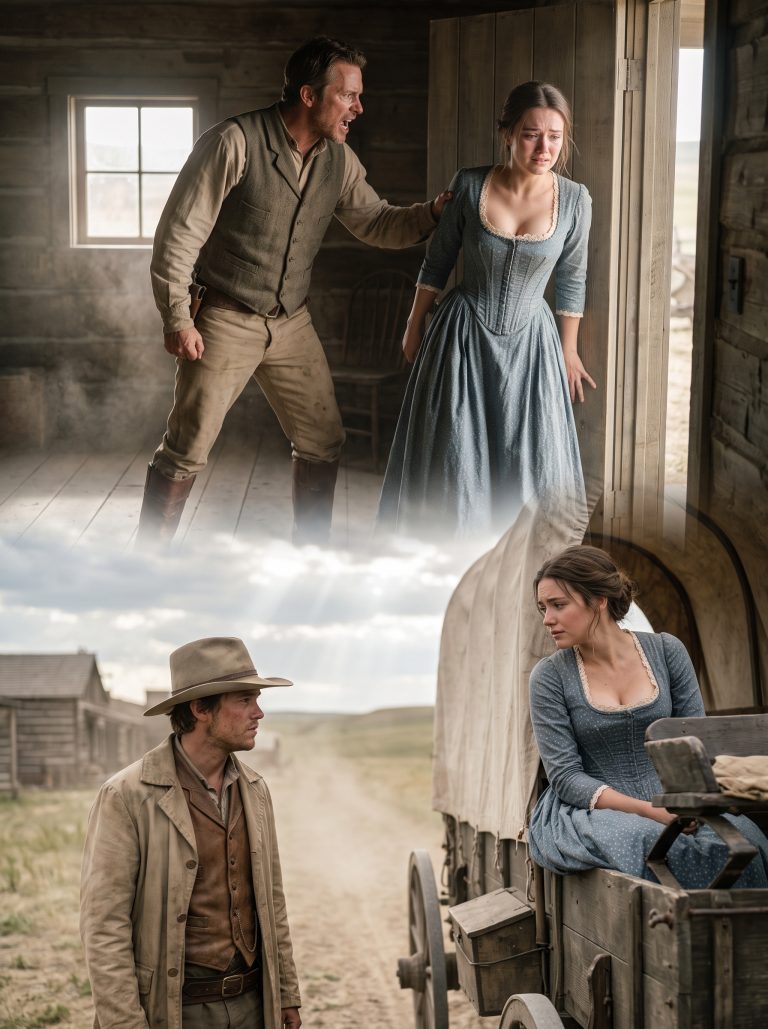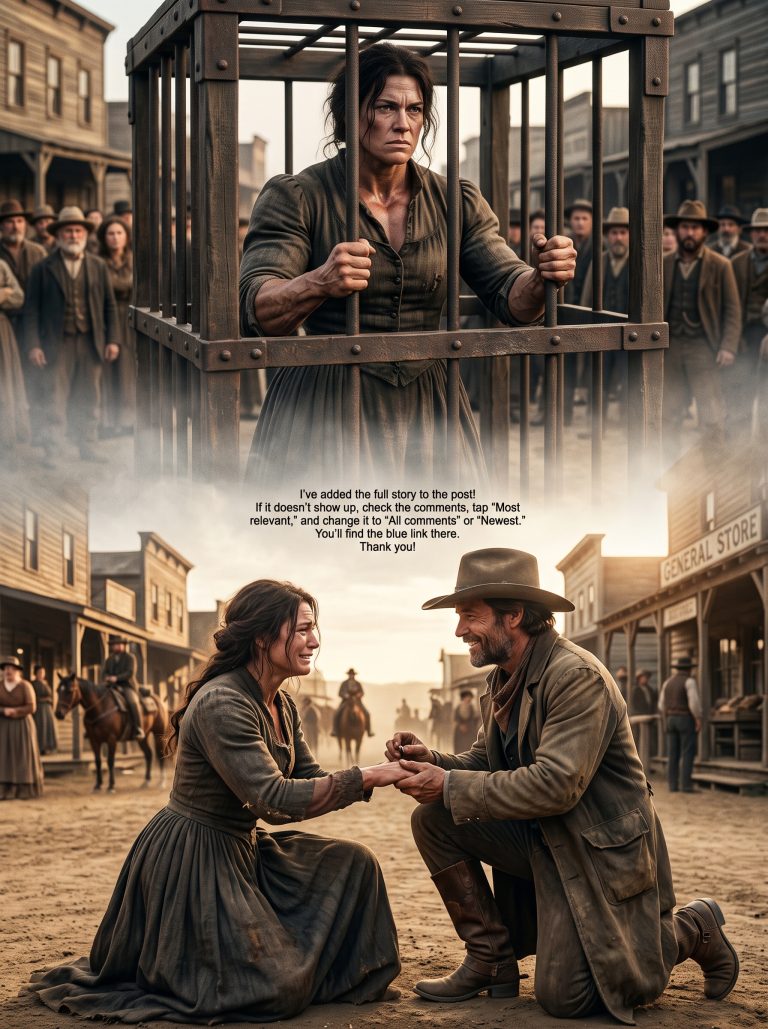
Rancher Bought a Ghost Town for $100 — And Found a Family Still Living There

PART 1
The deed cost him a hundred dollars. The truth would cost him everything else.
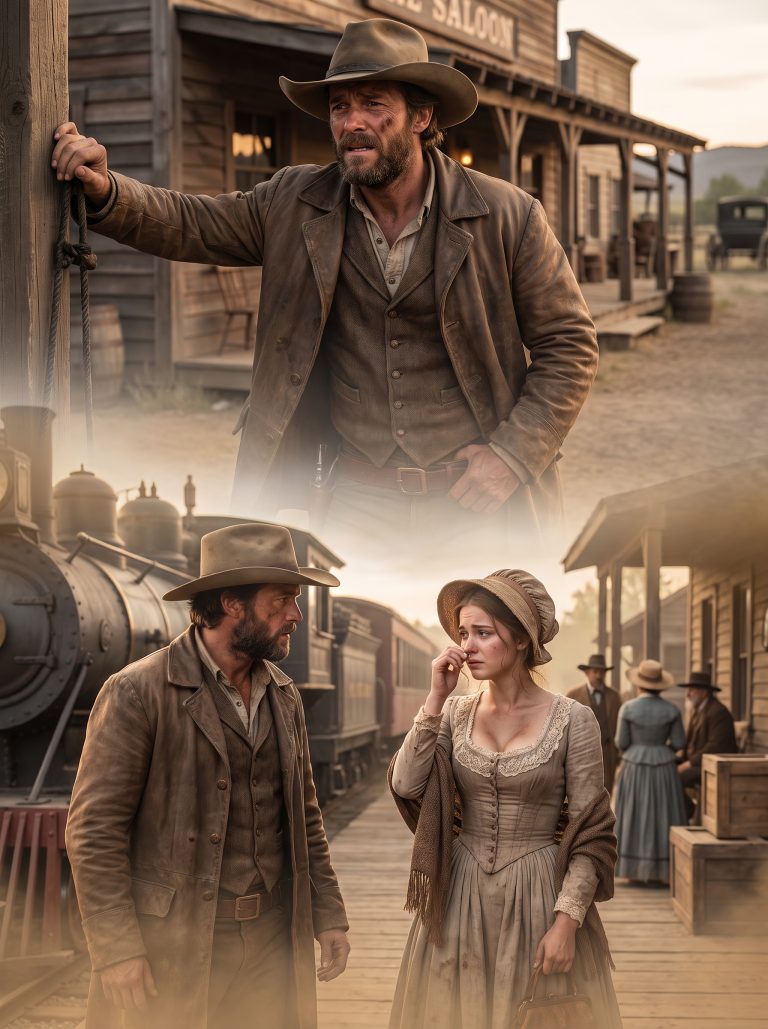
Boon Carter had ridden three days to reach the town the county called worthless — a scatter of collapsed roofs and sun-bleached signs nobody had bothered to take down. He’d expected silence. He’d expected dust settling over dead dreams, maybe a rattlesnake sunning itself on a porch that hadn’t held weight in a decade.
He hadn’t expected smoke.
It rose thin and gray from a chimney that, according to the county clerk, belonged to a building condemned since before the war ended. Boon reined his horse in at the edge of what used to be Main Street and just looked at it for a long moment, the way a man looks at something his eyes are telling him can’t be real.
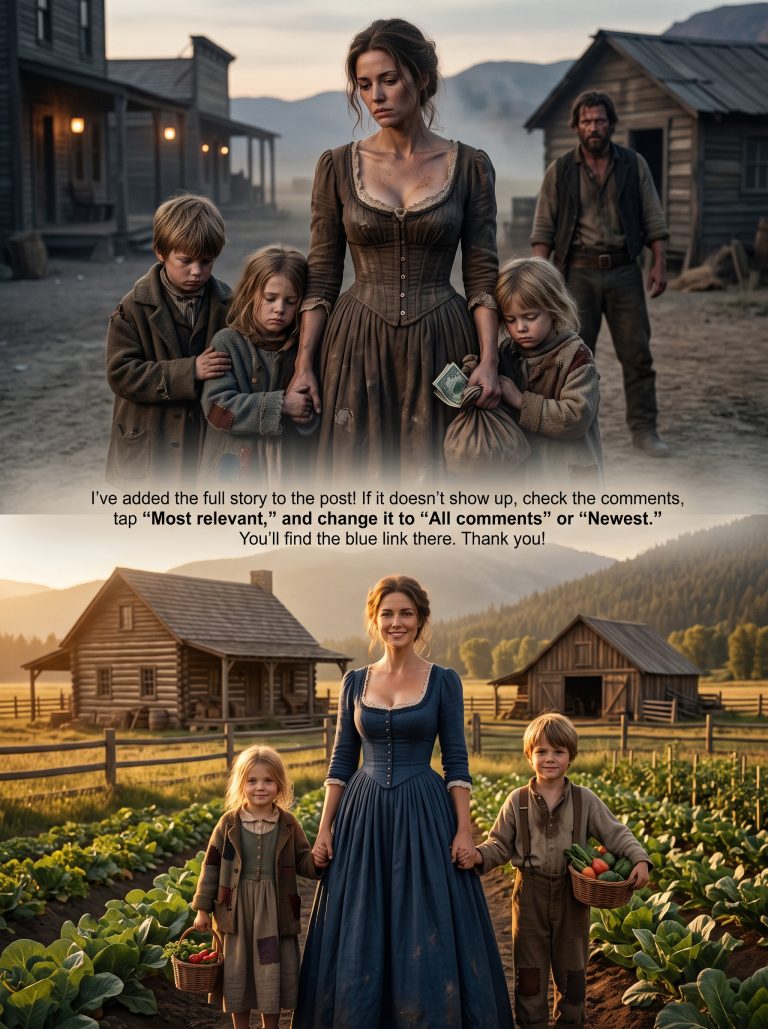
Then he saw the garden. Neat rows of it, tucked behind the old assay office, green against all that dead brown. And then — through a window with a crack running corner to corner like a lightning bolt frozen in glass — a shadow moved.
He was still deciding whether to draw his gun or take off his hat when the door of the general store opened, and a woman stepped into the frame with a rifle held like she’d used it before and would again without much ceremony.
She didn’t say hello. She didn’t ask his business. She just looked at him the way you look at weather rolling in — something you can’t stop, only brace for.
“Ma’am,” Boon said, keeping his hands where she could see them. “I think there’s some confusion here. I bought this town. Deed’s right here in my pocket.”
“No confusion on my end,” she said. Her voice didn’t shake, but her hands did, just slightly, against the stock of the rifle. “You’re the one who doesn’t belong.”
He almost laughed. He didn’t, because behind her, through the open door, he caught a glimpse of something that stopped the laugh cold in his throat — blankets strung up as walls, canned goods stacked like a life savings, a small fire burning in what used to be a merchant’s counter.
This wasn’t squatting. This was survival, built brick by brick out of nothing.
Then he heard it. A cough, deep in the building. Wet. Small. The kind of cough that comes out of a chest too little to be fighting something that big.
The woman’s composure cracked for exactly one second — her eyes darting toward the sound, her grip tightening on the rifle not at him this time, but around it, like it was the only solid thing left in her hands.
“That’s my granddaughter,” she said. “She’s sick. And this is the only roof we’ve got for a hundred miles.”
Boon had come here to look at ruins. He hadn’t planned on looking a woman in the eye while she told him, without asking, that she wasn’t leaving — because leaving meant a child dying somewhere with no walls at all.
“How long have you been here?” he asked instead of answering his own doubts.
“Three months,” she said. “Since the bank took everything else.”
The cough came again, worse. The rifle Dorothy Whitmore had clung to for three desperate months hit the dirt as she turned and ran back inside without a second thought for the man she’d just been ready to shoot.
Boon Carter followed her into a life he never planned on stepping into.
He had no idea yet what the next two days would ask of him — a badge that lied about what it protected, a debt with no signature behind it, and a decision that would cost him a lot more than a hundred dollars to make right.
By morning, the law would come back for Dorothy — and Boon had already chosen which side of the doorway he’d stand on.