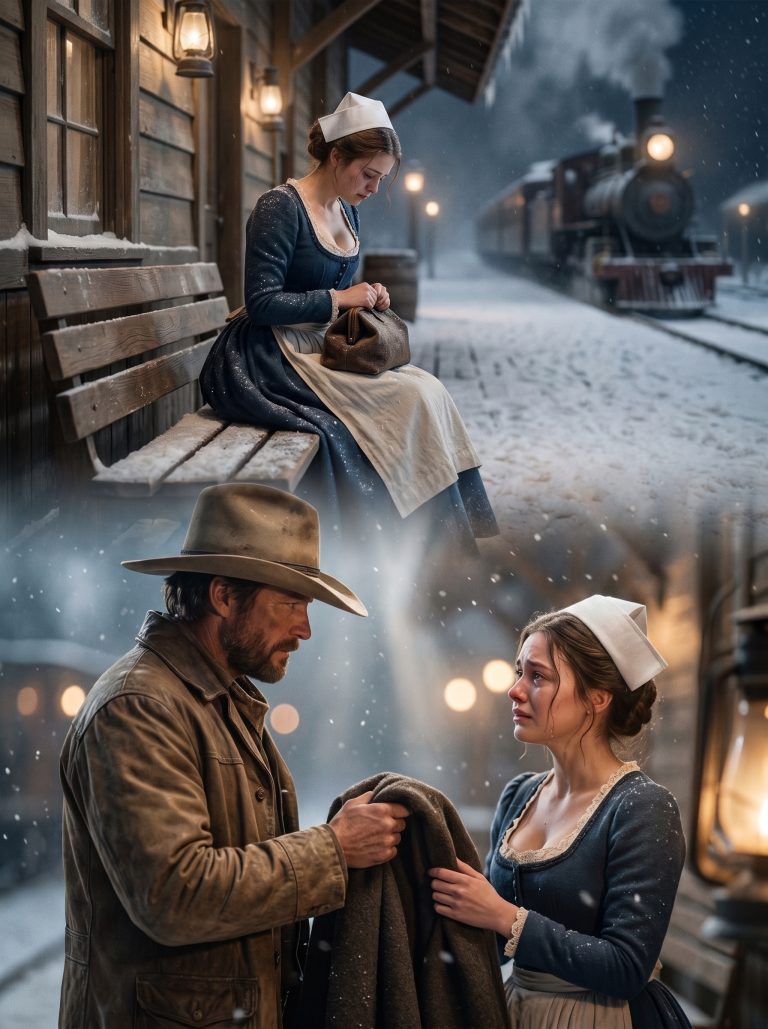
They were two Apache brides condemned as barren and thrown to the gallows by a merciless town—until a hardened cowboy shattered the noose, defied the law, and carried them away into a life no one saw coming.

Part 1
The first thing Caleb Hart saw was not the rope. It was the silence.
A crowd had gathered beneath the lone sycamore at the edge of Hollow Ridge, New Mexico Territory, and silence was not a thing crowds usually kept. Men who would normally be trading insults over cards stood with their hats in their hands, staring at the ground like the dirt owed them an explanation.
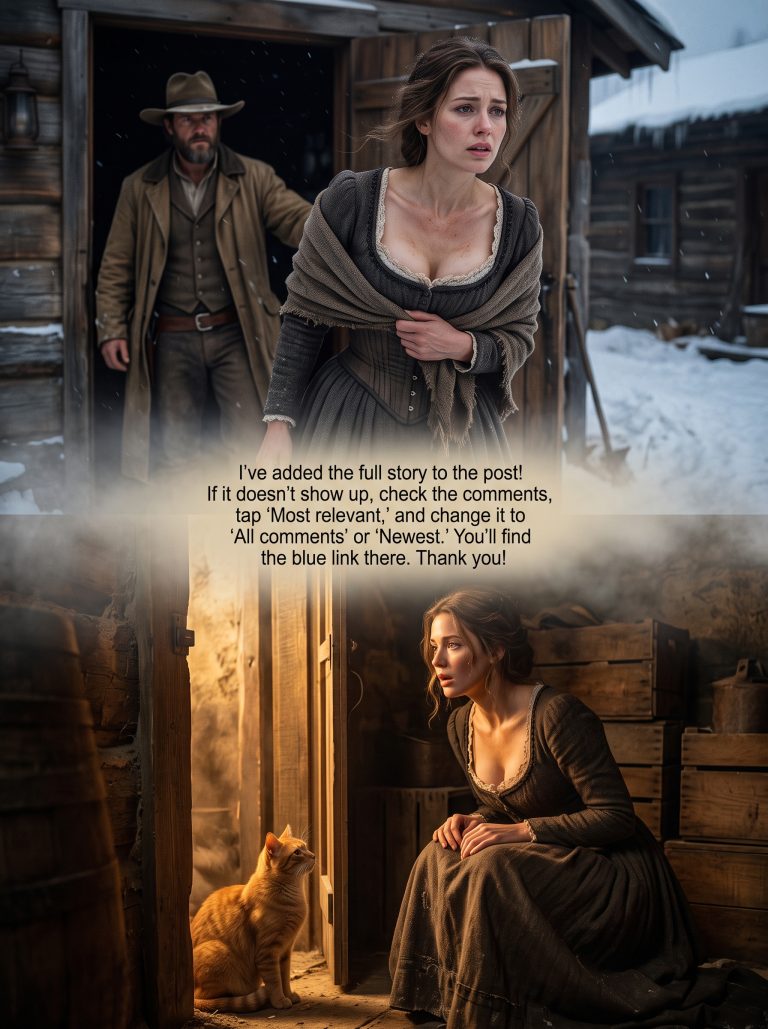
Then he saw the wagon. And the two women standing on it with ropes around their necks.
Caleb reined in his horse at the edge of town. He was thirty-one, lean from years of drifting after a war that had left him with more scars on the inside than the out, and he had promised himself more than once that other people’s trouble was no longer his to carry. He had broken that promise before. He was about to break it again.
“Move along, stranger,” a deputy called, tapping the star pinned crooked on his vest.
“What did they do?”
“Cursed this town,” the deputy said. “Every wife they’ve been given has come up barren. Sofia Reyes there—” he pointed to the older woman, blood dried above one eyebrow, chin lifted anyway, “—buried two husbands. Both healthy men. Both dead within the year. And the young one, Marta, been married four months and already her husband’s crops are dying in the field.”
Caleb looked at the two women. The younger one, Marta, could not have been twenty. Fear had drained the color from her face, but not her posture. The older one, Sofia, met his eyes with a kind of exhausted defiance, as though she had long since stopped expecting rescue and had simply decided to die without flinching.
“That’s not a crime,” Caleb said. “That’s bad luck.”
A rancher near the wagon spat into the dust. “Bad luck follows women like that on purpose, mister. Ain’t no coincidence.”
“Rejected ain’t the same as guilty,” Caleb said, and swung down from his horse before anyone could stop him.
Three rifles came up. Caleb kept his hands where they could be seen and his voice low. “Point those at me if you mean to use them. Otherwise put them down.”
Nobody fired. Nobody ever did, in Caleb’s experience, when a man made them look at what they were actually about to do.
He climbed onto the wagon boards, which groaned under his weight, and cut Marta’s bindings first. She gasped as the noose slid free and nearly went down; he caught her elbow.
“Easy,” he said.
She whispered something in Spanish too fast for him to catch, then, “Thank you.”
He turned to Sofia next. She didn’t thank him. She watched him with sharp, measuring eyes, as if kindness itself had become a thing worth being suspicious of.
“Why?” she asked, when the rope came away from her throat.
“Because a man who watches this and does nothing isn’t much of a man,” Caleb said.
The deputy found his nerve too late. “You ride out of here with them, you’ll regret it before sundown.”
Caleb’s hand drifted near his revolver. “Then come make me regret it.”
Nobody came. A town brave enough to hang two women in daylight suddenly found the toes of its own boots very interesting.
Caleb led the women out past the last house in Hollow Ridge, Marta walking close beside his horse, Sofia riding behind the saddle, silent. For a long while there was only wind and hooves and the low red light of a sun going down over the hills.
“Why did you really help us?” Sofia finally asked.
Caleb looked at the horizon a long moment before answering. The truth was that he’d been the loneliest man in the territory for four years running, and something about two women standing beneath a rope had looked even lonelier than that.
He didn’t say that.
“Because somebody had to,” he said.
Sofia’s grip tightened on the back of his saddle. He felt it through the leather, and said nothing more.
They made three miles before Marta stopped walking and turned to look behind them, eyes narrow against the dying light.
“Riders,” she said.
Caleb followed her gaze. Dust rose from the trail behind them — three horses coming hard.
“Who?” he asked, already reaching for his rifle.
Sofia’s voice had gone very still. “My husband’s brother. And the man Marta was given to.”
“Given to,” Caleb repeated slowly, turning the words over like they tasted wrong. “Given to by who?”
Neither woman answered. And in the silence, Caleb understood — with the cold certainty of a man who had learned to read what people didn’t say — that the story he’d been told back in Hollow Ridge was not the whole of it. Not nearly.
Part 2
The riders pulled up twenty yards off, dust settling around their horses’ legs. The lead man was young, narrow-faced, dressed too fine for honest ranch work — Silas Cobb, and Caleb knew the type without needing an introduction. Beside him rode an older man with a shotgun laid across his saddle, and behind them both, hanging back like a man ashamed of his own company, rode a third — a surveyor, judging by the leather satchel of maps strapped to his horse.
“Those two are coming back to town,” Silas said.
“No,” Caleb said.
Silas smiled the smile of a man who had never once been told no and taken it seriously. “We have marriage papers, mister. Filed with the county.”
“Then frame them,” Caleb said. “They won’t make good kindling out here.”
The older man leaned forward. “You don’t understand what these women cost this town. Every field near their husbands’ land has failed for two years running. Cattle sick. Wells running dry. Folks are scared, and scared men need somebody to blame.”
Sofia’s eyes cut toward the surveyor, who would not meet her gaze. Something passed over her face — not fear this time, but recognition.
“Ask him,” Sofia said quietly, nodding at the surveyor, “why the Larkin Water Company has been buying failed claims along Hollow Creek for eighteen months. Ask him why every family that refuses to sell suddenly has a barren wife and a dying field.”
The surveyor went pale.
Silas’s hand twitched toward his pistol. “Shut your mouth.”
“No,” Marta said, stepping forward for the first time, her voice shaking but clear. “I refused to sign the water lease my husband was pressured to sign. Three weeks later he told the whole town I was cursed.”
Caleb’s rifle came up before he’d decided to raise it. “Seems to me,” he said, “the only thing barren around here is your conscience, Cobb.”
The silence that followed was different from the one back in town. This one had teeth in it.
“You don’t know what you’ve stepped into,” Silas said, and for the first time there was something under his bravado that sounded almost like fear.
“Then somebody had better explain it,” Caleb said, “before I decide you’re not worth explaining anything to at all.”
The three riders turned back toward Hollow Ridge, but Caleb had seen enough men like Silas to know shame didn’t end a thing. It only delayed it.
Behind them, the sky had gone the color of a bruise. On the ridge ahead, a line of dark shapes had appeared, watching. Waiting.
“Who are they?” Caleb asked.
Sofia’s breath caught. “My father’s people,” she said. “We should not have come this far without warning them.”
“Why?”
“Because,” she said, watching the riders on the ridge begin to move, “they have been waiting two years for proof of what’s been done to their daughters. And I think you just gave three men reason to make sure that proof never reaches a judge.”
Part 3
The riders on the ridge did not attack. They descended slow and sure-footed through the dusk, and at their head rode an old man with silver in his braid and a face carved by grief and years of searching. He stopped his horse before Sofia and placed one hand flat over his heart. She did the same, and something in her — the hard, careful posture she’d worn since the wagon — finally broke.
“My uncle,” she told Caleb, voice thick. “Tomás.”
Tomás studied Caleb for a long moment, the way a man studies a bridge before deciding whether to trust his weight to it. Then he spoke, and Marta translated, her Spanish and his Apache blending into something Caleb could only half follow.
“He says many men would have ridden past that wagon.”
“Tell him I nearly did,” Caleb said, and meant it.
That night they made camp in a hollow between the hills, hidden from the trail. Cook fires glowed low so as not to carry light too far. Tomás listened while Sofia told him everything — not just her own hanging, but the pattern behind it. Two years of families near Hollow Creek losing wives to accusation the moment they refused to sell their water rights. Two years of the Larkin Water Company quietly buying up abandoned claims for a fraction of their worth, while a corrupt deputy and a frightened, superstitious town did the dirty work of driving people off their own land without a single shot fired by the company itself.
“It was never about barren wives,” Sofia said. “It was about barren land — land the Larkin Company wanted people desperate enough to leave. A hanged wife is faster than a lawsuit, and cheaper than a bullet.”
Caleb sat with that a long moment, turning it over like a stone with something ugly written on the underside. He had ridden into Hollow Ridge expecting cruelty born of superstition. What he’d found instead was cruelty built on purpose, with a name and a ledger behind it, wearing superstition like a mask because a mask was easier for a town to live with than the truth of what it had done for money.
“That’s worse,” he said finally.
“Why?” Tomás asked through Marta.
“Because superstition you can argue a man out of,” Caleb said. “Greed just finds a new mask.”
By midnight, riders had arrived from Hollow Ridge — not Silas Cobb’s men this time, but three families Tomás had quietly sent for: men and women who had lost wives, daughters, and land to the same pattern, all of them too frightened to speak until now, and all of them furious to learn they had not been cursed at all, only robbed.
At dawn, Silas Cobb came back with twelve men and a warrant.
He found instead a camp of forty, Apache riders on the ridgeline and Hollow Ridge families standing in the open beside them, the surveyor’s own ledgers — recovered that night from his abandoned satchel — laid out on a wagon bed for anyone to read.
“This is trespass,” Silas shouted, though his voice had lost its certainty.
“This is evidence,” Caleb said, holding up the surveyor’s own map, marked in his own hand with every claim Larkin had targeted, cross-referenced with the date each “barren” accusation had been made. The pattern was there in black ink, plain enough for a child to follow. “Every claim on this map belongs to a family your company wanted gone. Every hanging happened within two weeks of a refusal to sell.”
Silas’s face drained of color. Behind him, his own men had begun to shift, reading over each other’s shoulders, doing arithmetic they didn’t like the answer to.
“The company will bury you,” Silas said, but it came out thinner than he meant it to.
“Maybe,” Caleb said. “But you’ll be buried first, and that judge in Santa Fe doesn’t answer to Larkin money — not since your deputy’s been skimming enough of it that half the territory already suspects him.”
It was the deputy, in the end, who broke. Faced with a ledger, a dozen witnesses, and a federal marshal Tomás had sent for three days earlier — a man who arrived that very afternoon with two more deputies and a face like a closing door — the crooked lawman gave up Silas Cobb, the Larkin Company’s local agent, and eighteen months of falsified filings in exchange for a lighter rope of his own.
Silas Cobb did not go easy. He drew on the marshal in the confusion, and it was Caleb who put him down before a shot could be fired at anyone standing near Sofia — a single round through the shoulder, enough to end the argument without ending the man.
“Should’ve let you hang instead,” Caleb told him, standing over him in the dust.
Silas said nothing. There was nothing left in him worth saying.
By evening, the surveyor had confessed everything to the marshal in exchange for his own freedom, and the truth of Hollow Ridge — two years of manufactured shame used to steal land from people too frightened and too proud to fight back — was written down where a court could not un-write it.
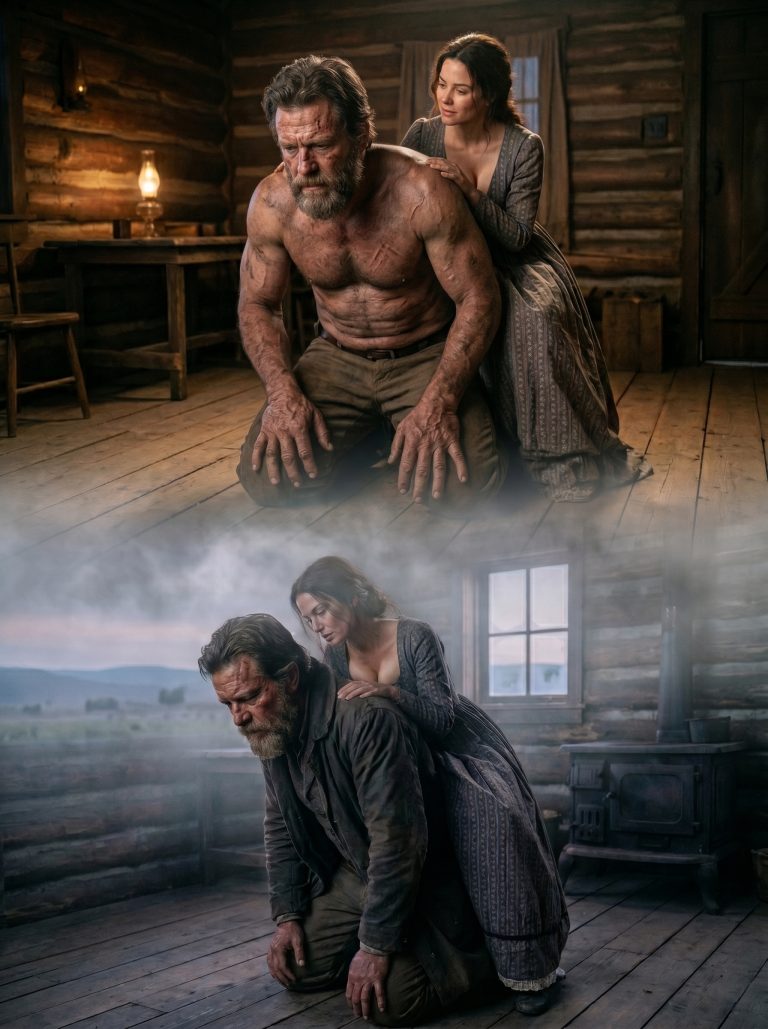
The families who had lost wives to the rope, or to shame, or to husbands too weak to stand against a company with money behind it, gathered that night around the fires. Some wept. Some sat in silence too old for tears. Sofia moved among them the way Caleb imagined she must have moved for years, quiet and steady, offering what comfort she had left to give even though she had less reason than anyone to have any left at all.
Caleb found her by the edge of the firelight later, apart from the others, looking north toward the dark shape of Hollow Ridge.
“You did that,” he said. “Not me. I just cut a rope.”
“You believed us,” she said. “Nobody in that town believed us in two years. You believed us in one afternoon.”
“Wasn’t hard,” he said. “I’ve seen men build lies before. This one just had better bookkeeping.”
She almost smiled at that — the first real one he’d seen from her.
“What will you do now?” he asked.
“Tomás says I can stay with our people. Rebuild. Marta too, if she wishes it.” She looked at him, and there was something careful in the look, the way a person tests weight on ice before trusting it. “And you? You have land of your own to return to, I think. A man doesn’t ride three counties on borrowed time for nothing.”
“Forty acres,” Caleb admitted. “Stubborn dirt. Leaking roof. Nothing to write home about, and nobody to write home to.”
“Sounds lonely.”
“Was,” he said. “Getting less so, the longer I sit here talking instead of leaving.”
Sofia looked at him a long moment, weighing something he couldn’t name.
“I am not looking for a man to decide my life for me,” she said. “I have had enough of men deciding things.”
“Wasn’t offering to decide anything,” Caleb said. “Was offering a fence that needs mending and a coffee pot I’ve been assured is terrible. You’d be doing the choosing. Every day of it, if you wanted.”
She was quiet for a while, watching the fire.
“Ask me again in the spring,” she said finally. “After the company’s men are gone from these hills for good, and after Marta has had time to be young again, and after I have had time to remember what wanting something feels like, instead of only surviving it.”
“Spring, then,” Caleb said.
It was not a yes. But it wasn’t a no, either, and for a man who had spent four years expecting nothing, it was more than enough to ride home on.
Winter came hard that year, but news traveled anyway. The Larkin Water Company’s charter was revoked by the territorial court in January, its local holdings seized and — by the marshal’s insistence — returned or auctioned back to the families it had driven out. The deputy served four years in Santa Fe. Silas Cobb served longer, his shoulder never quite healing right, a small and constant reminder of the one afternoon a stranger had refused to ride past.
Hollow Ridge did not become a kind town overnight. Some families never apologized. Some still crossed the street rather than look Sofia or Marta in the eye. But enough did — enough who had lost land, lost wives, lost fathers to a lie dressed up as superstition — that the town slowly stopped being a place built on a story it told to feel better about its own greed.
Caleb rode home alone that winter and spent it fixing the roof that leaked and the fence that leaned, telling himself not to count on spring the way a man shouldn’t count on rain in a drought.
But spring came anyway, the way it does.
And on a morning bright enough to make the stubborn dirt look almost forgiving, two riders came up the trail from the north — Sofia in front, Marta close behind, both of them sitting a horse like people who had finally remembered they were allowed to go wherever they chose.
Caleb stood in the yard and did not trust himself to speak first.
Sofia reined in before him, looked at the sagging roof, the crooked fence, the small stubborn house that had waited out a whole winter for an answer it had no right to expect.
“You asked me once why I would trust a stranger who cut a rope,” she said. “I think I have an answer now.”
“Yeah?”
“Because the town taught me that lies wear masks, and cruelty always has a reason behind it, dressed up to look like fate.” She dismounted, and for the first time since the wagon, she reached for his hand herself, without waiting to be offered it. “But you had no reason. No company paying you, no land to gain, no debt to settle. You stopped because it was wrong, and that was all the reason you needed.”
“That’s not a small thing,” Caleb said.
“No,” she agreed. “It is the rarest thing I have ever seen.”
Marta laughed from her horse, breaking the moment before it could grow too solemn. “The roof still leaks, cowboy.”
“Warned you both,” Caleb said, and found he was smiling in a way his face had nearly forgotten how to do.
They married that summer at the edge of a garden that hadn’t existed the spring before, with Tomás standing witness, and half the families of Hollow Ridge who had finally chosen decency over comfort standing beside him. Sofia painted the door blue, because, she said, every home needed one bright thing visible from far off — a signal to anyone still out on the road, still looking for a place that wouldn’t lie to them about what it was.
Caleb told her the brightest thing on the land had walked up the trail on her own two feet, choosing it.
She rolled her eyes at that. But she kept the door blue anyway, and every evening after, when the light hit it just right, it looked less like a warning and more like a promise — that some towns could be shamed into honesty, some lies could be unmasked by patient truth, and some men, given one good reason, would choose in a single afternoon to become the kind of person their whole life had been quietly waiting for them to be.
The end.